Scientists are once again raising concerns about the strength of the Atlantic Meridional Overturning Circulation (AMOC), a vast ocean circulation system that transports warm water northward through the Atlantic Ocean. Often associated in public discussion with the Gulf Stream, the system plays a crucial role in shaping weather patterns across Europe, North America and parts of the tropics.
New climate modelling suggests the AMOC may now be weaker than at any time in the past 1,600 years. Researchers attribute the decline largely to global warming and rising sea levels, which are altering temperature and salinity balances in the North Atlantic. While earlier projections had considered a full collapse before 2100 unlikely, more recent simulations — extending further into the future — indicate the tipping point could be closer than previously thought. Scientists caution, however, that significant uncertainty remains.
Up to 70% Risk Under Rising Emissions
According to research cited by the Arctic Portal, earlier studies had suggested that a breakdown of the system this century was improbable. The new modelling incorporates more complex simulations and longer time horizons.
Under scenarios where greenhouse gas emissions continue to rise, researchers estimate the risk of collapse at around 70%. If emissions stabilise at current levels, the probability falls to 37%. Even with reductions aligned with the Paris Agreement, the study calculates a 25% risk.
Importantly, scientists stress that a collapse would likely unfold gradually over 50 to 100 years rather than occurring abruptly. Nonetheless, the higher probability estimates suggest the system may be more sensitive to warming than previously assumed.
Part of a Larger Climate Engine
The Gulf Stream carries warm water from the Gulf of Mexico along the eastern coast of the United States before veering toward Europe. It forms one component of the broader AMOC system.
As warm surface waters move northward, they cool, become denser and sink into deeper layers of the ocean. This sinking drives a southward return flow at depth, forming part of a global “ocean conveyor belt” that redistributes heat and nutrients around the planet.
This circulation helps explain why Western Europe experiences milder winters than other regions at similar latitudes. It also influences weather patterns along the eastern United States, including Florida. While it is not the sole factor shaping regional climates, it provides a steady and significant contribution.
Potential Global Consequences
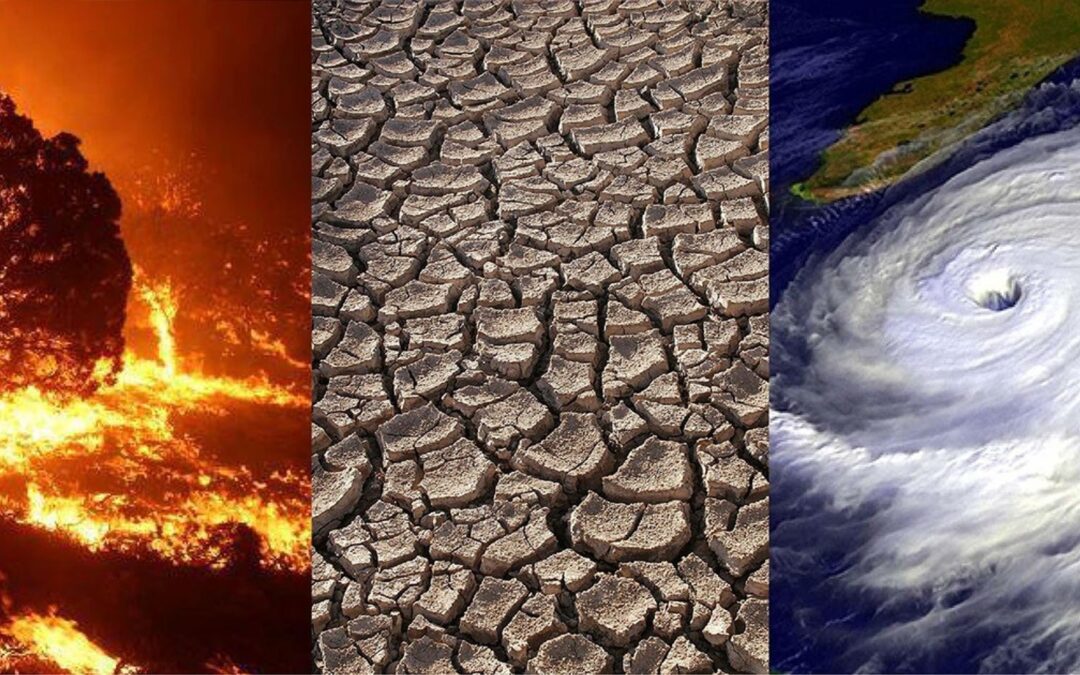
A substantial weakening — or eventual collapse — of the AMOC could have wide-ranging consequences. Scientists warn it may shift tropical rainfall belts, disrupting agriculture and food security for millions. Some regions could face intensified rainfall, while others experience prolonged drought.
Sea levels along parts of the North Atlantic coastline could rise by an additional half metre beyond existing projections. Western Europe could see colder winters, even as global average temperatures continue to rise. Broader atmospheric systems could also become destabilised.
The impacts would not be uniform, researchers emphasise. Climate systems rarely respond in identical ways across regions.
For now, scientists describe their findings as a warning rather than a prediction. The AMOC continues to function — but at a slower pace than in previous centuries. Whether it stabilises or approaches a tipping point will depend heavily on future greenhouse gas emissions and global climate action.