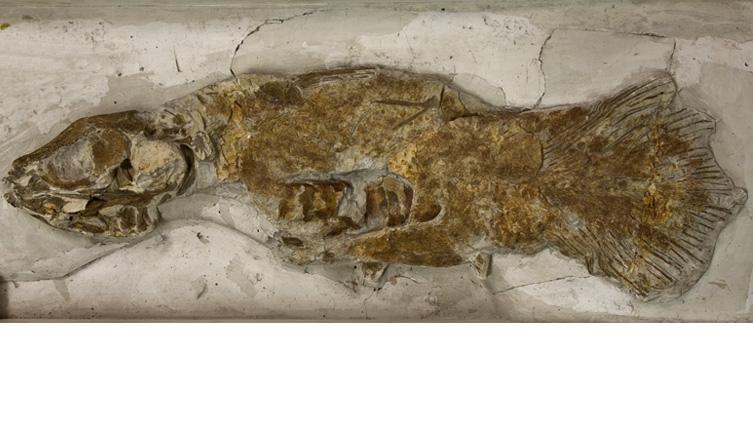
Scientists at the Natural History Museum have identified a previously unknown species of coelacanth from fossil remains that have been in their collection for around 150 years. The species, named Macropoma gombessae, is helping to bridge a major evolutionary gap of roughly 50 million years in the history of these ancient fish.
Coelacanths—often called “living fossils”—are among the most recognisable ancient lineages still existing today. The discovery sheds new light on their long and complex evolutionary journey.
A fossil hiding in plain sight
The fossil was originally discovered in the Gault Formation, dating back to the Lower Cretaceous period. It remained unrecognised as a distinct species for over a century until it was re-examined by Jack L. Norton, a researcher associated with the University of Portsmouth.
The name “gombessae” is derived from “gombessa,” the Comorian term used by local fishers for modern coelacanths, linking the fossil species to its living relatives.
Unlocking secrets with modern technology
Researchers used advanced imaging techniques—specifically X-ray computed tomography (XCT)—to study the fossil without damaging it.
This method allowed scientists to create highly detailed 3D images of the fossil’s internal structures, something not possible when the specimen was first catalogued. By comparing these features with known coelacanth fossils, researchers identified unique anatomical traits that confirmed it as a new species.
Filling an evolutionary gap
The discovery provides valuable insight into the evolutionary history of the coelacanth lineage, particularly the family Latimeriidae, which includes modern species. It helps fill a long-standing gap in the fossil record and offers clues about how these fish evolved over millions of years.
Hidden potential in museum collections
The finding underscores the scientific value of historical museum collections. Specimens collected decades—or even centuries—ago can still yield groundbreaking discoveries when studied with modern tools.
Researchers say this case highlights how new technologies can transform our understanding of ancient life, revealing details that remained hidden for generations and deepening knowledge of evolutionary processes.