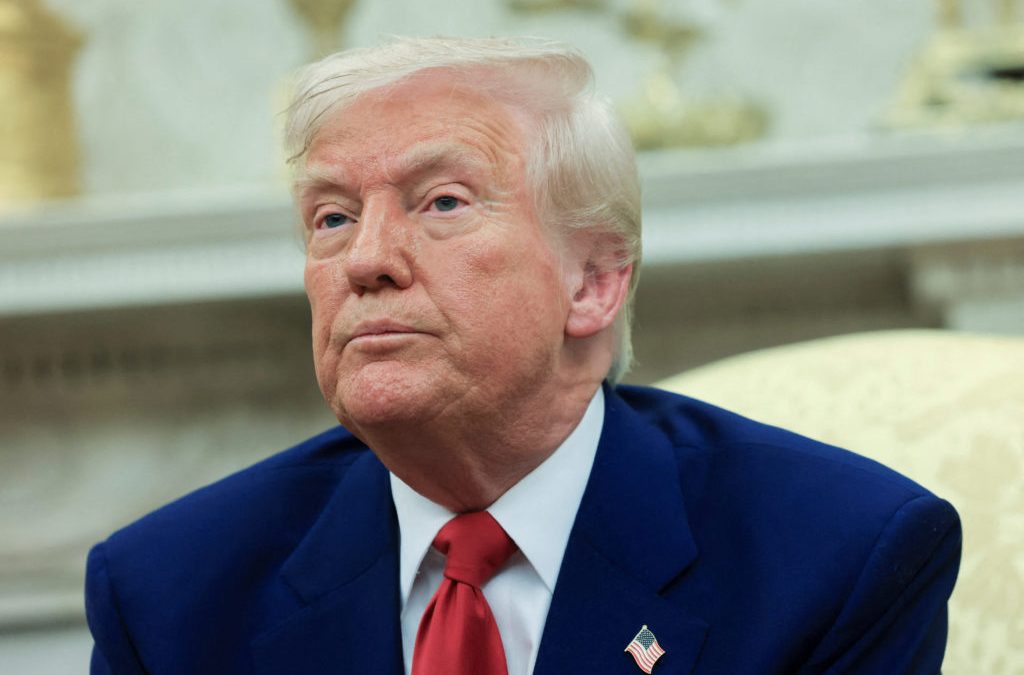
Washington: U.S. President Donald Trump has announced that Antifa will be designated as a terrorist organisation, accusing it of fuelling political violence. The move comes after the killing of conservative activist Charlie Kirk, now linked to alleged Antifa sympathiser Tyler Robinson.
In a post on Truth Social, Trump wrote: “I am pleased to inform our many U.S.A. Patriots that I am designating ANTIFA, A SICK, DANGEROUS, RADICAL LEFT DISASTER, AS A MAJOR TERRORIST ORGANIZATION. I will also be strongly recommending that those funding ANTIFA be thoroughly investigated.”
What is Antifa?
- Name Origin: “Antifa” is short for anti-fascist, tracing back to resistance movements in Nazi Germany and Fascist Italy.
- Structure: Antifa is not a formal organisation—it has no leadership, membership rolls, or central body. Instead, it is a loose network of activists and local groups.
- Ideology: Members position themselves against fascism, racism, xenophobia, and authoritarianism. Many are also deeply critical of capitalism and policing institutions.
- Tactics: Antifa groups are known for direct confrontation with far-right organisations, counter-protests, exposing (or “doxxing”) white supremacists, and using “black bloc” attire to maintain anonymity. Some participants have engaged in violent clashes, particularly at rallies.
- Historical Roots: The movement’s lineage stretches back to Europe in the 1930s, when groups like Antifaschistische Aktion resisted Hitler. In the U.S., Antifa resurfaced in the late 1980s with groups like Anti-Racist Action, and re-entered the national spotlight after the deadly 2017 Charlottesville rally.
- Modern Presence: Local networks such as Rose City Antifa in Portland remain active, often organising online but avoiding traditional hierarchies.
Antifa has drawn heavy political attention in recent years, especially during the 2020 George Floyd protests, when the Trump administration frequently blamed the movement for violence—claims that investigators found little evidence to substantiate.