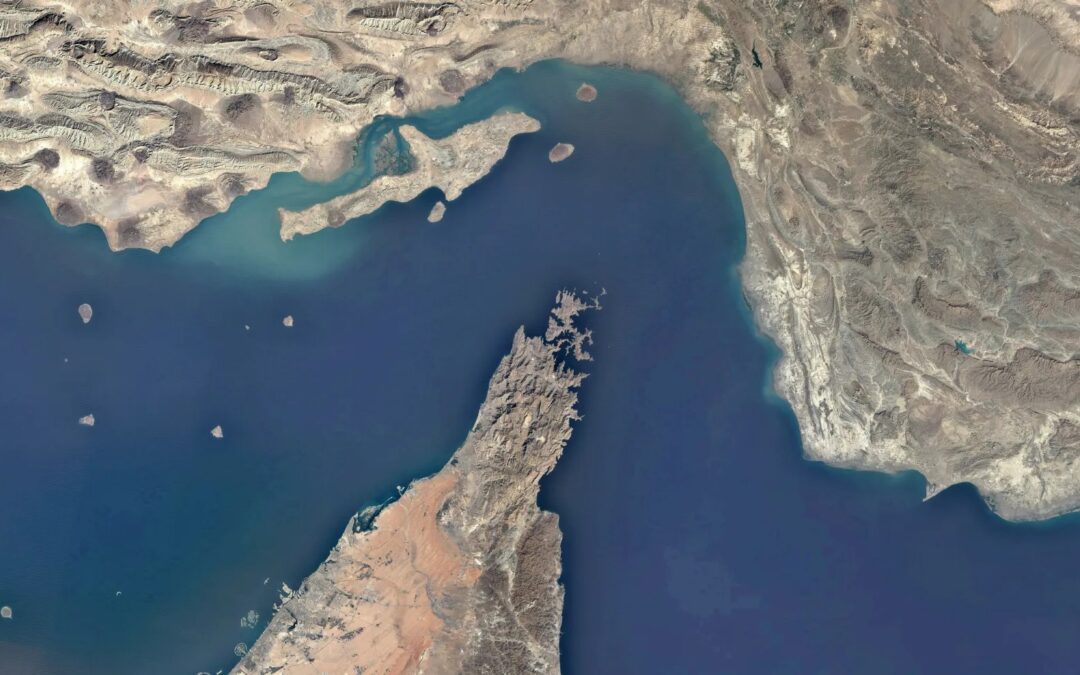
A prolonged closure of the Strait of Hormuz could send Brent crude to $150 a barrel, revive inflation and force major central banks to raise interest rates despite slowing economic growth, Capital Economics said in a recent note.
Energy markets have absorbed the disruption from the Iran conflict through pipeline diversions and inventory drawdowns. Roughly one-third of the crude previously transported through the strait has been redirected using other regional infrastructure.
Those buffers are becoming depleted. Commercial oil inventories across OECD economies are at their lowest level in recent history, leaving the market with limited capacity to withstand another supply shock.
The central scenario assumes disruption proves temporary, with Brent ending the first and second quarters at $80 and $75 per barrel, respectively. Options markets indicate traders still view that as the most likely outcome, although the probability assigned to a severe price spike has increased.
If the waterway remains closed, crude could initially climb toward $120. Under a more adverse scenario, Brent would reach $150 from about $84 currently, while European natural gas prices would rise to €90 per megawatt-hour from €54.
Such an increase would push U.S. inflation close to 5% and slow annualized economic growth below 1% during the second half of 2026. Full-year U.S. growth would fall to 1.7%, compared with 2.2% under the baseline forecast.
Europe would face a larger stagflationary shock. Eurozone growth would stall in 2026, while inflation could accelerate above 6% at its peak. The U.K. would approach recession as inflation climbs as high as 7%.
Asian economies would also come under pressure. China’s export-driven support from electric vehicles and other green-energy products could weaken as elevated energy costs discourage consumers from making large purchases. India’s 2026 growth could slow to 5.5%, compared with 6.5% in the baseline case.
Central banks would probably respond by tightening policy to prevent energy costs from spreading into wages and broader prices. The adverse forecast puts year-end rates at 4.63% in the U.S., 3.25% in the eurozone, and 4.75% in Britain.
China has helped balance the oil market by reducing crude imports by more than 40% year over year in June and drawing on domestic inventories, a strategy that cannot continue indefinitely.
Source: Investing.com