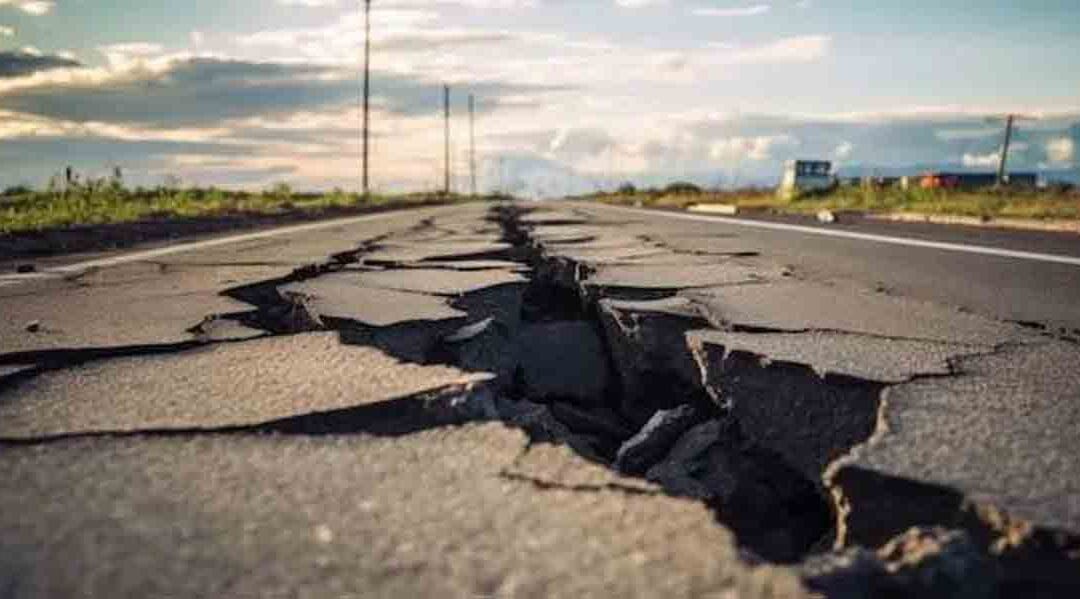
CARACAS: Rescue workers and volunteers continued searching through the rubble across northern Venezuela on Thursday (local time) after two powerful earthquakes devastated large parts of the country, leaving at least 235 people dead, injuring more than 1,500 and trapping hundreds beneath collapsed buildings.
The twin earthquakes, measuring 7.2 and 7.5 in magnitude, struck within a minute of each other on Wednesday evening, causing widespread destruction in Caracas, La Guaira and surrounding coastal regions.
According to Reuters, around 200 people remain trapped under debris, while nearly 250 buildings have been damaged or destroyed.
A website tracking missing persons listed more than 46,000 people as unaccounted for, although authorities have not independently verified the figure.
Acting President Delcy Rodríguez declared La Guaira a “disaster zone” and said heavy construction machinery from private companies was being deployed to accelerate rescue efforts.
She urged businesses to provide excavation equipment, saying the priority was “to rescue as many living people as possible.”
Search for survivors continues
Residents criticised the pace of official rescue operations, with many using their bare hands to search through collapsed buildings alongside neighbours.
“I want to know where my child is, if he’s trapped or in a shelter,” Dayana Delgado, the mother of three children, told the Associated Press while searching for her missing eight-year-old son.
The disaster has severely disrupted daily life, with widespread power outages reported in several regions. Authorities have also closed Caracas’ main airport in La Guaira, suspended metro services and converted schools into temporary shelters for displaced families.
The US Geological Survey (USGS) said the shallow depth of the earthquakes and the fact that they struck within a minute of each other significantly increased the level of destruction.
USGS predictive models indicate the final death toll could climb into the thousands as rescue operations continue.
International aid begins to arrive
Countries and humanitarian organisations around the world have begun mobilising emergency assistance for Venezuela.
The United States has announced $150 million in humanitarian aid, including support for UN agencies and relief organisations, while deploying disaster response teams and urban search-and-rescue units.
The US military is also sending two warships, transport aircraft and helicopters to assist relief efforts. Additionally, the US Treasury has temporarily eased sanctions until October 23 to facilitate earthquake-related humanitarian assistance.
The United Nations is coordinating international rescue operations, with humanitarian chief Tom Fletcher describing the response as a “massive collective effort.”
Starlink has announced it will provide free satellite internet services in affected areas for one month and deploy additional terminals to help restore communications, according to Reuters.
Several countries—including Mexico, Colombia, Spain, France, Italy, Ecuador, Panama and El Salvador—have dispatched or pledged rescue teams, medical personnel, search dogs, aircraft and emergency supplies.
Prime Minister Narendra Modi also expressed condolences and offered India’s assistance.
“Deeply saddened by the devastation caused by the severe earthquakes in Venezuela. On behalf of the people of India, I extend our heartfelt condolences to the Government and people of Venezuela, especially to the families who have lost their loved ones. We pray for the speedy recovery of those injured and stand in solidarity with all those affected during this difficult time. India stands ready to extend all possible assistance,” he wrote on X.
Pope Leo XIV has donated €100,000 towards relief efforts, while World Central Kitchen has begun distributing meals in Caracas and pledged an additional $1 million in humanitarian aid.
Despite the widespread destruction and mounting death toll, initial assessments indicate that Venezuela’s key oil production and export infrastructure has largely escaped major damage, allowing energy operations to continue with minimal disruption.