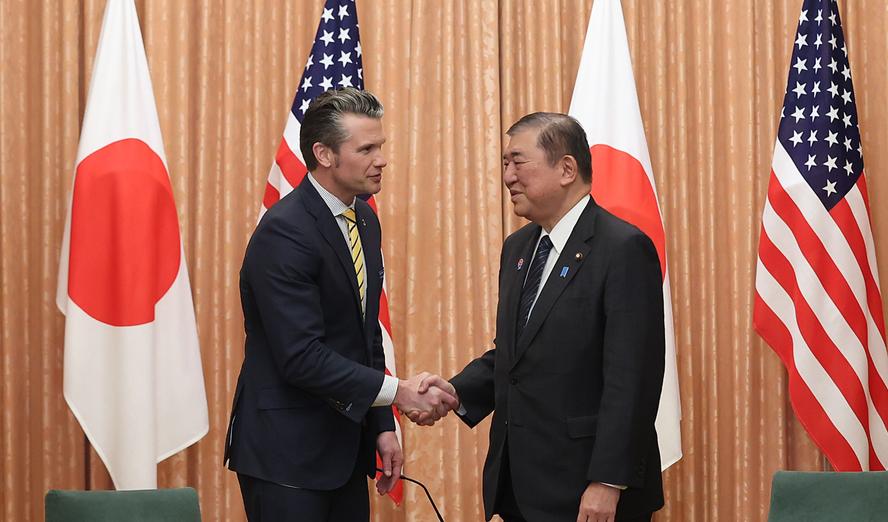
US President Donald Trump on Tuesday unveiled what he described as a “massive” trade agreement with Japan, under which Tokyo has pledged to invest $550 billion in the United States. As part of the arrangement, Washington will reduce tariffs on Japanese imports to 15%.
The White House outlined three major projects worth a combined $36 billion as the first phase of Japan’s broader investment commitment. The initiatives span energy exports, power generation and advanced manufacturing, with projects planned in Texas, Ohio and Georgia.
Trump hails ‘historic’ agreement
In a post on Truth Social, Trump said the deal marked the launch of Japan’s first tranche of investments under the $550 billion pledge. He described the pact as a historic effort to revitalize the American industrial base, create hundreds of thousands of jobs, and strengthen national and economic security.
According to Trump, the projects will focus on oil and gas development in Texas, power generation in Ohio, and critical minerals in Georgia.
$33 billion power plant in Ohio
One of the centrepieces of the announcement is a $33 billion natural gas-fired power plant in Portsmouth, Ohio. Commerce Secretary Howard Lutnick said the facility is expected to generate 9.2 gigawatts of electricity annually, calling it the largest natural gas-fired power plant in US history. He added that the plant’s output would be sufficient to power all homes in Ohio.
The facility will be operated by SB Energy, a subsidiary of SoftBank Group. The additional generation capacity is intended to reinforce baseload electricity supply as demand surges, particularly due to the expansion of data centres supporting artificial intelligence technologies.
Referring to the Ohio project, Trump said the scale of the initiatives underscored the role of tariffs in driving investment. He also highlighted the LNG facility in the Gulf and the critical minerals plant as measures to boost energy exports and reduce reliance on foreign sources.
Texas crude export terminal
The second major project involves Japanese backing for the $2.1 billion Texas GulfLink deepwater crude oil export terminal off the Texas coast. The White House said the investment will support development of the offshore export facility.
Lutnick said the terminal could generate between $20 billion and $30 billion annually in US crude exports, secure export capacity for domestic refineries and strengthen America’s position as a leading global energy supplier.
Texas GulfLink, which is being developed by Sentinel Midstream, confirmed its participation and said it was honoured to partner with the US Department of Commerce and the Japanese government.
Synthetic diamond plant in Georgia
The third initiative involves the construction of a synthetic industrial diamond manufacturing plant in Georgia, valued at approximately $600 million. Lutnick said the high-pressure facility would meet 100% of US demand for synthetic diamond grit, a key material used in advanced manufacturing and semiconductor production. At present, the United States relies heavily on China for such supplies.
The White House said the plant will be operated by Element Six, an industrial diamond company and a unit of the De Beers Group.
Financing structure and next steps
It remains unclear how much of the total project costs will be directly financed by Japanese entities or the specific terms governing the investments. Under a previous US-Japan framework, profits from joint ventures were to be shared equally until Japan recouped its initial investment, after which the profit split would shift to 90-10 in favour of the United States.
The announcements follow recent meetings between Commerce Secretary Lutnick and Japan’s economic and trade minister, Ryosei Akazawa. Speaking last week, Akazawa indicated that several issues were still being negotiated before the agreements could be formally finalised.
The deal marks a significant expansion of economic ties between Washington and Tokyo, with both sides presenting it as a strategic partnership aimed at boosting industrial capacity, energy exports and supply chain resilience.