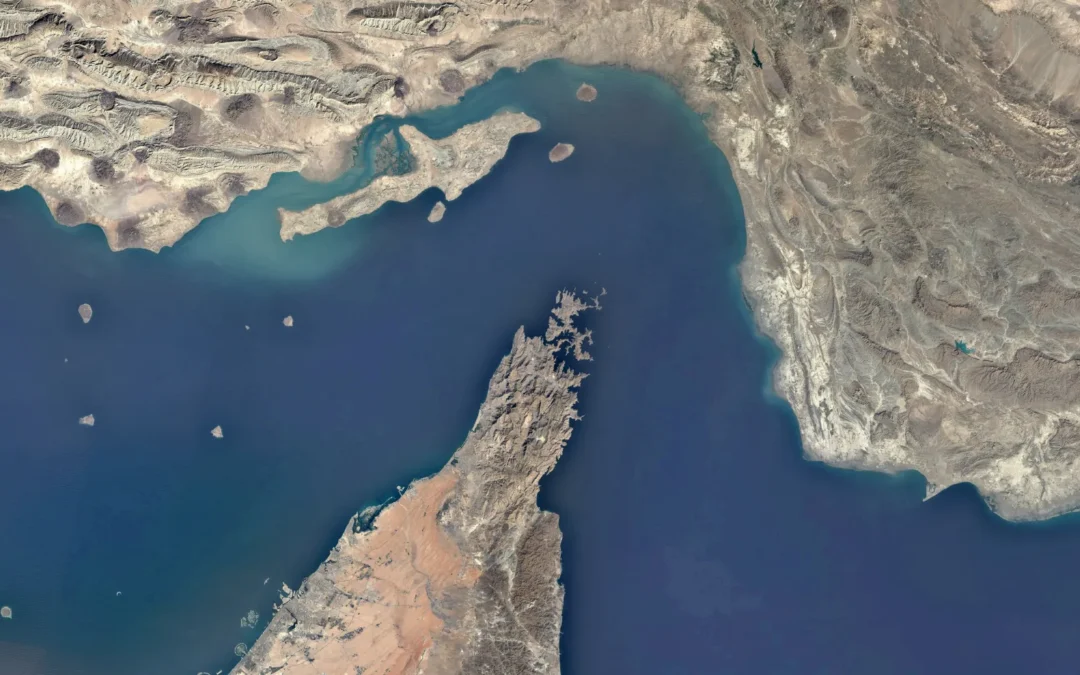
Two supertankers caught fire after hitting mines in the Strait of Hormuz, Iran’s Revolutionary Guard has said, adding that the vessels were taking an “unauthorized route” through the conduit.
In a statement to Iran’s state broadcaster, the paramilitary group said the ships were carrying over 4 million barrels of crude and attempting to traverse the southern section of Hormuz under the protection of the U.S. military.
The Associated Press said the Iranian claims could not be immediately verified and U.S. Central Command, which oversees U.S. forces in the Middle East, did not comment.
Tehran has frequently warned ships against transiting Hormuz, a vital waterway for a fifth of the world’s oil and liquefied natural gas before the start of the U.S.-Israel assault on Iran in late February. Iran has moved to close down the strait, although shipments have begun to improve in recent months, fueling some predictions that global oil supply could soon outstrip demand. Benchmark Brent crude prices have fallen by more than fifth so far this month.
However, in a potential sign of the impact of the Iranian attacks, crude shipments through the strait appear to have fallen since the start of November.
Data firm Kpler said the number of shipments going through Hormuz have declined to 8.5 million barrels per day, or around half of the prewar levels reached at the beginning of the month. Still, Kpler flagged that shipments could recover over the rest of November.
According to media reports, tanker crews have had to employ a ship-to-ship transit procedure to take oil barrels out of the Persian Gulf, a risky process that has sparked a surge in vessel chartering rates.
Meanwhile, there have been few indications that the standoff in Hormuz is softening. U.S. President Donald Trump is weighing another round of extensive military strikes on Iran, considering fresh intelligence about Tehran’s military capabilities and mounting pressure from Israel to launch an aggressive campaign, The New York Times reported on Wednesday, citing U.S. and Israeli officials briefed on the discussions.
Trump has not made a final decision, but is assessing Israeli warnings that Iran is rebuilding its missile and drone arsenals and advancing its chemical and biological weapons programs, the report said.
Israeli Prime Minister Benjamin Netanyahu is pushing Washington to join Israel in a four- to seven-day campaign of airstrikes, seeking to capitalize on the U.S. military presence in the region, according to the report.