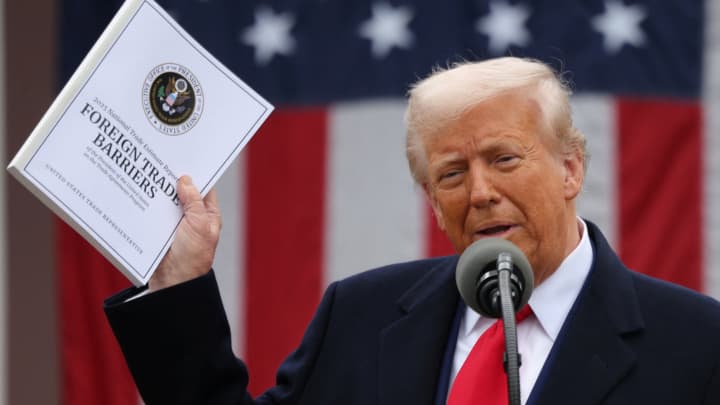
WASHINGTON: With tensions from the Iran-Israel conflict receding, U.S. President Donald Trump has swiftly redirected his attention to global trade, reigniting his hardline strategy on tariffs and bilateral deals. In just 24 hours, Trump suspended trade talks with Canada over its new digital services tax, signaled a fresh agreement with China, and hinted at a major trade breakthrough with India—all part of his revived push to reshape U.S. trade dynamics through “reciprocal tariffs.”
Canada Talks Halted Over Tech Tax
The most immediate fallout came with Canada. Trump abruptly ended trade negotiations after Ottawa unveiled a 3% digital services tax on large American tech firms, including Amazon, Google, Meta, and Airbnb. Calling it a “direct and blatant attack on our country,” Trump announced on social media that all trade discussions with Canada were terminated “effective immediately.” He warned that tariffs on Canadian goods would be finalized and announced within a week.
Speaking from the White House, Trump said Canada was mimicking the EU’s approach: “They tried to copy Europe. It won’t end well for them. We have all the cards.” He cited Canada’s existing tariffs on U.S. dairy—some reportedly as high as 400%—as further justification.
Despite the escalating rhetoric, Canadian Prime Minister Mark Carney called for calm: “This is a negotiation. We’ll continue to protect Canadian interests.”
The tax, set to take effect Monday, is retroactive and could cost U.S. companies nearly $2 billion. Industry leaders, including the Computer & Communications Industry Association, applauded Trump’s firm stance, labeling the Canadian policy discriminatory.
Trump’s Tariff Deadline Looms
The U.S. is now entering a critical phase of its tariff strategy. Trump reiterated his plan to send formal tariff notices to multiple nations within the next 10 days. “We’re going to tell them exactly what they’ll pay to do business in the U.S.,” he said. “Could be 25%. Could be 50%—whatever’s fair.”
The deadline for several of these tariff decisions falls on July 9, marking the end of a 90-day negotiation window. The White House has hinted that these moves could trigger a new wave of trade restrictions on countries with whom the U.S. runs significant trade deficits.
Warming Signals on India
In stark contrast to his tone on Canada, Trump adopted a more optimistic approach toward India. Calling a possible agreement “a very big one,” Trump hinted that long-standing trade barriers could finally be dismantled.
“Right now, it’s restricted. You can’t just walk in there… but we’re working on opening it up,” Trump said. “We’re talking about a full trade barrier drop. That would be historic.”
At a separate event, Trump said, “We might have something very big coming up with India. We’re going to open up their markets, just like we’re opening up China.”
Commerce Secretary Howard Lutnick supported that outlook: “A U.S.-India deal is on the horizon. We’ve found a formula that could work for both sides.”
India’s Commerce Minister Piyush Goyal confirmed that discussions were progressing. “We’re focused on a fair, equitable, and balanced agreement that serves both economies well,” he stated.
China Deal Inked, But Light on Details
Trump also confirmed that the U.S. had quietly reached a trade agreement with China “the other day,” though specifics remain sparse. China’s Ministry of Commerce acknowledged the development, saying it included a review of rare earth exports and trade in critical minerals.
Treasury Secretary Scott Bessent said the deal would “make it easier for American firms to access strategic resources” and described the moment as a “de-escalation under President Trump’s leadership.”
Although few details have been released, the White House has portrayed the deal as a victory for U.S. manufacturers and technology firms, particularly those dependent on rare earths and mineral imports.
Summary of Trump’s Last 24 Hours in Trade:
- Canada: Trade talks abruptly suspended over a 3% digital services tax; tariffs pending within a week.
- India: Trump teases a “very big” potential deal to open Indian markets to U.S. firms.
- China: Agreement reportedly signed involving rare earths and mineral access; details remain confidential.
- Tariffs: U.S. preparing letters to countries outlining new reciprocal tariffs, with deadlines looming by July 9.
As Trump intensifies his second-term trade strategy, allies and rivals alike are grappling with a White House that continues to mix bold unpredictability with transactional deal-making. Whether these moves lead to lasting trade gains or fuel new confrontations will likely define the next chapter of U.S. global economic policy.