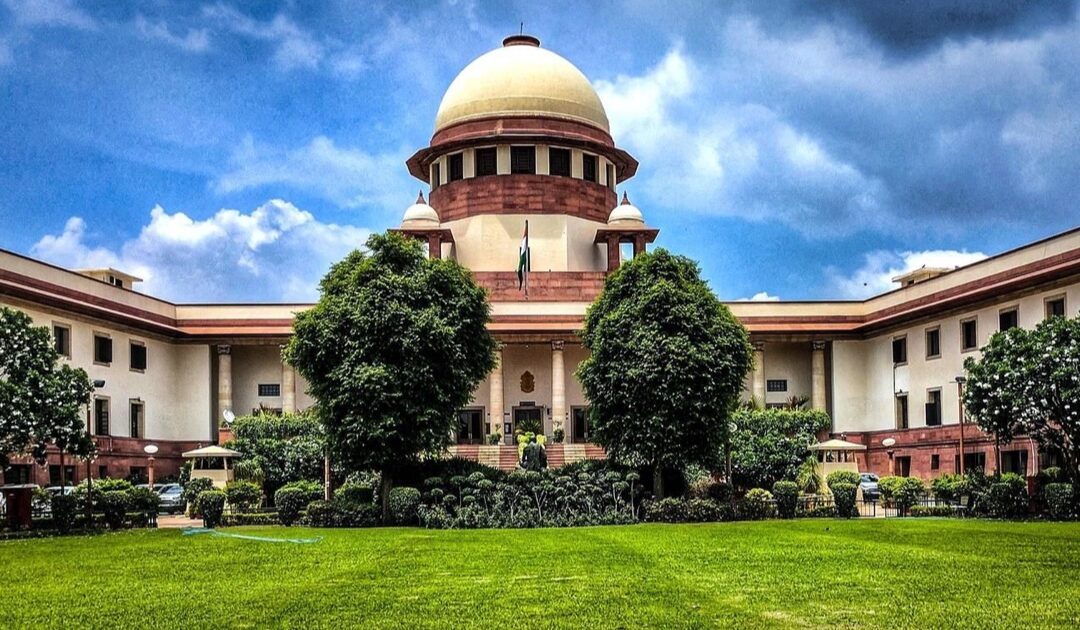
In a landmark judgment, the Supreme Court has recognised homemakers as “nation builders” and ruled that, in cases involving the accidental death of a homemaker, compensation should be calculated by assuming a minimum monthly income of ₹30,000.
A bench of Justices Sanjay Karol and N.K. Singh delivered the ruling while hearing a case related to the death of a homemaker in a road accident in November 2001. Expressing concern over the 25-year delay in compensation, including 22 years of pendency before the Punjab and Haryana High Court, the court enhanced the family’s compensation from ₹8.4 lakh to ₹63 lakh, along with 7.5% annual interest from 2001.
The court said homemakers play a critical role in sustaining households and preparing human capital that contributes to the nation’s growth. “Homemakers are actually the nation builders and ought to be recognised as such,” Justice Karol observed.
Rejecting the conventional practice of assigning a notional income of ₹3,000 per month to homemakers, the bench criticised gender stereotypes and noted that household’s function largely because of the unpaid labour performed by women. It stated that earning members are often dependent on homemakers rather than the other way around.
The judgment also introduced a new framework for calculating compensation, including: Loss suffered by children who lose their mother’s care and support. Loss of companionship and household support suffered by the spouse. Loss of domestic care due to the homemaker’s absence.
Highlighting the economic value of unpaid domestic work, the court noted that women’s unpaid caregiving contributes an estimated 15–17% of India’s GDP. It also cited data showing that around 16 billion hours are spent daily worldwide on unpaid domestic and care work.
The bench directed that if compensation is not paid within three months, the interest rate will rise to 9%, and after six months, to 12% annually.
The Supreme Court also flagged delays in accident compensation cases, noting that 123 such matters remained pending in various High Courts for an average of eight years, and urged Chief Justices to prioritise long-pending claims.