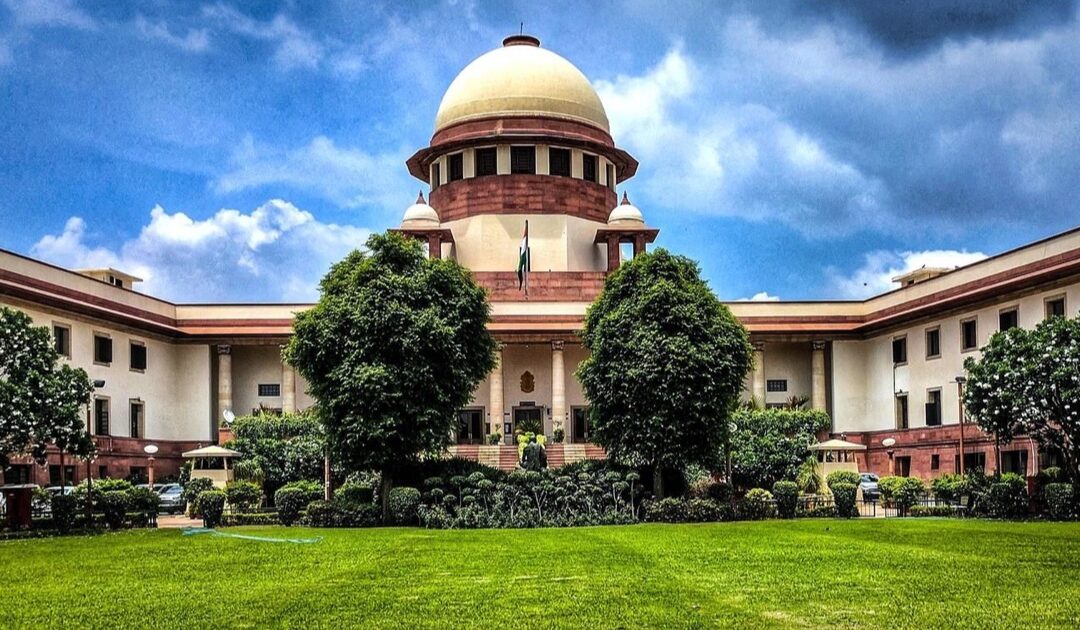
NEW DELHI: The Supreme Court of India has dismissed a petition filed by a lady doctor who argued that her access to WhatsApp constituted a fundamental right after her account was blocked by the messaging platform.
A bench led by Justice Sanjiv Khanna ruled that the use of a private digital service like WhatsApp does not fall under the ambit of constitutionally protected rights, as the platform is a private entity governed by its own terms of service.
The petitioner, Dr. Raman Kundra, approached the apex court seeking restoration of her account, claiming that WhatsApp was essential for both her professional and personal communication. However, the court rejected her plea, noting that users voluntarily agree to a platform’s policies and cannot claim entitlement to its services under the Constitution.
“You can use Arattai,” the bench remarked, referring to Zoho’s indigenous messaging app, suggesting the use of alternative platforms.
Court’s stand: No fundamental right over private platforms
The Supreme Court emphasized that access to private digital platforms such as WhatsApp is not a guaranteed right under Indian law. While acknowledging the importance of digital communication, the court stated that such services operate under private contracts and are not bound by constitutional obligations.
The bench also refused to entertain arguments that WhatsApp’s actions violated the petitioner’s right to free speech, clarifying that such grievances should be pursued through appropriate regulatory or civil forums.
“Ms. Mahalaxmi Pawni, learned senior counsel appearing for the petitioners, upon instructions, seeks permission to withdraw this petition with liberty to avail other remedies available under law,” the court noted in its order.
Arattai: India’s homegrown alternative
The mention of Arattai, Zoho’s messaging platform, drew public interest as the app continues to gain traction in India. Launched in 2021, Arattai—which means “chat” in Tamil—has recently surged to the top of Indian app store charts, briefly surpassing WhatsApp, Telegram, and Signal.
Marketed as a “spyware-free, made-in-India messenger”, Arattai’s popularity has grown amid rising concerns over data privacy, AI surveillance, and Big Tech monopolies.
The platform has been endorsed by several public figures, including Union Education Minister Dharmendra Pradhan, who encouraged citizens to adopt indigenous apps as part of the Aatmanirbhar Bharat initiative.
Arattai’s key features include:
- One-to-one and group messaging with media sharing and voice notes
- End-to-end encrypted audio and video calls
- Multi-device support, including desktop and Android TV apps
- “Stories” and “Channels” for updates and broadcasts
The case highlights the growing debate over digital rights and accountability in the era of private tech dominance—while reaffirming that constitutional protections apply to state actions, not private companies.