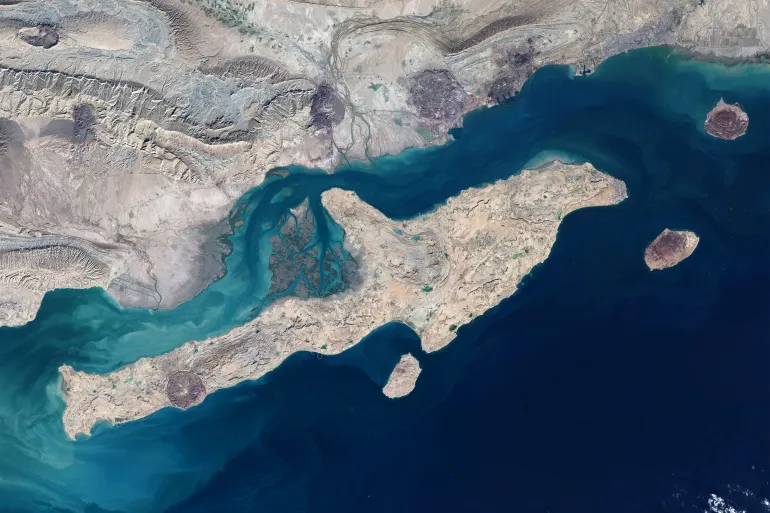
Even as transits through the Strait of Hormuz have ticked higher, a shipping analyst believes that Iran retains de facto control over the waterway where about 20% of crude oil supply passes through.
Lars Jensen, president of consultancy firm Vespucci Maritime, said none of the vessels that transited the Strait were container ships and that the numbers of transits is still tiny compared to the pre-crisis traffic.
“But it does show that some shipping lines are cooperating with the Iranians and also shows that Iran is allowing some elements of traffic through,” Jensen said.
Jensen noted reports that Iran allowed a few Chinese vessels to pass through without payment.
“The timing of this is interesting as it took place immediately prior to [US President Donald] Trump’s visit to China and would therefore constitute an attempt by Iran to drive a wedge between US and China in terms of the Strait of Hormuz,” Jensen said.
According to the Strait of Hormuz tracker, a free, real-time dashboard that tracks the ongoing crisis using AI-powered analysis of current strait conditions, insurance markets and diplomatic developments using real-time web data and AIS data for vessel positions, 16 vessels have transited the Strait over the past 24 hours.
PERSIAN GULF STRAIT AUTHORITY
On Monday, Iran officially announced on social media the Persian Gulf Strait Authority (PGSA) as “the legal entity and representative of the Islamic Republic of Iran” for managing passage through the Strait.
“Passage without permission will be considered illegal,” the PGSA said.
Vessels wanting to transit the Strait must apply through the PGSA’s official email address, submit ownership details, proof of insurance, crew manifests, cargo declarations and intended routing.
Qatar-based news agency Al Jazeera reported that Iran has submitted a response to the latest US proposal to end the war.
The New York Times reported that Trump is not open to offering Iran any concessions to end the war.
US strikes on Iran began on 28 February and the Strait has been essentially closed since.
Only about 2% of global container capacity has been impacted by the closure.
Container ships and costs for shipping containers are relevant to the chemical industry because while most chemicals are liquids and are shipped in tankers, container ships transport polymers, such as polyethylene (PE) and polypropylene (PP), which are shipped in pellets. Titanium dioxide (TiO2) is also shipped in containers.
They also transport liquid chemicals in isotanks.
Source: ICIS by Adam Yanelli