Marine biologist Mario Tamburri, a professor at the University of Maryland’s Center for Environmental Science, warns that the prolonged disruption of shipping through the Strait of Hormuz could trigger an overlooked environmental crisis: the global spread of invasive marine species.
Tamburri, whose research focuses on the chemical ecology of marine organisms and the movement of invasive species through shipping, says the current situation presents an unusually high risk of biofouling—the accumulation of marine organisms on ships’ hulls.
Normally, commercial vessels spend only a day or two in port before continuing their journeys. But the disruption in the Strait of Hormuz has left large numbers of ships idle for weeks or even months. This prolonged inactivity is occurring during the reproductive and growth seasons of many marine organisms, creating ideal conditions for extensive fouling.
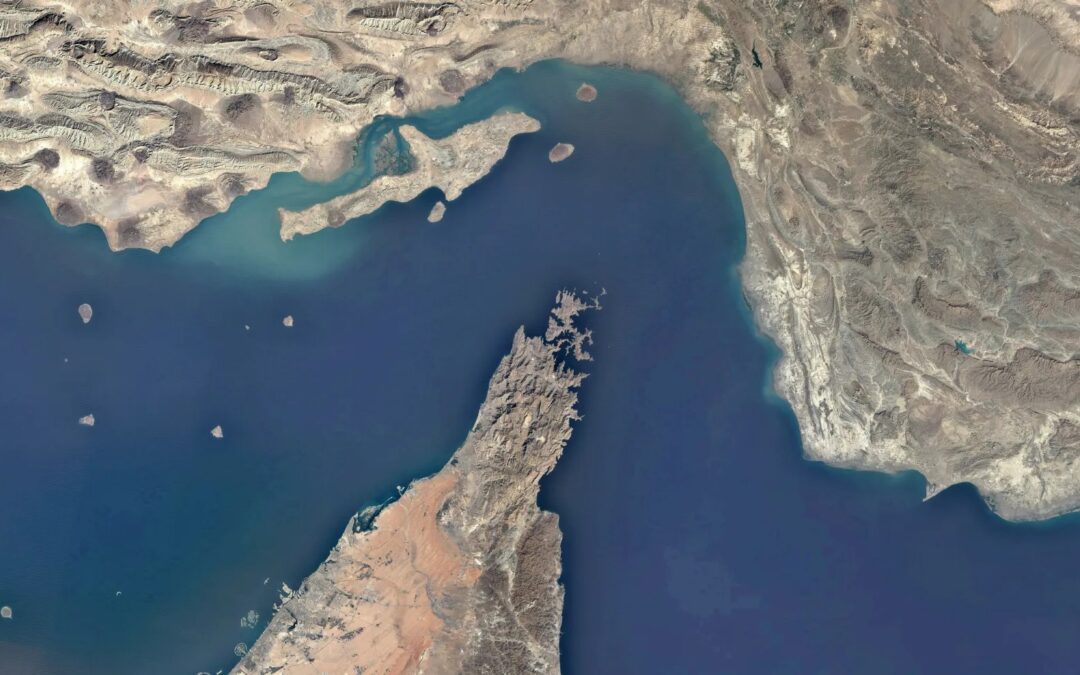
The Strait is one of the world’s most important shipping routes, with more than 30,000 vessels passing through it annually under normal circumstances. Ships stranded or delayed in the region can accumulate substantial amounts of marine life on their hulls. Once they eventually resume their journeys, they could transport those organisms to distant ecosystems.
How ships become carriers of invasive species
The process begins with microscopic organisms. When a ship’s hull is submerged, bacteria, fungi and single-celled algae can establish an initial biofilm. This creates a surface on which larger organisms can settle, including seaweeds, seagrasses, barnacles, mussels, sponges, corals and other invertebrates.
These organisms are naturally restricted by geographical barriers and differences between marine ecosystems. Shipping, however, can effectively overcome those barriers by carrying organisms thousands of kilometres to new environments.
If the destination has similar temperature and salinity conditions, some of these species can survive, reproduce and establish themselves as invasive populations.
The consequences can be severe. Invasive species can displace native organisms, reduce biodiversity, contribute to local extinctions and disrupt fisheries. They can also cause significant economic damage by fouling industrial infrastructure, including the cooling systems of power plants.
In the United States, for example, the rope-grass hydroid, an animal that resembles a plant, has spread along parts of the East Coast and into the Chesapeake Bay. Its growth on industrial infrastructure has created costly maintenance problems, with individual power plants spending millions of dollars each year to remove fouling organisms.
Why India faces a particularly high risk
The precise probability of an invasion is difficult to calculate, but scientists can assess relative risk by examining the environmental similarity between the source and destination regions, as well as the length of shipping routes.
That analysis places India among the areas of greatest concern.
Ships travelling from the Gulf to India undertake relatively short voyages through warm, high-salinity waters. These conditions are broadly similar to those found in the Gulf, increasing the likelihood that organisms attached to ship hulls could survive the journey.
Other major maritime hubs in Asia—including Singapore and ports in Indonesia, Japan, South Korea and China—could also face elevated risks because of similar environmental conditions and extensive shipping connections with the Gulf.
By contrast, a vessel travelling from the Gulf to a freshwater environment would present a much lower invasion risk because many marine organisms could not survive the sudden change in salinity.
Shipping can break natural ecological barriers
Marine ecosystems contain enormous biological diversity, even across relatively short distances. Different regions have distinct communities of organisms, and natural barriers such as ocean currents and environmental differences limit their movement.
Global shipping can bypass those barriers.
For instance, marine organisms native to the Gulf would not normally reach Southeast Asian ecosystems on their own. A ship, however, can transport them directly between the two regions, potentially introducing species into ecosystems where they have never previously existed.
This makes prolonged ship immobilisation particularly concerning. The longer a vessel remains stationary, the greater the opportunity for organisms to establish themselves on its hull.
Existing safeguards have limitations
The shipping industry already has regulations and technologies designed to reduce biofouling risks. The International Maritime Organization (IMO) has developed measures aimed at limiting the transfer of invasive species through shipping.
Ships commonly use specialised, anti-fouling coatings containing biocides, such as copper-based compounds, to discourage marine organisms from attaching to their hulls.
These coatings are generally designed around normal operating conditions. They are most effective when vessels remain in motion or spend relatively short periods in port. Extended periods of inactivity can reduce their effectiveness, allowing organisms to establish themselves.
Another approach is in-water cleaning. Traditional methods involved divers manually scraping organisms from hulls, while newer technologies use remotely operated or autonomous systems to clean vessels.
However, cleaning a heavily fouled vessel presents another environmental challenge: the organisms removed from the hull must be captured and contained. Simply releasing them into the surrounding water could spread potential invasive species. Cleaning systems must also avoid releasing harmful anti-fouling coating materials into the marine environment.
A capacity problem in the Gulf
In-water cleaning services are available in the Gulf region, but their existing capacity was not designed for a sudden situation in which thousands of vessels might require cleaning simultaneously.
There is also an operational dilemma. After months of disruption, crews and ship operators may understandably want to leave the region as quickly as possible once safe passage becomes available. They may therefore postpone cleaning until their next port of call.
But cleaning at the next destination must be carried out responsibly, with systems capable of capturing the organisms and debris removed from the hull. Otherwise, the attempt to solve one environmental problem could create another.
A need for coordinated action
The issue also has an economic dimension. Fouling increases a ship’s drag, forcing it to burn more fuel to maintain speed. That raises operating costs and increases atmospheric emissions.
As a result, shipping companies have a strong commercial incentive to keep vessels clean, making technologies such as robotic and autonomous cleaning systems potentially valuable both environmentally and economically.
The challenge is ensuring that these technologies are deployed in ways that do not create additional environmental damage.
Tamburri argues that the most effective response will require cooperation among shipowners, shipping operators, technology developers, regulators, port authorities, international organisations such as the IMO, local resource managers and scientists.
The Strait of Hormuz crisis demonstrates how a disruption in global shipping can have consequences far beyond trade and energy supplies. Thousands of ships sitting idle for prolonged periods can become floating carriers for marine organisms, potentially breaking natural ecological barriers and introducing invasive species into vulnerable coastal ecosystems.
For India and other Asian maritime hubs, preparing for that risk before vessels begin moving again could be critical to preventing a biological problem from becoming the next unintended consequence of the blockade.