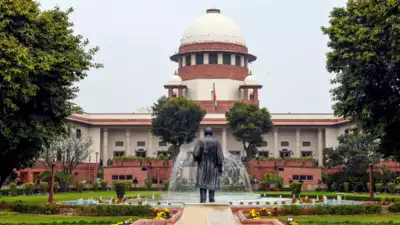
NEW DELHI: The Supreme Court on Thursday observed that criminal prosecution brings immense strain and social stigma, and urged courts — particularly trial courts — to display “clarity and courage” in discharging an accused at the stage of framing charges if the material on record does not establish a prima facie case.
A bench comprising Justices Sanjay Karol and N K Singh emphasised that the judicial process should not itself become a form of punishment. Courts, it said, must stay mindful of the human consequences of their decisions and the trust reposed in them by society.
The ruling came while the apex court discharged an accused under the SC/ST Act after finding that the essential ingredients of the offence under the special law were not made out. However, it permitted the trial court to continue proceedings for offences under the IPC.
The court reiterated that charges should be framed only when there are sufficient grounds to presume that the accused has committed an offence. It also cautioned High Courts against mechanically rejecting pleas for discharge without proper application of mind.
Writing the judgment for the bench, Justice Karol said that at the stage of framing charges or considering discharge, courts are not engaged in an abstract legal exercise but are dealing with real individuals facing genuine anxiety and the burden of criminal prosecution.
Judicial responsibility at this stage, he said, demands care, balance, and honest scrutiny of the material on record. “The power to frame a charge is not meant to be exercised by default or merely out of caution. If the material before the court, even when accepted at face value, does not disclose the ingredients of an offence, the law expects the court to have the clarity and courage to say so and set the case aside,” he observed.
The bench underlined that discharge is not a technical relief but an essential safeguard within the criminal justice system. Courts must consciously distinguish between cases that genuinely warrant trial and those based merely on suspicion, assumptions, or lacking any substantive basis.
Allowing a case to proceed without a prima facie foundation, the court warned, exposes individuals to unnecessary strain, stigma, and uncertainty. Upholding the rule of law requires recognising that the process itself can become the punishment if judicial discretion is not exercised carefully.
The judges noted that this responsibility weighs most heavily on trial courts. For most litigants and accused persons, the trial court represents the face of the judiciary. The fairness, sensitivity, and legal discipline demonstrated at this level shape public perception of justice and the judicial system as a whole.
Therefore, especially at the threshold stage, trial courts must remain conscious of the human impact of their decisions and the societal trust vested in them, the bench said.