Russian President Vladimir Putin has instructed the government, together with the Bank of Russia, Rosatom State Corporation, and the State Development Corporation VEB.RF, to provide the necessary financing, primarily extra-budgetary, for the construction of the fifth and sixth universal nuclear icebreakers of Project 22220 and one multifunctional nuclear service vessel (MSATV) of Project 22770. The instructions have been published on the Kremlin website.
The icebreakers construction financing is required to secure schedules and commissioning deadlines. Furthermore, Russia’s government has been instructed to consider providing state guarantees for financing raised in 2026–2027, including interest payments.
A report on these issues is to be prepared by June 15, 2026.
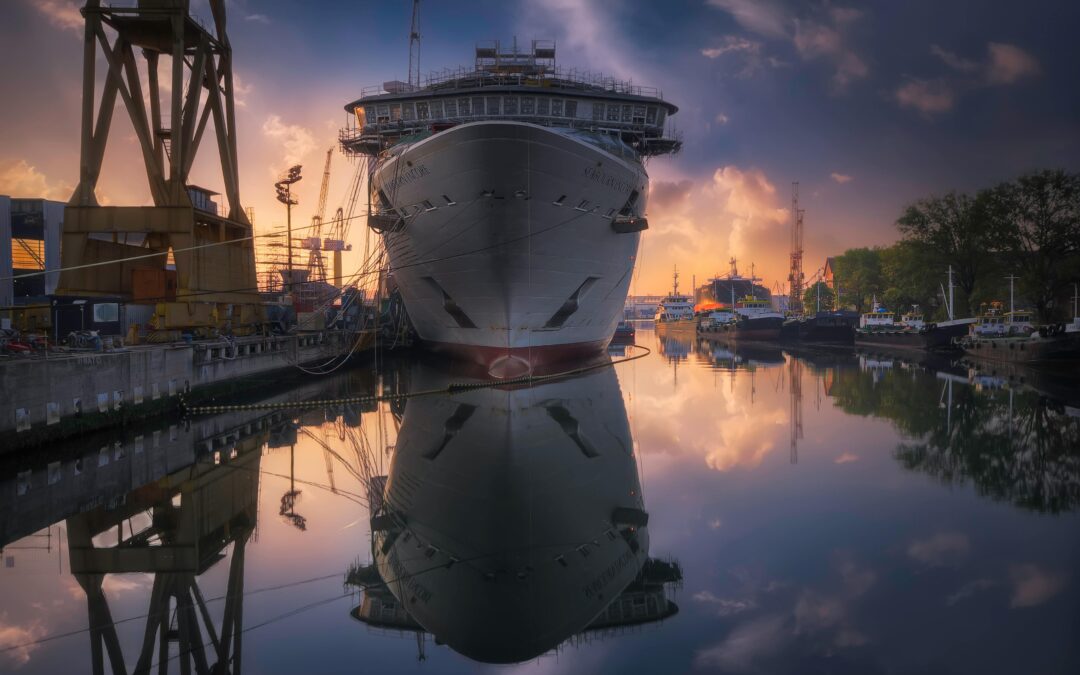
The series of Project 22220 universal nuclear icebreakers and the Project 22770 multifunctional nuclear service vessel Vladimir Vorobyov are under construction at Baltiysky Zavod Shipyard (Baltic Shipyard, part of United Shipbuilding Corporation).
The Project 22220 icebreakers are the largest and most powerful in the world. All icebreakers in the series utilize a unique electric propulsion system developed in-house by Russia. The icebreakers primary mission is to ensure year-round navigation in the western Arctic. These dual draft icebreakers can operate in deep seas and are able to enter the mouth of Siberian rivers. Its dimensions allow the icebreakers to break a 40-meter-wide sea route through 3-meter-thick ice.
Key particulars of Project 22220: LOA – 173.3 meters; Beam: 34 meters (33 m, DWL); Height: 52 meters; Draft (DWL): 10.5 m/8.65 m; Minimum draft: 9.03 meters; Full displacement: 33,540 tonnes; Engine rated power: 60 MW; Cruising speed: 22 knots (in clear water); Maximum icebreaking capability: 2.8-meter-thick ice (at full capacity and speed of 1.5-2 knots); Crew: 54; Expected service life: 40 years.
The Project 22770 MSATV developed by ICEBERG Central Design Bureau features diesel-electric propulsion and unrestricted navigation capability. The vessel was designed to perform a range of support activities for the fleet of nuclear-powered ships, including safe reception, storage and transport of “liquid radioactive waste generated during the operation of ship reactor installations, as well as in the process of reloading nuclear fuel and soaking of spent fuel assemblies in order to reduce residual heat release”. It will also be able to load used fuel assemblies into shipping containers for transfer to reprocessing as well as tackling decontamination of removable parts of ship reactor plants and refuelling equipment. The vessel will ensure the effective operation of existing nuclear-powered fleet, icebreaking ships under construction and future ships and other facilities with reactor installations. The vessel will provided support to nuclear-powered ships in western and eastern regions of the Arctic including the Barents, White, Pechora, Kara Seas, Laptev Sea, East Siberian, Chukchi, Bering, Okhotsk Sea, northern part of the Sea of Japan.
Key particulars of Project 22770: LOA: 158.8 m; Breadth: 26 m; Draft: 7.5 m; Power plant rated power: 9.28 MW (on shafts); Displacement: 22,661 tonnes; Speed: 12 knots; Ice Class: Arc5.