Global financial markets reacted positively on Monday after the United States and Iran announced a breakthrough agreement aimed at ending months of conflict in the Middle East, easing concerns over energy supplies and regional instability.
Oil prices tumbled sharply in early trading, while major Asian stock markets recorded significant gains as investors welcomed signs of de-escalation between the two countries.
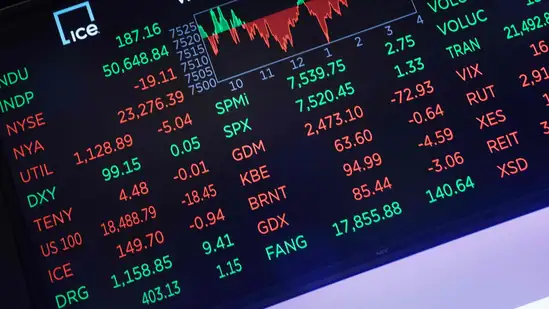
At 0045 GMT, US benchmark West Texas Intermediate (WTI) crude fell 4.7 percent to $80.89 per barrel, while Brent crude, the international benchmark, dropped 4.03 percent to $83.81 per barrel.
Asian equity markets surged on the news. Japan’s Nikkei 225 climbed nearly five percent, while South Korea’s Kospi index advanced more than 5.5 percent, reflecting renewed investor confidence and expectations of improved global economic conditions.
The market rally followed an announcement by Pakistan, which served as a key mediator in the negotiations, stating that Washington and Tehran had agreed to an “immediate and permanent” cessation of military operations across all fronts, including Lebanon.
US President Donald Trump later confirmed the development, declaring that negotiations with Iran had successfully concluded.
“The deal with the Islamic Republic of Iran is now complete,” Trump said in a statement, adding that the agreement would pave the way for the restoration of normal trade and energy flows.
A major component of the agreement is the reopening of the Strait of Hormuz, one of the world’s most strategically important shipping routes through which nearly one-fifth of global crude oil supplies pass each day.
Trump announced the lifting of US naval restrictions in the area and authorized the unrestricted reopening of the waterway, signaling a return to normal maritime operations after weeks of disruption.
Iran also welcomed the agreement, describing it as a framework that would bring an immediate end to hostilities between the two countries.Despite the optimistic market response, analysts cautioned that several critical issues remain unresolved.
Stephen Innes, Managing Partner at SPI Asset Management, noted that the agreement should be viewed as an initial ceasefire framework rather than a comprehensive peace settlement.
According to Innes, investors will closely monitor the official signing ceremony scheduled in Switzerland, as well as subsequent implementation measures, including maritime mine-clearance operations, Iranian compliance commitments, and the response of regional actors such as Israel and Hezbollah.
While uncertainties remain, financial markets have interpreted the agreement as a significant step toward reducing geopolitical risks, restoring confidence in energy markets, and preventing further disruptions to global trade.