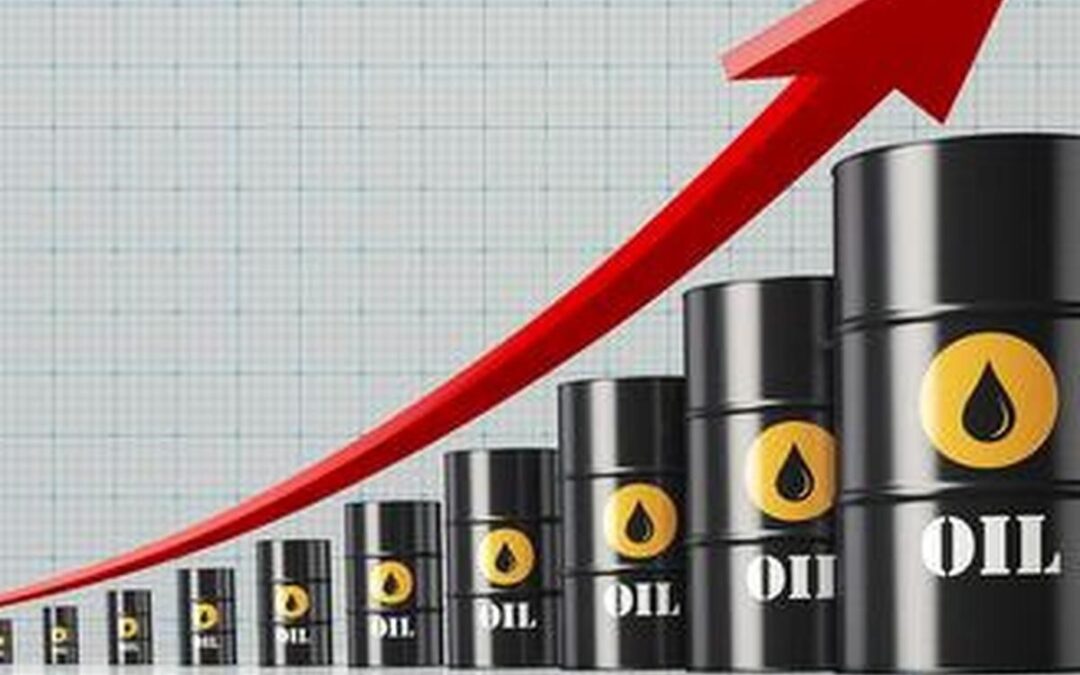
Global oil prices opened the week with strong gains, holding firmly above the $100-per-barrel mark as escalating tensions in West Asia continue to disrupt supply routes and shake market confidence.
In early Monday trading, US benchmark West Texas Intermediate (WTI) jumped 1.86% to $113.62 per barrel, while North Sea Brent crude rose 1.16% to $110.30—bringing it close to the $111 level.
The rally comes amid intensifying friction between the United States and Iran, particularly over the strategic Strait of Hormuz, a vital artery for global energy shipments. US President Donald Trump has issued a deadline for Iran to halt hostilities and restore free movement through the strait, warning of potential strikes on key Iranian infrastructure if demands are not met.
In a social media post, Trump described Tuesday as a decisive moment, hinting at possible attacks targeting power plants and bridges. He later told Fox News there was still a “good chance” Iran might agree to a deal before the deadline.
Markets had already reacted sharply ahead of the weekend. On Thursday, both major crude benchmarks posted their steepest gains since 2020 in highly volatile trading. WTI surged more than 11%, while Brent climbed nearly 8%, after signals that US-led strikes on Iran could continue.
Further adding to the supply outlook, the Organisation of the Petroleum Exporting Countries (OPEC) announced a production adjustment of 206,000 barrels per day starting May 2026. The decision followed a virtual meeting of key OPEC+ members, including Saudi Arabia, Russia, Iraq, the UAE, Kuwait, Kazakhstan, Algeria, and Oman, to reassess market conditions.
At the heart of the crisis is the Strait of Hormuz, which remains effectively under Iranian control since the conflict began on February 28. The chokepoint is critical, handling roughly 20% of the world’s oil and gas flows. Disruptions here have severely impacted exports from major producers such as Iraq, Saudi Arabia, Qatar, Kuwait, and the United Arab Emirates.
With supplies constrained, refiners are increasingly turning to alternative sources, including shipments from the United States and the North Sea. As the conflict enters its sixth week, fears of prolonged disruption continue to push prices higher, raising concerns about inflation and broader economic instability worldwide.