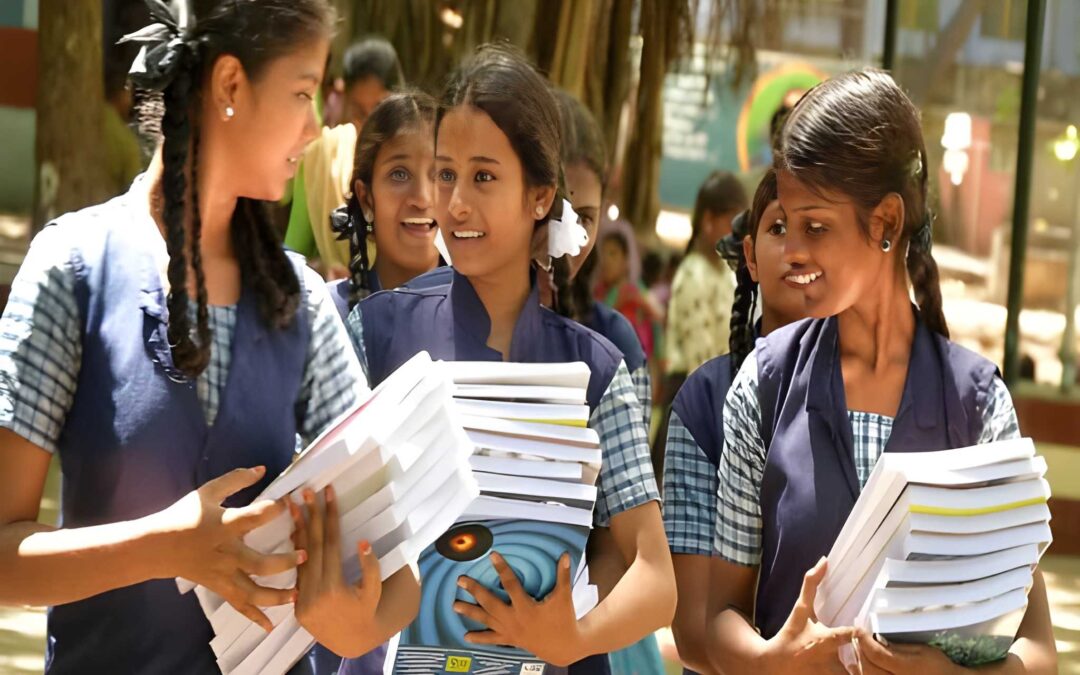
The Odisha Cabinet, chaired by Chief Minister Mohan Charan Majhi, has approved 16 proposals across 11 departments, including free textbooks for approximately 28.7 lakh students and a ₹500-crore programme to strengthen urban drainage and reduce flooding.
Chief Secretary Anu Garg announced the decisions following the Cabinet meeting, stating that the approved proposals would be implemented soon.
Free Textbooks for Classes 9 and 10
Under the expanded textbook scheme, students in Classes 9 and 10 at government and government-aided secondary schools will receive free textbooks, except those already covered under existing provisions for Scheduled Caste and Scheduled Tribe students.
The scheme will run for five years, from 2025-26 to 2029-30, with an estimated outlay of ₹284.07 crore. It aims to reduce the financial burden on economically weaker families, improve enrolment in government schools, lower dropout rates and encourage students to continue from elementary to secondary education.
The School and Mass Education Department will establish a system to verify beneficiary information and ensure textbooks reach schools before each academic session. Procurement, printing, transportation and distribution will follow competitive and transparent procedures under applicable financial and procurement rules.
The decision comes amid controversy over errors in textbooks supplied by the department. More than 1,600 mistakes, including spelling errors and incorrect names of prominent personalities, were reportedly identified across 55 textbooks.
₹500 Crore to Improve Urban Drainage
The Cabinet also approved the Urban Storm Water Drainage Management and Improvement Programme, which will receive ₹500 crore from state resources over five years, from 2026-27 to 2030-31.
The programme will cover urban local bodies and selected block headquarters. Planned interventions include desilting existing drains, constructing reinforced cement concrete stormwater drains, covering drains where required, restoring natural drainage channels and connecting them to suitable water bodies.
The initiative aims to improve drainage capacity, reduce waterlogging and localised flooding, promote groundwater recharge and strengthen climate-resilient urban development.
Disaster Recovery Data Centre in Keonjhar
Another major approval concerns the establishment of a Disaster Recovery-cum-Data Centre in Keonjhar to protect government data and maintain essential digital services during major disruptions, including cyclones and earthquakes.
The Odisha State Data Centre in Bhubaneswar currently hosts critical government applications, databases and platforms supporting services for citizens, businesses and government departments.
The proposed Keonjhar facility will serve as a backup centre, allowing essential services to continue if the Bhubaneswar facility suffers a major disruption. Chief Secretary Garg noted that the two locations are situated in different seismic zones, providing an additional layer of protection.
The project is estimated to cost more than ₹176 crore, comprising ₹154 crore in capital expenditure and ₹22.83 crore in operational expenditure over five years. Of this, ₹162.83 crore has been provided through the Fifth State Finance Commission grant-in-aid.
₹105-Crore Water Storage Project in Bolangir
The Cabinet also approved a ₹105-crore tender for an in-stream water storage project on the Tel river at Tustapali village in Bolangir district.
The project is expected to strengthen water security and help address persistent water shortages in the drought-prone district.
Other approved proposals cover departments responsible for fisheries and animal resources, industries, skill development, technical education, finance, information technology, agriculture, housing and urban development, revenue and disaster management, and water resources.
The decisions span education, urban infrastructure, digital resilience and water security, with implementation scheduled across the respective departments and approved project timelines.