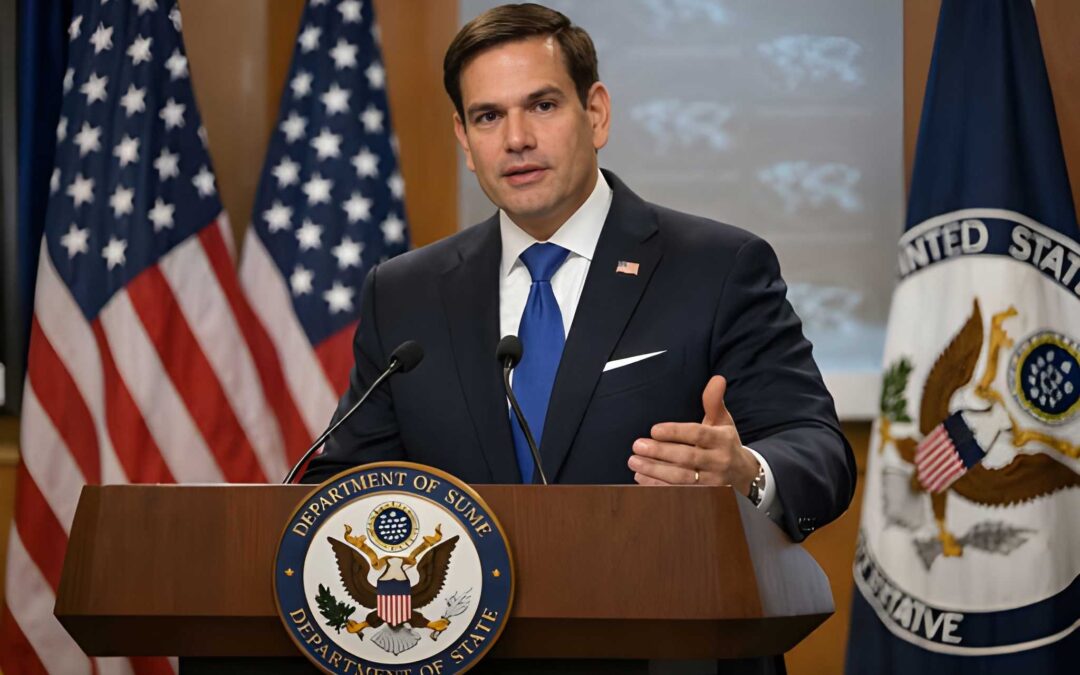
US Secretary of State Marco Rubio has defended President Donald Trump’s “America First” foreign policy, saying Washington must prioritise American national interests over international institutions and the existing global order while using diplomacy to manage differences with allies.
In an interview with Breitbart News at the State Department on October 15, Rubio dismissed criticism of the approach, describing it as a matter of common sense. His remarks followed Trump’s address to the United Nations General Assembly, where the president emphasised using American power to advance US interests.
“I think at its core everyone understands that our foreign policy—which is what I can speak about—has to be about what is good for America,” Rubio said.
He argued that governments should pursue policies that serve their own national interests, adding that diplomacy allows countries to manage disagreements when their priorities differ.
Rubio explains ‘America First’ approach
Rubio said critics often portrayed the phrase “America First” negatively, arguing that politicians would find it difficult to win elections by promising to place their country second or third.
He challenged opponents of the policy to explain why American foreign policy should prioritise other countries over the United States.
The secretary of state maintained that putting American interests first could also benefit allies and other nations, particularly when their objectives align with those of Washington.
He said the administration would rely on diplomatic engagement when US interests differed from those of its partners.
Rubio described the policy as an effort to direct American foreign policy and international engagement towards outcomes that benefit the country.
US interests take precedence over global institutions
Rubio said the Trump administration would no longer place international institutions or the broader global order ahead of American national interests.
“We’re not against any of those things. We’re just not going to put them ahead of American interests anymore,” he said, referring to the United Nations and the wider international system.
He also criticised foreign policy commentators and think tanks that have opposed the administration’s approach, arguing that following their recommendations could have weakened the United States’ position as a global power.
“If we had listened to them, I mean, at this point, America would be a middle power,” Rubio said.
His remarks underline the administration’s emphasis on using the United States’ economic, military and cultural influence to advance national priorities, while pursuing cooperation with allies where interests overlap.
The interview provided further insight into the Trump administration’s foreign policy outlook, which places national interests at the centre of international engagement and treats diplomacy as a means of managing competing priorities.