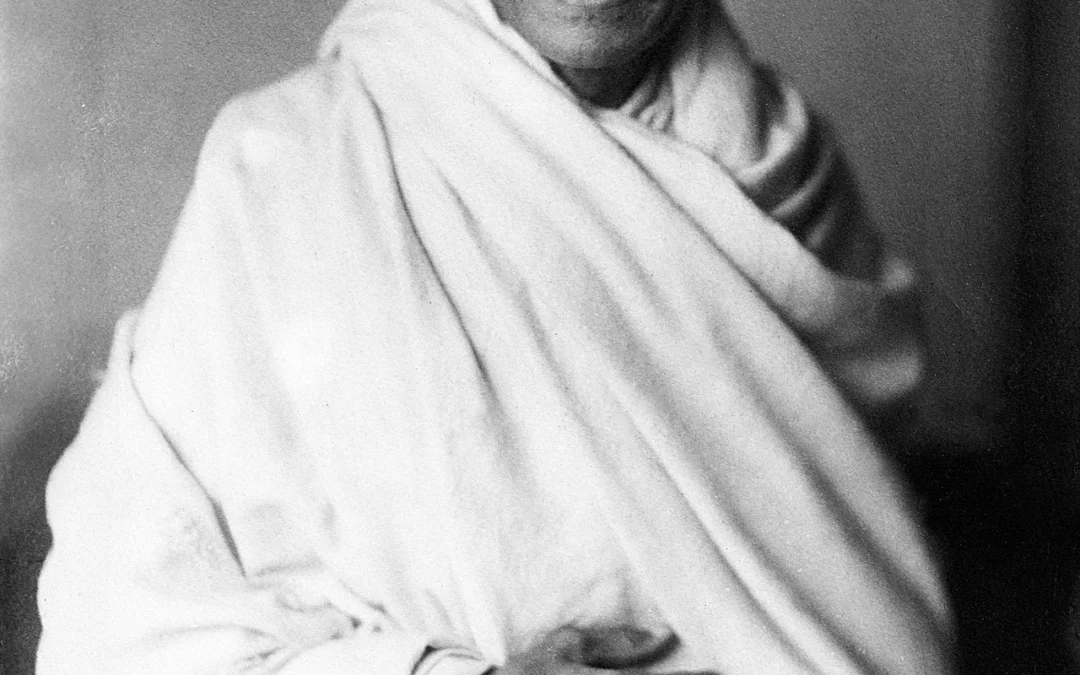
Mahatma Gandhi is often remembered for his principles of non-violence, self-reliance and simplicity, but his experiments with food and health were another important part of his philosophy. Long before many modern dietary trends became popular, Gandhi wrote extensively about vegetarianism, fasting, whole grains, sugar and the role of food in maintaining health.
His writings, including Diet and Diet Reforms, The Moral Basis of Vegetarianism and Key to Health, document his personal experiments with diet and the conclusions he drew from them. While some of his views reflected the scientific understanding of his time and should be considered in that historical context, several of his observations continue to resonate with modern discussions about nutrition and healthy living.
From vegetarianism to conscious eating
Gandhi’s commitment to vegetarianism began partly as a promise to his mother, whom he had assured that he would not eat meat while in England. Initially, however, maintaining that commitment was difficult because of social pressure and the limited availability of vegetarian food.
His perspective changed after discovering a vegetarian restaurant that also sold books. There, he came across Henry Salt’s A Plea for Vegetarianism. Gandhi read the book from beginning to end and later wrote that it was from that point that he became a vegetarian by choice rather than simply by obligation.
His approach to food gradually became an exercise in discipline and self-observation. He experimented with different foods and eating habits, recording his experiences and reflecting on how they affected his health and wellbeing.
Fasting and physical activity
Fasting was another major part of Gandhi’s approach to health. He regarded periods without food as a way of giving the digestive system a rest and practised fasting repeatedly throughout his life. Some of his fasts lasted for several weeks and were also used as forms of political protest.
Gandhi also remained committed to walking despite his frail appearance and frequent fasts. His extensive walking became an important part of his daily routine and political life, illustrating his belief in simple forms of physical activity.
Reducing sugar and choosing traditional alternatives
Gandhi was critical of excessive consumption of refined sugar and preferred jaggery, or gur. In his writings, he argued that jaggery retained nutritional qualities that were lost during the refining of sugar.
He also reduced sweets and condiments and gave up tea and coffee as a regular part of his diet, choosing cocoa instead.
While modern nutritional science provides a more nuanced understanding of sugar and jaggery, Gandhi’s broader emphasis on moderation and reducing dependence on highly refined foods remains relevant to contemporary conversations about diet.
The value of whole grains
Gandhi strongly opposed the excessive processing of grains. He argued that removing the bran from wheat resulted in a significant loss of nutritional value and praised the use of whole-wheat flour ground in traditional household mills.
He similarly expressed reservations about polished and highly processed grains, favouring foods that retained more of their natural components.
His emphasis on whole grains closely resembles the modern preference for minimally processed foods, although the nutritional claims made in his writings should be understood alongside current scientific evidence.
His complicated relationship with milk
Gandhi’s experiments with diet also included periods when he avoided milk. He believed that it might be possible to maintain good health without consuming milk or ghee through an appropriately balanced vegetarian diet.
However, he acknowledged the limits of his own experiments. He wrote that although he personally believed milk could potentially be avoided, he was not prepared to recommend eliminating it for everyone because he had not yet established a vegetarian combination that could reliably provide the benefits attributed to milk.
That qualification is significant: Gandhi frequently treated his dietary practices as experiments rather than universal prescriptions.
A philosophy of moderation and self-experimentation
Gandhi’s writings on food reveal an approach that went beyond individual ingredients. He viewed eating as part of a broader discipline involving moderation, self-control, simplicity and awareness of one’s physical needs.
Some of his specific nutritional claims do not align with modern scientific understanding, and his dietary practices should not be treated as medical or nutritional prescriptions. Yet his willingness to question established habits, observe the effects of his choices and adapt his practices offers a lasting lesson.
For Gandhi, food was not simply about satisfying hunger. It was closely connected to discipline, ethics, health and the way a person chose to live.