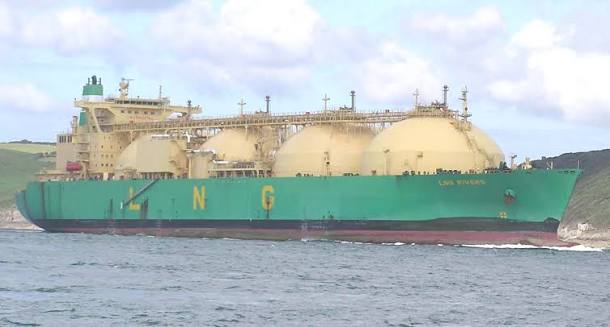
Demand for seaborne LNG demand is expected to grow significantly, mainly as a result of the EU’s future needs. In its latest weekly report, shipbroker Intermodal said that “the European gas market is heading into the winter heating season against a challenging backdrop, shaped by relatively low inventories, constrained Middle Eastern LNG availability in view of the phase-out of Russian gas. EU gas storage currently stands at around 71%, compared with a five-year seasonal average of about 86%, leaving the market with a considerably thinner buffer heading into winter. The phase-out will advance from 1 January 2027, when long-term Russian LNG imports are due to be prohibited, followed by remaining pipeline imports at the latest 1 November 2027. At the same time, the US is taking a growing share of Europe’s LNG supply, accounting for around 58% of EU imports in 2025 and about 62% so far in 2026, according to LSEG”.
According to Intermodal’s Head of Research Department, Mr. Nikos Tagoulis, “that exposure has been amplified by persistent strain in global LNG supply, as Middle East disruptions curtail Qatari exports and QatarEnergy extends force majeure on deliveries to several term buyers into the winter period. In parallel, the company has turned to US LNG to cover the resulting shortfall, buying replacement cargoes and discussing further purchases to honour its contractual commitments. Prolonged weakness in Qatari output is therefore tightening the market from both sides: fewer volumes are available, while QatarEnergy’s own buying is adding fresh demand for the very flexible cargoes on which Europe relies”.
“US LNG has consequently become important not only to Europe’s own gas balance, but also as a source of flexibility when disruptions emerge. The gradual removal of Russian gas from the European energy mix is increasing the call on alternative LNG suppliers. In Asia, however, current competition for uncommitted volumes has been less intense than the tight market might suggest. With spot LNG expensive and coal offering a cheaper option for power generation, the more price-sensitive Asian importers have adopted a wait-and-see approach, limiting purchases in the hope that prices will ease, although some markets, such as South Korea, still need to replenish inventories. This hesitancy is giving European buyers more room to attract flexible cargoes as they seek to rebuild storage. As Europe becomes more reliant on US LNG, energy security is taking on greater relevance within the broader transatlantic framework. While it is unlikely to determine policy on its own, the growing importance of US supply adds another consideration to Europe’s strategic calculus, particularly as potential friction with Washington could carry higher economic and energy-security costs. LNG is therefore becoming not only a commercial issue, but also a more significant component of Europe-US strategic ties”, Mr. Tagoulis said.
He added that “at the same time, Europe is looking to broaden its LNG supply base over the longer term, with Canada emerging as a potential new source. The proposed Ksi Lisims LNG project in British Columbia, with initial export capacity of around 6 mtpa targeted for 2029, has already attracted interest from German buyers including SEFE and Uniper, while France has also signalled interest in future Canadian LNG supply. With deliveries expected to build from the early 2030s, these developments underline Europe’s broader effort to diversify its LNG portfolio and reduce concentration over time”.
“For LNG shipping, the key factor will be the arbitrage between Europe and Asia. A sufficiently wide Asian premium to offset the higher costs of the longer voyage would encourage more US cargoes to head east, supporting tonne-mile demand, while stronger European pricing would favour shorter-haul Atlantic trades. At the same time, the phase-out of Russian LNG imports could provide additional support to ton-mile demand as Europe replaces nearby Russian volumes with cargoes sourced from more distant suppliers. With Europe needing to rebuild storage and price-sensitive Asian buyers holding back amid elevated prices, more US cargoes could be drawn to the Continent, particularly if alternative supply remains constrained”, Intermodal’s analyst said.
“In these market conditions, Europe increasingly depends on its ability to compete for flexible LNG cargoes amid constrained supply. Low inventories, reduced Qatari availability and the phase-out of Russian volumes are reinforcing the role of US LNG in the European balance, while Asian importers could return to the market more actively during the winter heating season, or should prices retreat. With LNG crucial to Europe’s energy security, growing reliance on US supply increases concentration risk, while also adding a new strategic dimension to transatlantic diplomacy”, Mr. Tagoulis concluded.