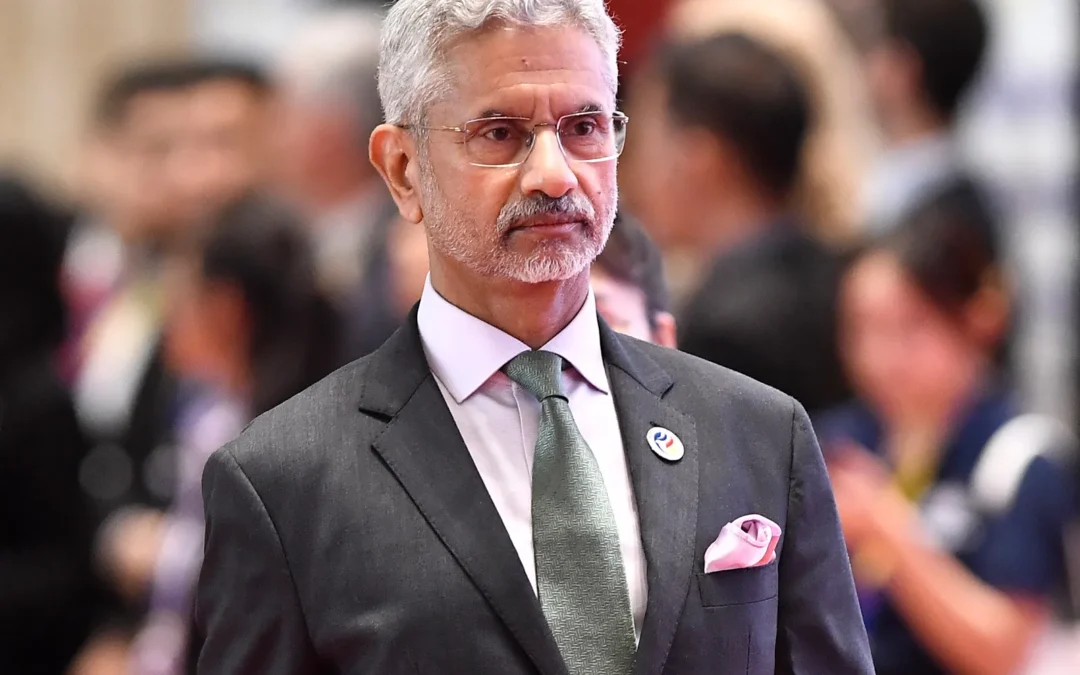
External Affairs Minister S Jaishankar has called for urgent reforms in multilateral institutions to reflect the changing global order, emphasising that cooperation among smaller groups of countries could help advance the process.
Speaking at the Middle East edition of the Raisina Dialogue in Abu Dhabi, Jaishankar joined UAE Deputy Prime Minister and Foreign Minister Sheikh Abdullah bin Zayed Al-Nahyan for a discussion titled The World Ahead: Power, Purpose & Possibility.
Highlighting the accelerating pace of global change, Jaishankar said the evolving international environment was being shaped by both long-term trends and immediate disruptions. These developments were prompting countries to explore new partnerships and strategic alternatives suited to their circumstances.
He stressed the need for countries to move beyond traditional approaches and strengthen their strategic awareness. “The reform of multilateralism is urgent. It can be supported through stronger minilateralism,” he said in a social media post following the discussion.
Minilateralism refers to cooperation among a small group of countries to address specific challenges, often enabling more focused action when larger multilateral institutions struggle to reach a consensus.
Jaishankar cited the India-UAE partnership over the past decade as an example of how countries could respond to changes in the global environment through closer cooperation.
Jaishankar Holds Bilateral Talks with UAE Foreign Minister
Separately, Jaishankar held a bilateral meeting with Sheikh Abdullah bin Zayed Al-Nahyan, describing the discussions as “warm and productive”.
The two leaders exchanged views on bilateral and global issues in keeping with the Comprehensive Strategic Partnership between India and the UAE.
Jaishankar arrived in the UAE for a three-day official visit aimed at reviewing progress in bilateral relations and strengthening cooperation between the two countries.
India-UAE Ties Expand Across Key Sectors
India and the UAE have strengthened cooperation in trade, investment, energy, defence and security in recent years. The Comprehensive Economic Partnership Agreement, which came into force in May 2022, has provided a framework for expanding bilateral trade and economic engagement.
The UAE remains an important partner for India in the Gulf region, serving as a significant source of energy supplies and investment while hosting a large Indian expatriate community.
According to the Embassy of India in Abu Dhabi, Indian nationals constitute the largest expatriate community in the UAE, accounting for approximately 35% of the country’s population. The Indian population residing in the UAE was estimated at 4.3 million in 2024.
Around 15% of the Indian diaspora in the UAE lives in Abu Dhabi, while the remainder is spread across the other six emirates, including Dubai.
Among Indian states, Kerala accounts for the largest representation in the UAE, followed by Tamil Nadu, Andhra Pradesh and Telangana. Significant communities from Uttar Pradesh, Bihar, Punjab and other states also reside in the country.