Italy is preparing to deploy warships to protect its commercial vessels travelling through the Bab el-Mandeb Strait, as growing Houthi control over the key Red Sea chokepoint threatens international shipping and has squeezed Saudi Arabia’s ability to use the route as an alternative pathway for oil exports. According to Al Jazeera, Italian Defence Minister Guido Crosetto said Rome would move ahead with measures to safeguard its merchant vessels rather than wait for the European Union to reach a joint decision. He warned that allowing the strategic waterway to become impassable could have serious consequences for the global economy.
“We have the capabilities to protect the passage,” said Crosetto, arguing that Italy could not allow bureaucratic delays in decision-making to worsen an already volatile situation.
The planned Italian deployment comes as the Iran-backed Houthi movement has expanded its hold over Yemen’s western Red Sea coastline, including strategically important territory and islands around the Bab el-Mandeb. The group’s growing presence has raised concerns over the safety of commercial vessels and the movement of energy supplies through the waterway.
For Saudi Arabia, the developments are particularly significant. Riyadh has increasingly relied on the Red Sea as an alternative export corridor after disruption around the Strait of Hormuz, using pipelines to transport crude towards its Red Sea ports before sending tankers through Bab el-Mandeb to international markets.
That makes Bab el-Mandeb one of the remaining critical routes for Gulf oil reaching consumers outside the region. Greater Houthi control of the waterway therefore threatens to further restrict Saudi Arabia’s options for moving crude at a time when the kingdom is already facing severe disruption to its traditional export routes.
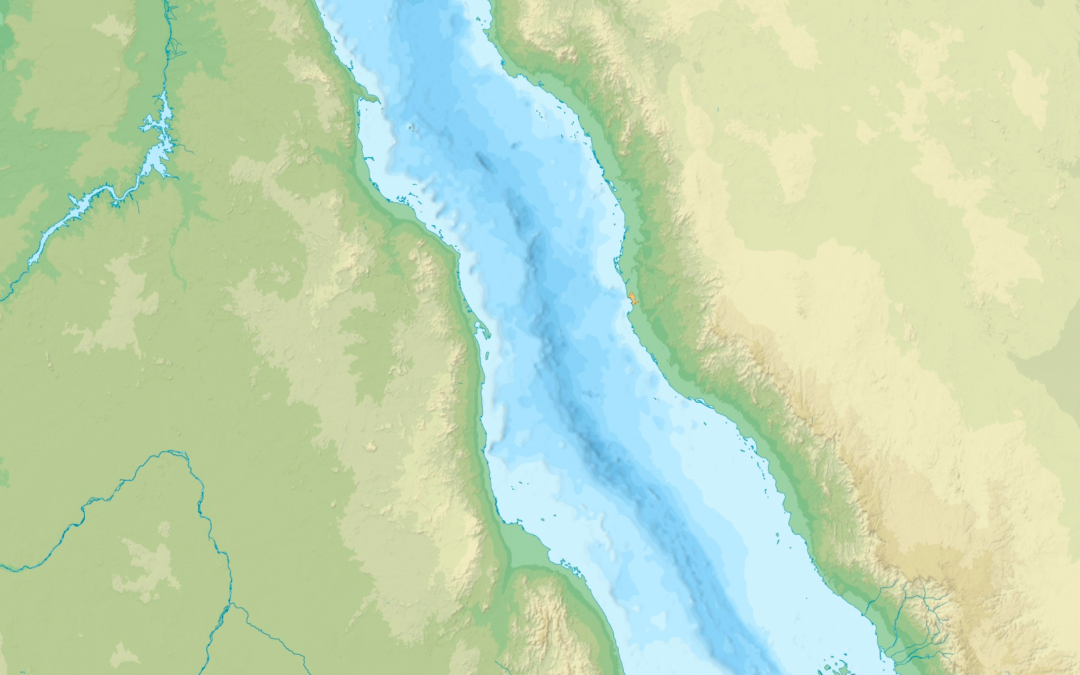
The strait connects the Red Sea with the Gulf of Aden and forms an important maritime link between the Indian Ocean, the Suez Canal and European markets. It is one of the world’s key shipping chokepoints, carrying energy shipments, container vessels and other commercial traffic between Asia and Europe.
The narrow passage lies between Yemen on one side and Djibouti and Eritrea on the African coast. At its narrowest point, it is only around 30 kilometres wide, making control of the surrounding coastline and islands strategically important for anyone seeking to influence maritime traffic.
The latest escalation follows a rapid Houthi offensive that has expanded the group’s control along Yemen’s Red Sea coast. Its capture of strategically located islands, including Mayun in the Bab el-Mandeb, has strengthened its position around the waterway and increased concerns over its ability to disrupt shipping.
Even the African Union Commission has condemned attacks on the Red Sea shipping routes. According to AL Jazeera, the African Union Commission has expressed “particular concern over reports of attempted attacks targeting Makkah and other holy cities of the Kingdom of Saudi Arabia”.
The organisation also emphasised that the security of the Red Sea and the Bab al-Mandeb strait was “a major strategic interest for Africa, particularly for the States of the Horn of Africa and the Red Sea littoral States”.
The commission joined a number of other states, global organisations, and individuals that also came forward to condemn ongoing attacks.
The issue has become even more important following the disruption of shipping through the Strait of Hormuz earlier this year amid the war involving Iran and the US. With Gulf oil producers seeking alternative ways to reach global markets, the security of Bab el-Mandeb has assumed greater importance.
The move also underlines the growing difficulty of securing one of the world’s busiest maritime corridors. The US and European countries have previously conducted military operations to protect commercial shipping from Houthi attacks, but the latest expansion of Houthi territorial control has renewed questions about whether existing measures can keep the route open.
Any prolonged disruption to Bab el-Mandeb could have consequences far beyond the region. Ships unable to safely use the Red Sea route may have to travel around the Cape of Good Hope, adding thousands of kilometres to journeys between Asia and Europe and increasing fuel, insurance and freight costs.
For Saudi Arabia, meanwhile, the stakes are particularly high. With its alternative oil-export infrastructure increasingly dependent on access to the Red Sea, sustained Houthi pressure around Bab el-Mandeb could further narrow Riyadh’s options for getting its crude to international buyers.
Source: Moneycontrol