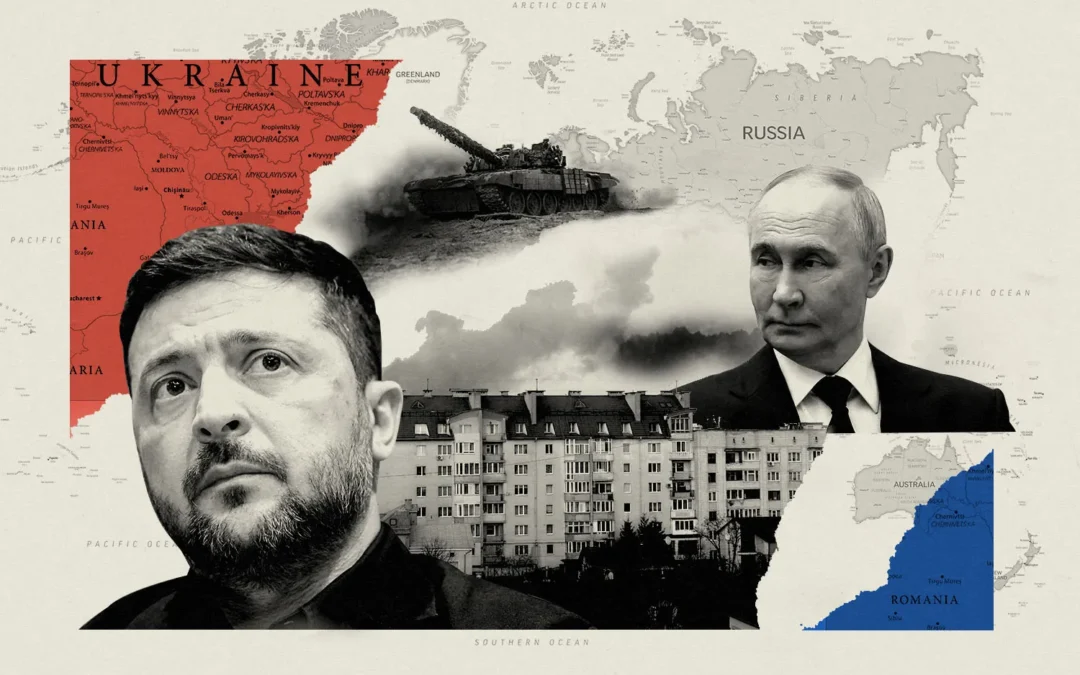
India appears to be moving beyond its long-standing call for dialogue and diplomacy between Russia and Ukraine, with External Affairs Minister S Jaishankar indicating that New Delhi is becoming more actively involved in efforts to find a path towards ending the conflict.
Speaking at the Munich Leaders Meeting on Sunday, Jaishankar said India had been advocating dialogue for years but had recently become more involved in efforts to help address some of the immediate concerns shared by Russia and Ukraine.
“We would like to see an end to this conflict. This will require dialogue and diplomacy. We have been advocating it for many years, and in recent months we have got a little bit more involved beyond advocacy,” Jaishankar said.
He added that India was maintaining conversations with both Moscow and Kyiv and was attempting to play a constructive role, beginning with the issue of shipping safety in the Black Sea.
According to Jaishankar, some of the areas India is examining include grain exports, energy exports and possibilities for preventing further attacks.
The comments indicate a potential shift in India’s approach. While New Delhi has consistently supported dialogue and backed international efforts aimed at ending the Russia-Ukraine war, it has traditionally stopped short of presenting itself as a formal mediator or putting forward a distinct peace framework.
That position may now be evolving. Both Russia and Ukraine have indicated in recent days that India has shared ideas and proposals aimed at helping bring the conflict to an end.
During his visit to Ukraine last month, Jaishankar had said India was discussing ideas that could potentially contribute to a cessation of hostilities. His remarks followed Prime Minister Narendra Modi’s message to Russian President Vladimir Putin calling for an end to the “endless war.”
On Friday, Putin said Modi had very good ideas for peace. Ukraine’s Foreign Minister Andrii Sybiha also said India had presented the “broadest” peace proposal among four proposals Kyiv had received from different countries, including the United States.
India’s increasing involvement comes against the backdrop of the wider economic and strategic consequences of the conflict. The war has disrupted commercial shipping through the Black Sea and affected global energy and food supply chains. India has also faced pressure from the United States over its continued purchases of Russian crude oil.
At the same time, New Delhi’s relationship with Moscow remains shaped by decades of strategic ties.
Jaishankar reiterated that Russia had stood by India during periods when the country faced threats to its security and territorial integrity, arguing that this history continues to influence India’s relationship with Moscow.
“At a time when much of the world preferred backing a military regime next to us (Pakistan), Russia was a country with which our relations were very good, and we are shaped in many ways by that legacy,” he said.
Jaishankar also addressed the changing balance of global power, pointing to what he described as a significant repositioning of the United States and the growing influence of China.
He said the international system had historically been heavily supported by the United States but that this role was now weakening.
“The current system was significantly underwritten by the United States. That underwriting is diluting. There are gaps which have emerged,” he said.
According to Jaishankar, the intensifying competition between Washington and Beijing extends beyond the two powers themselves and is affecting countries around the world.
“It has led to weaponization of any leverage that any country has. And that competition coexists with the complexity of interdependence,” he said.
India’s evolving engagement with both Russia and Ukraine places New Delhi in a potentially significant diplomatic position as efforts to end the war continue. For now, the government has indicated that its focus is on maintaining dialogue with both sides and exploring practical areas where tensions can be reduced.