As former U.S. President Donald Trump escalates his rhetoric against BRICS, threatening 100% tariffs for allegedly undermining the dollar, India has reaffirmed its stance as a founding member while distancing itself from any de-dollarization efforts.
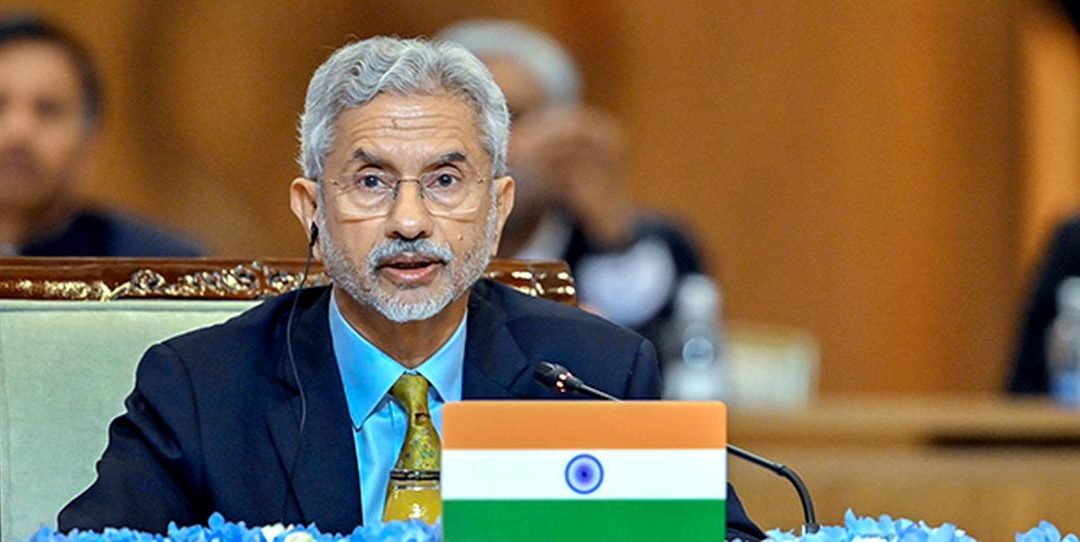
In a statement to Parliament, External Affairs Minister S. Jaishankar defended BRICS, emphasizing that the bloc reflects the shared concerns of its members and aims to make global leadership and discussions more representative and inclusive.
“BRICS has expanded in both membership and agenda over the last two decades. Our goal is to enhance international understanding of BRICS activities,” Jaishankar stated in response to a written query in the Lok Sabha regarding Trump’s tariff threats.
India’s Position on BRICS and the Dollar
While India remains committed to BRICS, it has made clear that it is not involved in any initiative to weaken the dollar or introduce a common BRICS currency. Jaishankar reiterated that targeting the dollar is not part of India’s economic or strategic policy and that New Delhi has conveyed this position to Washington in multiple bilateral engagements.
“As nations at different levels of development and income, BRICS members naturally hold diverse views on contemporary global issues,” Jaishankar noted, responding to concerns about Trump’s stance. However, he stressed that the group remains united by its commitment to multipolarity and cooperative engagement on global challenges.
BRICS Growth and Global Engagement
Trump recently dismissed BRICS as “dead” following his tariff warnings. However, Jaishankar highlighted the steady progress of the bloc since its establishment in 2006. Initially comprising Brazil, Russia, India, and China, BRICS expanded to include South Africa in 2010 and now consists of 11 full members and 9 partner nations.
“The growing membership and increasing interest from aspiring countries underscore BRICS’ status and significance,” Jaishankar said. He also outlined key issues the bloc is addressing, including United Nations Security Council (UNSC) reforms, global economic cooperation, and counterterrorism—a priority repeatedly emphasized by Prime Minister Narendra Modi.
BRICS and Global Political Issues
Beyond economic matters, BRICS regularly engages in discussions on geopolitical challenges. Jaishankar noted that the group has deliberated on various regional issues, including the peaceful resolution in Afghanistan, the humanitarian crises in Sudan and Haiti, the situation in Lebanon, the war in Ukraine, and a permanent ceasefire in Gaza.
India continues to use the BRICS platform to advocate for its key concerns while ensuring its independent stance on global financial policies.