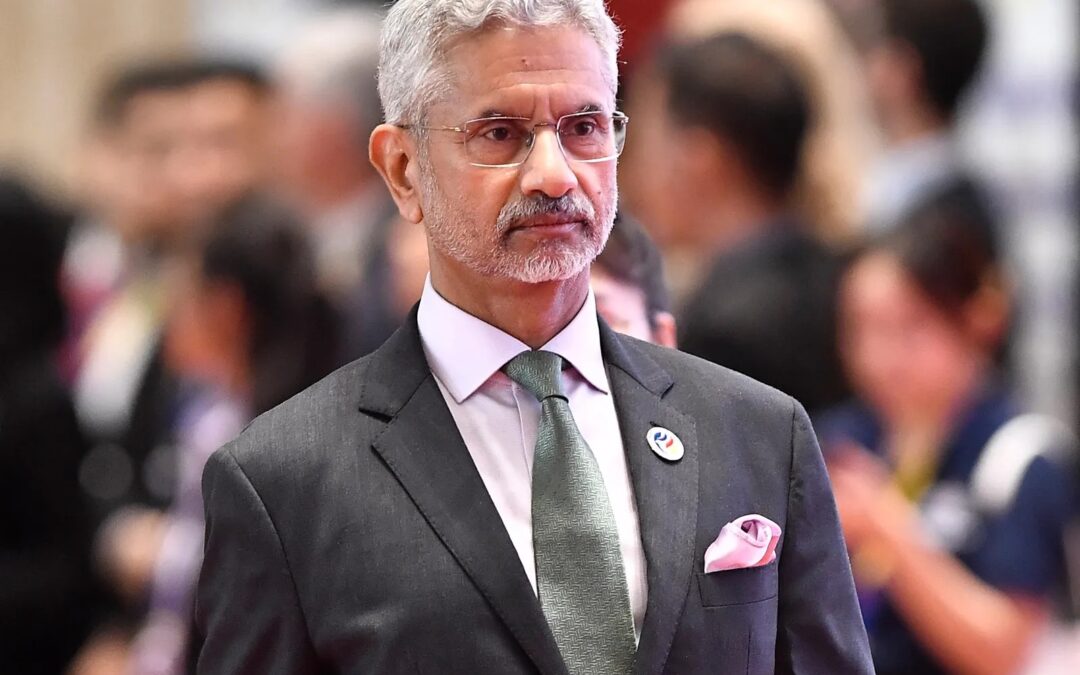
The government on Wednesday dismissed suggestions that Pakistan had gained diplomatic leverage by offering to mediate between Iran and the United States, with External Affairs Minister S. Jaishankar asserting that India does not see itself as a “broker nation.”
Speaking at an all-party meeting convened by the Centre, Jaishankar said India’s approach is guided by its own national interests and longstanding diplomatic principles. “India cannot be a broker nation,” sources quoted him as saying, while also noting that Pakistan has historically inserted itself into geopolitical conflicts.
He cited past instances, including Pakistan’s role as an intermediary between the US and China in 1971, and between the US and Iran in 1981, to put recent developments in context. Government sources clarified that the remarks were not intended as criticism of Pakistan’s current position, but rather as a reflection of historical precedent.
Jaishankar also briefed leaders on Prime Minister Narendra Modi’s recent conversation with Donald Trump, during which Modi said that the ongoing conflict is impacting all sides and stressed the need for a swift resolution.
Reiterating India’s foreign policy stance, Jaishankar said the country continues to follow a policy of multi-alignment and maintains strong ties with Iran, even amid the evolving regional tensions.
He also flagged uncertainty around the structure and future of US-Iran talks, including ambiguity over who would represent Tehran in negotiations. In particular, he pointed to the sudden emergence of Iranian Parliament Speaker Mohammad Bagher Ghalibaf as a key negotiator.
The meeting, chaired by Defence Minister Rajnath Singh, saw participation from leaders across the political spectrum. Opposition members, including Mukul Wasnik, John Brittas, Asaduddin Owaisi, Supriya Sule, and Sanjay Singh, raised concerns ranging from India’s diplomatic positioning to energy security and recent geopolitical developments.
Some opposition leaders questioned the timing of Modi’s visit to Israel ahead of the conflict, while also raising concerns over India’s stance on developments in Iran and the potential impact on oil and gas supplies.
Responding to these concerns, Petroleum Minister Hardeep Singh Puri assured participants that India has sufficient reserves of petrol and diesel and is actively securing alternative sources of supply.
Other senior ministers present included Home Minister Amit Shah, Finance Minister Nirmala Sitharaman, and Parliamentary Affairs Minister Kiren Rijiju.
The Trinamool Congress was the only major opposition party to skip the meeting, reiterating its demand for a full discussion in Parliament.
Following the meeting, Rijiju said the government had clearly outlined its position and addressed opposition concerns, adding that there was broad agreement on the need for unity in the face of evolving global challenges.