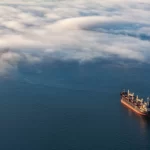
Vessel traffic remains subdued through the Strait of Hormuz as negotiations continue between the US and Iran, but US President Donald Trump said in a social media post that the ceasefire was over.
Hostilities reignited on Thursday after the two nations had previously signed a memorandum of understanding (MoU) and entered a ceasefire.
According to the Strait of Hormuz tracker, a free, real-time dashboard that tracks the ongoing crisis using AI-powered analysis of current Strait conditions, insurance markets and diplomatic developments using real-time web data and AIS data for vessel positions, 34 vessels have transited the Strait over the past 24 hours.
Traffic was at 40-50/day during the ceasefire and was around 150/day prior to the war.
The closure has had significant impact on crude oil and chemical markets as around one-third of global seaborne crude flows and up to 20% of the world’s total oil flows pass through.
The closure has had less impact on container shipping as less than 2% of global container capacity passes through the Strait each year but has contributed to higher rates mostly because of surging bunker fuel prices.
CONTAINER RATES
Rates for shipping containers from east Asia and China to the US continued to rise this week, although at a slightly slower pace.
Spot rates to the West Coast were seen as high as $7,400/FEU (40-foot equivalent unit) and as high as almost $9,000/FEU to the East Coast.
While uncertainty remains around the situation in the Middle East, the main driver for rising container rates is early peak season demand as importers try to get ahead of anticipated tariffs.
The US Trade Representative (USTR) started hearings this week as part of the process required to roll out new Section 301 tariffs before Section 122 tariffs expire on 24 July.
Judah Levine, head of research at online shipping marketplace and platform provider Freightos, said this coming tariff deadline is likely one driver of frontloading and the early peak season start on the transpacific.
Levine said the current supply/demand situation led to successful implementation of 1 July general rate increases (GRIs) and peak season surcharges (PSSs) across the major east-west lanes contributed to a total increase of more than $3,000/FEU on the transpacific trades since the end of May.
“Carriers are adding capacity to the transpacific to service the rush of demand, but some forwarders think frontload-driven demand may already be peaking,” Levine said. “Easing demand, together with capacity additions, could mean that the significant mid-month rate increases planned by some carriers may not take, and prices could even start easing later in the month.”
Peter Sand, chief analyst for ocean and freight rates and analytics firm Xeneta, said rates remain at “extraordinary levels and shippers are still paying multiples of what they were expecting to pay at the start of the year”.
Supply chain advisors Drewry said only three blank sailings have been announced on the transpacific trade route for the next week, reflecting tight capacity.
“A few carriers have announced GRIs in the range of $2,000-3,000/FEU on the transpacific trade route, effective 15 July,” Drewry said, adding that they expect rates to remain elevated in the coming weeks.
Rates on the New York Shipping Exchange Freight Index (NYFI) jumped by 9.9% to the West Coast and by almost 8.5% to the East Coast while rates on the Shanghai Containerized Freight Index (SCFI), which tracks rates for containers leaving Shanghai, fell by 2.7% after rising for each of the previous 10 weeks.
Container ships and costs for shipping containers are relevant to the chemical industry because while most chemicals are liquids and are shipped in tankers, container ships transport polymers, such as polyethylene (PE) and polypropylene (PP), which are shipped in pellets. Titanium dioxide (TiO2) is also shipped in containers.
They also transport liquid chemicals in isotanks.
TANKER RATES
US chemical tanker freight rates assessed by ICIS were steady to lower this week as prices continue to face downward pressure on several trade lanes.
There is downward pressure on rates along the USG-ARA trade lane as charterers are still in wait-and-see mode. Besides contract cargoes, there is very little seen in the market. The tariffs and looming uncertainty continue to dampen the spot market, pressuring rates.
Overall, the market has slowed dramatically as demand for any additional product in the region has all but stopped. However, a handful of caustic soda, styrene and ethanol was seen quoted in the market.
On the other hand, rates from the USG to Asia and all other trade lanes held largely steady. The previous uptick in activity, which resulted from the recent ceasefire in the Middle East conflict, appears to have stalled following an escalation in hostilities during the week, and the market to Asia fell flat. As a result, this route remained quiet this week, which has placed downward pressure on freight rates.
There have only been a few cargoes fixed, as a few more outsiders have come on berth and are working to fill space, which has led to more competition for regular owners. Methanol and caustic soda are the most frequently reported in the market.
The USG to Brazil trade lane remains unusually quiet and in turn, rates are facing downward pressure. Although availability for prompt space seems to be somewhat tight, there is plenty of open space for mid-July into August.
The USG to India route has not seen an uptick in enquiries over the last week with no confirmed fixtures. There were only a few new enquiries of monoethylene glycol (MEG) seen for August dates. Along with the other regions, freight rates are widely viewed as softer.
Source: By Adam Yanelli, Additional reporting by Kevin Callahan, ICIS,