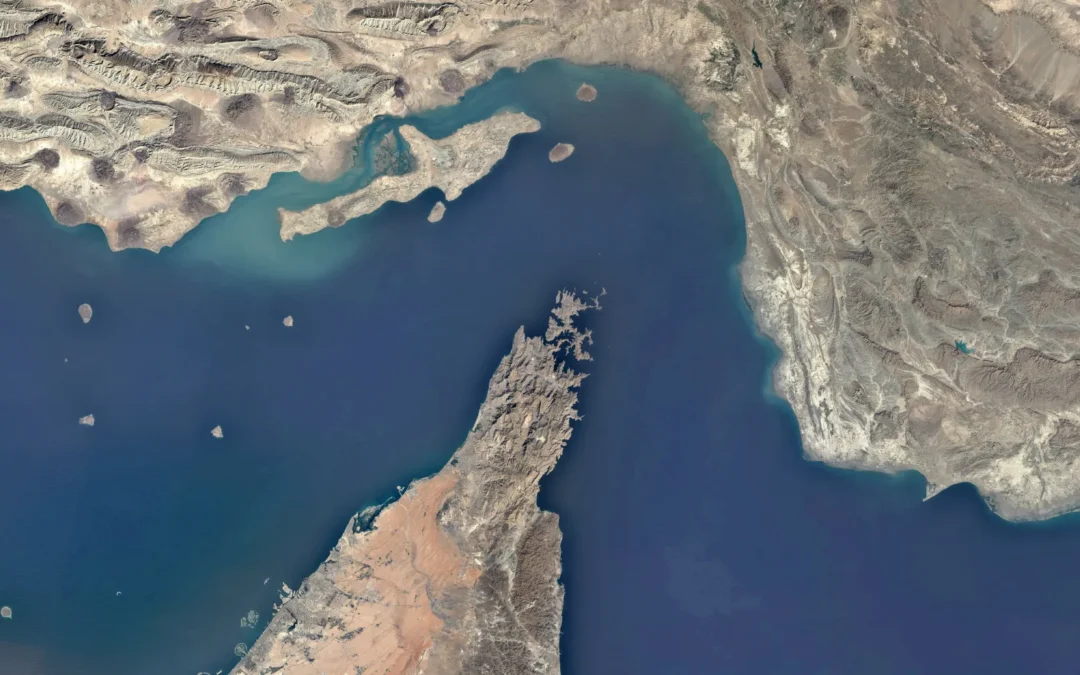
Korean shipyards are reportedly fielding a surge of Suezmax tanker inquiries as the U.S.-Iran conflict reroutes Middle East crude away from the Strait of Hormuz. Shipowners are paying premiums to secure the midsize vessels now carrying the oil on its longer path through the Red Sea and Egypt.
A Suezmax is the largest tanker that can pass through the Suez Canal fully loaded and holds about 1 million barrels of crude, roughly half a supertanker’s cargo.
Tracked flows of crude and petroleum products through Hormuz fell to about 2 million barrels per day as of Aug. 18, down about 89 percent from 18 million before the war, according to the Korea Energy Economics Institute’s weekly oil market report published Tuesday, which cited the commodity analytics firm Kpler.
Hormuz is the main export route for crude from Persian Gulf producers to Asia and Europe, and control of it has been the central dispute of the war. U.S. President Donald Trump continues to demand Iran’s surrender, and U.S. Central Command says the strait is an international waterway that commercial vessels continue to transit.
Mohammad Bagher Ghalibaf, Iran’s parliament speaker and chief negotiator, said Aug. 18 that the strait would stay shut until Washington met its commitments. Ghalibaf listed four conditions: lifting the U.S. blockade of Iranian ports, lifting oil sanctions, releasing Iran’s frozen assets and ending military threats and operations on all fronts.
Saudi Arabia seeks to bypass Hormuz by moving crude from its eastern fields across the country through the East-West pipeline to Yanbu on the Red Sea, but that detour is under pressure of its own. Houthi rebels have extended their threats as far as the Bab el-Mandeb Strait, which has raised the risk of sailing south through the Red Sea.
Saudi shippers are therefore running a northern Red Sea route from Yanbu to Egypt’s Ain Sukhna terminal. Crude unloaded there crosses Egypt through the Sumed pipeline to Sidi Kerir on the Mediterranean coast, where it is reloaded onto tankers for Europe and Asia.
Very large crude carriers (VLCC), which hold about 2 million barrels, have handled much of the Yanbu to Ain Sukhna trade. Fully laden VLCCs, however, can face restrictions in the Suez Canal because of their draft.
The canal permits drafts of up to 20.1 meters (66 feet), with the exact limit depending on a vessel’s beam. Suezmaxes, generally between 120,000 and 200,000 deadweight tons, fit inside those limits even fully loaded, and the change of route has made that ability far more valuable.
Korean shipyards say Suezmax inquiries have risen sharply. The demand is reaching the country’s three largest shipbuilders as well as the midsize yards that specialize in the class.
Daehan Shipbuilding, a major Suezmax builder, had won orders for 17 vessels this year as of the end of July and held a backlog of 36 ships. Industry sources said its 2029 delivery slots are effectively full.
Samsung Heavy Industries won an order for two Suezmax crude tankers from a Turkish owner in late July at about $93 million each. The price was about 7.5 percent above the previous newbuilding price of $86.5 million.
The Greek shipping company Naftomar recently bought a two-year-old Suezmax for $123 million, about 94 percent of the $131 million newbuilding price of a VLCC. In some cases, used tankers are selling for more than comparable new ones — the way a popular used car can outprice a new model.
Owners pay those premiums for speed. An existing vessel can enter service almost immediately, while a newly ordered tanker generally takes more than three years to deliver. With freight rates high, owners would rather pay extra for a ship they can put to work at once.
Shipbuilders expect Suezmax demand to hold up as long as risks persist around Hormuz and Bab el-Mandeb. Continued disruption would force exporters and buyers to keep diversifying routes.
“Right now, how quickly owners can secure a ship matters more than how expensive it is,” an industry source said. “Demand for Suezmax tankers is expected to keep rising for the time being.”
Source: Korea JoongAng Daily