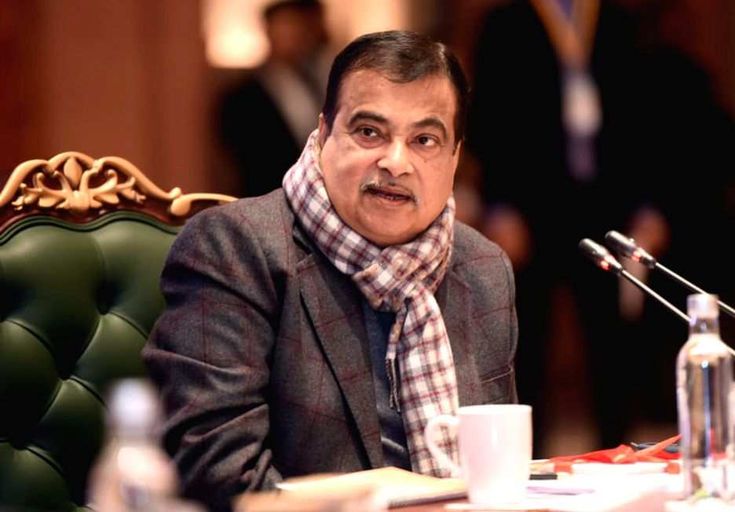
New Delhi: Union Road Transport and Highways Minister Nitin Gadkari has dismissed allegations that his support for India’s ethanol blending programme is driven by personal or family business interests, calling the criticism “politically motivated” and part of a broader misinformation campaign.
Speaking to The Times of India, Gadkari said he has consistently advocated alternative fuels—including ethanol, methanol, hydrogen, and electric mobility—to reduce vehicular pollution and cut India’s dependence on imported crude oil. He maintained that his position has remained unchanged for decades and predates the recent expansion of the ethanol blending programme.
Addressing allegations concerning his family’s business, Gadkari clarified that the sugar factory associated with his family existed long before the ethanol initiative gained prominence. He said the business is managed by his sons, not by him, and that ethanol contributes only around 10% of the company’s overall operations. According to him, the businesses operated by his sons account for less than 0.5% of India’s ethanol sector and carry debts of approximately ₹1,600 crore. He stressed that ethanol procurement and pricing are determined by the Petroleum Ministry and the Union Cabinet, leaving him with no role in those decisions.
The minister also pointed out that India’s ethanol blending programme did not originate under the current government. He noted that the initiative began during the Atal Bihari Vajpayee administration and was later continued by the UPA government, with then Petroleum Minister Mani Shankar Aiyar expressing support for it in Parliament.
Responding to concerns over E20 petrol, Gadkari rejected claims that the fuel damages vehicle engines. He said all vehicles compliant with E10 standards are capable of operating on E20 fuel and noted that no formal complaints regarding engine damage have been received by his ministry. He added that automobile manufacturers, including Maruti Suzuki, have publicly stated that E20 does not harm engines.
Gadkari acknowledged that ethanol-blended fuel may result in a slight reduction in fuel efficiency because ethanol has a lower calorific value than petrol. However, he said the impact is generally negligible during city driving and becomes noticeable mainly during sustained high-speed travel on expressways.
Emphasising the broader objectives of the policy, Gadkari said ethanol blending is intended to lower pollution levels—particularly in cities where vehicular emissions contribute significantly to air pollution—and reduce India’s reliance on imported fossil fuels. He also highlighted the government’s efforts to diversify ethanol production beyond sugarcane by promoting feedstocks such as maize, rice, crop stubble, and bamboo. According to him, these initiatives have benefited farmers while also providing productive uses for agricultural residue.
Citing international examples, Gadkari noted that countries such as Brazil have successfully used ethanol-blended fuels for decades without widespread vehicle-related issues. He also referred to Indonesia and Thailand as nations increasingly adopting biofuels.
On demands to continue offering E10 fuel at petrol stations, Gadkari said such an arrangement would be difficult now that India has achieved 20% ethanol blending and E20 fuel is widely available across the country. He suggested that consumers who prefer pure petrol could still purchase it, though at a higher price.
When asked whether petrol pumps should offer multiple ethanol-blend options, Gadkari said the matter falls under the Petroleum Ministry’s jurisdiction. He added that some outlets already sell E85 fuel for flex-fuel vehicles, with several automobile manufacturers preparing to introduce compatible models. According to him, E85 is currently cheaper than E20, giving consumers additional choices.
The minister also addressed criticism over the quality of national highways, saying the government maintains a zero-tolerance policy towards poor construction. He revealed that nearly 950 highway projects have been reviewed and that officials have been instructed to take strict action wherever quality standards have been compromised. While acknowledging that isolated issues may exist, Gadkari maintained that the government’s overall highway development programme has received widespread appreciation.