As shipping navigates an increasingly complex regulatory landscape, the challenge is no longer simply adopting new rules, but ensuring that they work in practice. Decarbonisation, alternative fuels, digitalisation, safety and evolving seafarer requirements are placing new demands on shipowners, managers and crews, while also reshaping the role of Flag States.
In this context, The Bahamas Maritime Authority (BMA) is placing particular emphasis on practical implementation, early engagement with the industry and clear regulatory guidance. With a fleet of more than 1,800 vessels globally and a growing presence in Greece, the Authority is also positioning its Piraeus operation as an important link with one of the world’s leading shipping communities.
In an exclusive interview with Hellenic Shipping News Worldwide (www.hellenicshippingnews.com), Captain Dwain Hutchinson, CEO and MD at The Bahamas Maritime Authority, discusses the transition from policy to practice, the changes introduced under The Bahamas’ new Merchant Shipping Regulations, and the challenges facing shipping as the industry moves towards a lower-carbon, more technology-driven and increasingly skills-intensive future.
This year’s IMO theme for World Maritime Day is “From Policy to Practice: Powering Maritime Excellence”. Can you tell us what this actually means from a shipowners’ and managers’ perspective?
For owners and managers, it comes down to what happens once new requirements or standards are introduced following the adoption of international regulations. That is the point at which they must assess what those requirements mean for their vessels, their crews and their day-to-day operations.
This is where The Bahamas Maritime Authority, as a Flag State, has an important role to play. We must ensure that requirements are clearly communicated and supported by practical guidance to enable effective implementation. Equally important is the feedback we receive from owners, managers and seafarers, who are often the first to identify what works well in practice and where challenges may arise.
For me, that is the true meaning of “From Policy to Practice”. Agreeing and adopting regulations is only the first step. The real measure of success is whether those regulations achieve their intended objectives once they are embedded within management systems and applied on board ships.
Are we making ships and shipboard systems safer? Are we strengthening security? Are we improving environmental performance? Are we providing appropriate training and safeguarding the health and wellbeing of seafarers? Most importantly, are we giving those responsible for implementation a framework that is practical and workable? Those are the questions that define maritime excellence.
As regulation becomes more complex, how can Flag States help owners in understanding the changes? Is BMA actively involved in this process?
Owners are facing a rapidly evolving regulatory landscape. Decarbonisation, alternative fuels, digitalisation, and changes to safety and training requirements all bring new levels of complexity and practical implications for fleet operations.
One of the key responsibilities of a Flag State is to provide clarity, ensuring that stakeholders understand their obligations and can achieve compliance without unnecessary disruption to operations. The BMA is actively involved throughout the regulatory process.
Firstly, The Bahamas, through the BMA and in close consultation with shipowners and other industry partners, is actively represented at IMO meetings, contributing technical expertise while regulations are still being developed rather than waiting until they enter into force. This collaborative approach allows us to bring the practical experiences and concerns of owners, managers and seafarers directly into the regulatory discussion.
Secondly, once requirements have been adopted, we support implementation through Marine Notices, technical guidance, industry briefings and direct engagement with our clients. We want owners to understand what is coming well in advance, enabling them to prepare effectively rather than react at the last minute.
Finally, we continue to seek feedback on both the effectiveness of our guidance and the practical implementation of requirements. This engagement takes place directly with owners and managers, as well as through organisations such as the Bahamas Shipowners Association, ICS, CLIA, INTERTANKO and INTERCARGO.
What are the main changes undertaken so far in 2026 under the new suite of Merchant Shipping Regulations? What do these mean for owners?
The new regulations, which came into force on 1 April 2026, represent a significant modernisation of The Bahamas’ maritime legislative framework. The industry has evolved considerably, and it was important that our regulatory structure reflected the realities of modern shipping and contemporary administration.
The changes cover a broad range of areas, including registration, inspections, marine safety investigations and seafarer standards. We have also consolidated our fee structure and introduced updated provisions that support the use of digital records and electronic certification.
From an owner’s perspective, the key benefits are clarity, efficiency and flexibility. The revised framework makes requirements easier to understand and navigate, while providing a more adaptable foundation capable of responding to the pace of international regulatory change.
This was not change for its own sake. It was about ensuring that The Bahamas has a modern, resilient framework that supports today’s fleet while remaining adaptable to future developments.
The Bahamas’ role in this shifting environment is growing. Can you give us some data in terms of the fleet under the Flag and its presence both internationally and in Greece?
The Bahamas remains one of the world’s leading international ship registries, with more than 1,800 vessels representing approximately 72 million gross tonnes across a diverse range of ship types operating globally.
Greece is a particularly important market for us and has been for many years. As part of our commitment to providing localised service and closer engagement with clients, we established our Piraeus office in 2014.
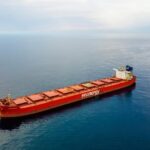
Today, the Greek-owned fleet under the Bahamian flag comprises more than 275 vessels, representing approximately 13 million gross tonnes. This includes over 100 bulk carriers, as well as tankers, gas carriers, general cargo vessels, offshore vessels and yachts.
Beyond the statistics, Greece offers an unparalleled depth of maritime expertise and experience. Maintaining a permanent presence in Piraeus enables us to engage directly with owners and managers, providing support on registration, technical matters, seafarer documentation and a wide range of operational issues.
Which are the main issues and areas where you expect significant changes moving forward?
Decarbonisation will undoubtedly remain a dominant theme, but the focus must extend beyond emissions targets alone. The key questions are practical ones: how ships will achieve those targets, which fuels will be adopted, and how safety frameworks will evolve to support them.
The availability of trained personnel will be equally important. The transition to alternative fuels such as methanol, ammonia and hydrogen introduces new operational requirements and risks. Safe bunkering, handling and operation will require seafarers with specialised skills and training.
At the same time, advancing technologies are changing the skills profile required on board. Recruiting, developing and retaining the next generation of seafarers will therefore remain a major challenge. The human element also extends beyond competence to include health, welfare and wellbeing, all of which must remain central to the industry’s future.
For The Bahamas, our role as a Flag State is to remain actively engaged within the IMO, ILO and other international bodies while working closely with owners, managers and industry partners. By anticipating change and developing practical, clearly understood requirements, we can help ensure that regulatory developments are implemented efficiently, without unnecessary burdens on ship operators or seafarers.