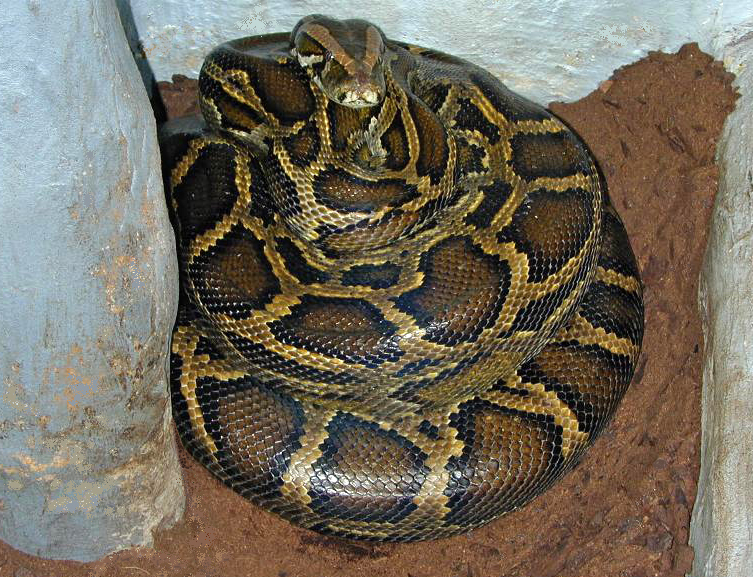
To tackle the growing Burmese python problem in the Everglades, Florida has turned to an unconventional solution: solar-powered robotic rabbit decoys. The South Florida Water Management District partnered with the University of Florida in 2025 to develop the devices, which use AI, heat signatures, and scent simulation to lure pythons out of hiding.
The robots supplement, rather than replace, existing removal efforts like the annual Florida Python Challenge. Equipped with AI-powered cameras, the decoys detect approaching snakes and alert officials, who then dispatch trained removal agents to capture them.
How the technology works
Designed to mimic natural prey, the solar-powered robots emit both a heat signature and a scent to attract pythons, which rely on thermal sensing and smell to hunt. Built-in cameras continuously monitor the surrounding area, and when a snake is detected, the system automatically notifies district officials, who can send a removal agent to the site. The district has deployed the robots at multiple locations across South Florida known for python activity, particularly in areas that are hard to monitor using traditional survey methods.
The scale of the python problem
Burmese pythons first arrived in the Everglades in the 1970s and have since become one of the region’s most damaging invasive species. Current estimates put their population between 100,000 and 300,000 across Florida’s subtropical zones. The snakes can exceed 18 feet in length, and females are capable of laying more than 70 eggs per clutch. Their spread has taken a heavy toll on native wildlife. A 2012 US Geological Survey study found raccoon and opossum populations in parts of the Everglades had plummeted by nearly 99% due to python predation, with knock-on effects for panthers, bobcats, and birds of prey that depend on the same prey.
Python Challenge continues to grow
Alongside the robotic decoys, Florida continues to rely on its annual Python Challenge, a 10-day hunting competition open to trained contractors and the public. This year’s event drew 907 participants from 30 US states plus Vietnam and Canada, who together removed 280 pythons, pushing the competition’s cumulative total past 1,600 snakes. Tom Rahill took home the $10,000 grand prize for removing 96 snakes, while Rahm Levinson won $1,000 for capturing the longest specimen, at 16 feet 5 inches.
FWC chairman Rodney Barreto called the results a major win for Florida’s native ecosystem, crediting strong partnerships and public involvement. Since 2017, contractors working with the state’s wildlife commission and water management district have removed more than 19,000 pythons in total — a number the robotic rabbit program is now aiming to help push even higher.