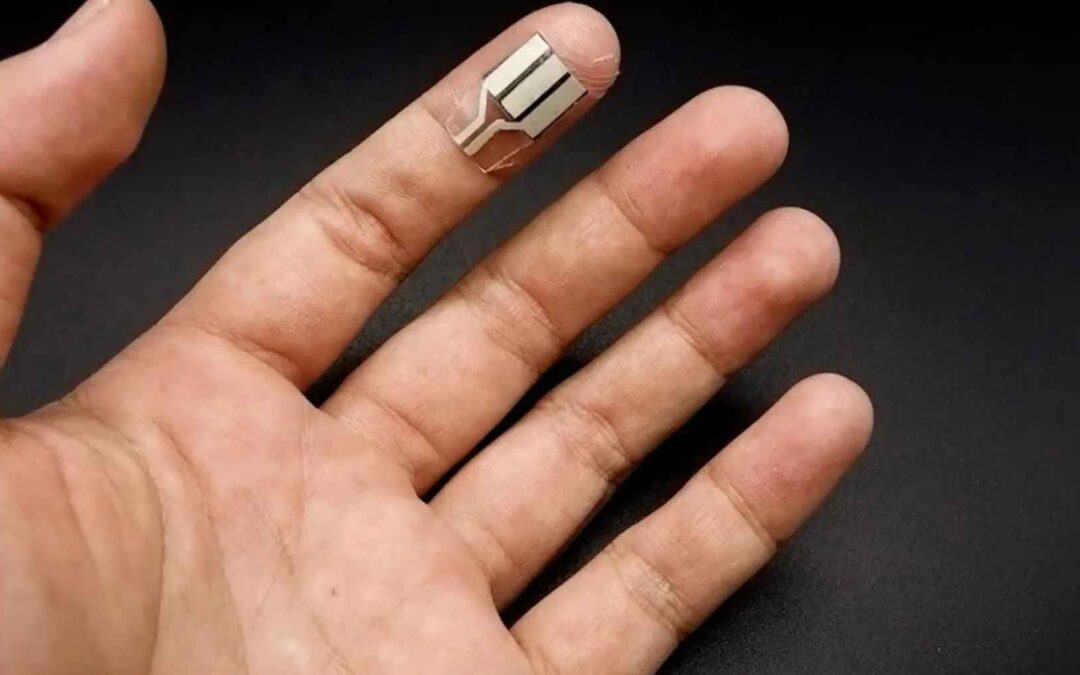
How sweat-powered sensors work
A new generation of wearable devices is turning the human body into a power source. At the heart of this innovation is a biofuel cell—a system that converts biochemical energy into electricity.
Researchers, including teams from Tokyo University of Science, have developed sensors that use lactate, a compound found in sweat, as fuel. When sweat comes into contact with enzymes embedded in the sensor, a chemical reaction occurs, generating small amounts of electricity.
In simple terms: your body’s natural processes—walking, exercising, even light sweating—can power devices.
From lab concept to scalable tech
One of the biggest breakthroughs isn’t just the science—it’s how these sensors are made.
Scientists have developed a single-step printing process, using enzyme-based inks that can be applied to:
- Paper
- Plastic films
- Textile fabrics (like clothing)
This makes the technology:
- Low-cost
- Flexible and wearable
- Scalable for mass production
As a result, these sensors can be integrated into fitness bands, patches, or even everyday clothing.
Real-world applications: Health and beyond
The implications go far beyond eliminating charging cables.
Sweat contains valuable biomarkers such as:
- Electrolytes → hydration levels
- Glucose → metabolic health
- Lactate → physical exertion
Sweat-powered sensors can continuously track these in real time, enabling:
- Fitness and performance monitoring
- Hydration tracking
- Stress and fatigue detection
- Early warning signs of illness
Researchers are already working on self-powered health monitors that function without batteries—potentially transforming preventive healthcare.
Why this matters: The battery problem
Wearable tech today faces a major limitation: power.
Traditional batteries:
- Need frequent charging
- Add bulk and weight
- Create environmental waste
Sweat-powered systems offer a sustainable alternative:
- No external charging required
- Continuous operation
- Reduced reliance on disposable batteries
This aligns with a broader push toward battery-free electronics.
What’s next?
The technology is still evolving. Key challenges include:
- Increasing power output
- Improving durability
- Ensuring consistent performance across conditions
But advances in materials science and bioengineering are rapidly closing these gaps.
A glimpse into the future
The long-term vision is simple but transformative:
your body becomes your charger.
In the coming years, devices could run silently in the background—powered by your own physiology—monitoring your health, enhancing performance, and keeping you connected without ever needing to plug in.
It’s a shift from wearable tech to truly integrated tech, where the boundary between body and device begins to disappear.