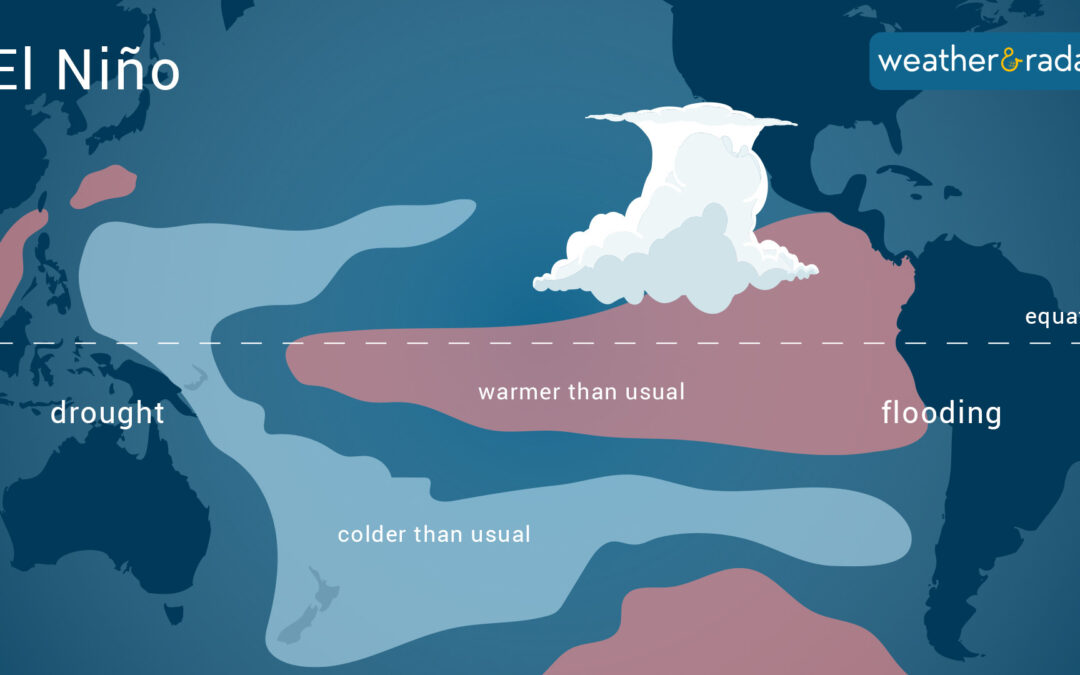
Climate scientists are closely monitoring the return of El Niño conditions in the Pacific Ocean, warning that the phenomenon could drive a noticeable rise in global temperatures during the latter half of 2026.
Researchers point to historical temperature patterns showing that changes in the Oceanic Niño Index (ONI) a key measure of sea surface temperatures in the central and eastern equatorial Pacific often have a significant influence on year-to-year fluctuations in global warming. El Niño conditions, marked by ONI values of 0.5 or higher, tend to raise global temperatures, while La Niña conditions, defined by values of -0.5 or lower, generally have a cooling effect.
Past climate records reveal a clear relationship between Pacific Ocean conditions and global temperature trends. In 2016, 2017 and 2020, global warming appeared to ease as the year progressed when the Pacific shifted from El Niño to La Niña conditions. By contrast, temperatures remained relatively stable during 2021 and 2022 when Pacific conditions showed little change. In 2023, warming accelerated through the year as the Pacific transitioned from neutral conditions into El Niño.
Scientists believe 2026 may follow a similar pattern. The year began under the lingering influence of La Niña, which helped moderate temperature increases during the opening months. However, recent data suggest that El Niño conditions may already be developing, setting the stage for stronger warming later in the year.
Because the influence of Pacific Ocean temperatures on the global climate typically occurs with a delay of two to four months, experts say the effects of the emerging El Niño could become increasingly evident before the end of 2026, potentially leading to a significant rise in global average temperatures.
Researchers caution, however, that El Niño is only one of several factors shaping global climate trends. Other influences, including changes in air pollution levels and shipping-related emissions, can either amplify or offset warming effects. Since 2020, stricter marine fuel regulations have reduced Sulphur emissions along major shipping routes, allowing more sunlight to reach the Earth’s surface and contributing to additional warming.
Despite these short-term influences, scientists stress that the overwhelming driver of rising global temperatures remains long-term climate change caused by greenhouse gas emissions. El Niño and La Niña can intensify or moderate warming temporarily, but they account for only a small portion of the broader trend.
The data underscore the scale of ongoing climate change. Global temperatures averaged 1.28°C above pre-industrial levels during the first five months of 2023 and ended that year at 1.48°C. By comparison, the average temperature anomaly for the first five months of 2026 has already reached 1.46°C, raising concerns that the current year could become one of the warmest ever recorded if warming accelerates further in the months ahead.