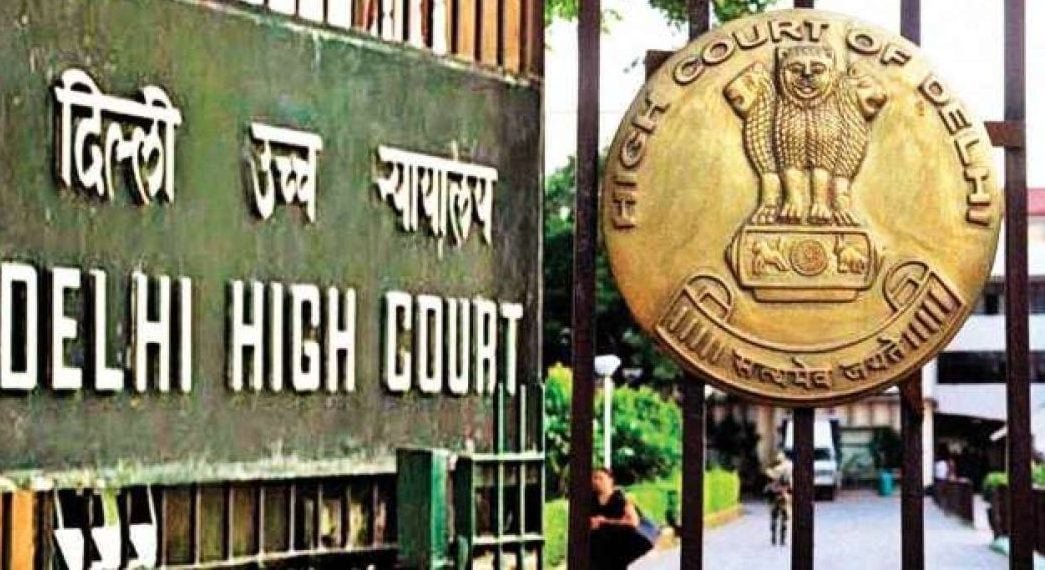
The Delhi High Court has ruled that a toll collection contractor cannot claim an absolute right to operate until the end of a contract when the agreement itself permits early termination, particularly where continued operation would result in financial loss to the public exchequer.
A Division Bench comprising Justice Anil Kshetrapal and Justice Amit Mahajan dismissed a writ petition challenging the National Highways Authority of India’s (NHAI) decision to terminate a toll collection contract before its scheduled expiry. The Court held that contractual termination clauses must be enforced as agreed and cannot be rewritten through judicial intervention.
Contract terminated after surge in toll revenue
The dispute concerned a one-year contract awarded through a competitive bidding process for toll collection at the Pawangaon Fee Plaza in Maharashtra, effective from June 2025 to June 2026.
In April 2026, NHAI issued a show-cause notice to the contractor before terminating the agreement and inviting fresh bids for a new toll operator.
The petitioner argued that the termination was arbitrary, pre-determined and contrary to the contract, contending that a contract awarded for a fixed period created a legitimate expectation of continuing until its expiry.
NHAI, however, relied on a contractual “windfall gain” clause that allowed it to terminate the agreement if toll collections rose significantly beyond projected levels.
According to the authority, the sharp increase in toll revenue meant the existing arrangement was causing a loss of nearly ₹7.5 lakh per day to the public exchequer. The Court accepted this reasoning, observing that the authority was entitled to invoke the contractual provision in the larger public interest.
No absolute right to complete contract
Rejecting the contractor’s arguments, the Bench held that parties are bound by the terms they voluntarily agree to.
“Once the contract between the parties provides adequate safeguards to both sides, it would not be appropriate to interfere with such terms or render them otiose,” the Court observed.
It further held that a contractor “cannot claim an indefeasible right to continue till expiry of the contractual tenure when the agreement itself provides otherwise.”
The judgment emphasised that courts exercising writ jurisdiction cannot alter commercial bargains freely entered into by contracting parties.
Limited scope of judicial review
The High Court reiterated that judicial review in government contract matters is confined to examining whether the decision-making process was lawful, fair and free from arbitrariness.
The Bench observed that courts do not function as appellate authorities over commercial decisions and will not interfere unless there is evidence of mala fides, procedural impropriety or arbitrariness.
The petitioner had argued that NHAI’s decision to issue a fresh tender on the same day as the show-cause notice demonstrated that the outcome had already been decided. The Court rejected this contention, holding that initiating the tender process simultaneously was a practical administrative measure to ensure uninterrupted toll collection and did not indicate bad faith.
Parties must accept contractual risks
The Court also stressed that parties entering government contracts do so with full knowledge of their terms.
It observed that those who enter contractual arrangements with the State “with open eyes” must accept both the benefits and the burdens arising from those agreements.
Noting that the petitioner was an experienced toll operator who had participated in similar contracts before, the Court found no basis for claims of unfairness or lack of understanding of the contractual risks.
The contractor’s plea that premature termination would cause severe financial hardship was also rejected, with the Court holding that commercial losses are an inherent risk of business and cannot justify relief under writ jurisdiction.
Delay by NHAI acknowledged
While upholding the termination, the Court noted that NHAI had delayed invoking the windfall gain clause despite the increase in toll collections becoming apparent earlier, resulting in avoidable losses to the public exchequer.
The Bench recorded NHAI’s submission that disciplinary proceedings had been initiated against the officials responsible for the delay and that the authority was introducing automated toll monitoring systems for real-time revenue tracking.
However, the Court held that this delay did not invalidate NHAI’s eventual exercise of its contractual right to terminate the agreement.
Finding no arbitrariness, illegality or mala fides in the decision-making process, the High Court dismissed the writ petition and upheld NHAI’s decision to terminate the toll collection contract before the expiry of its original term.