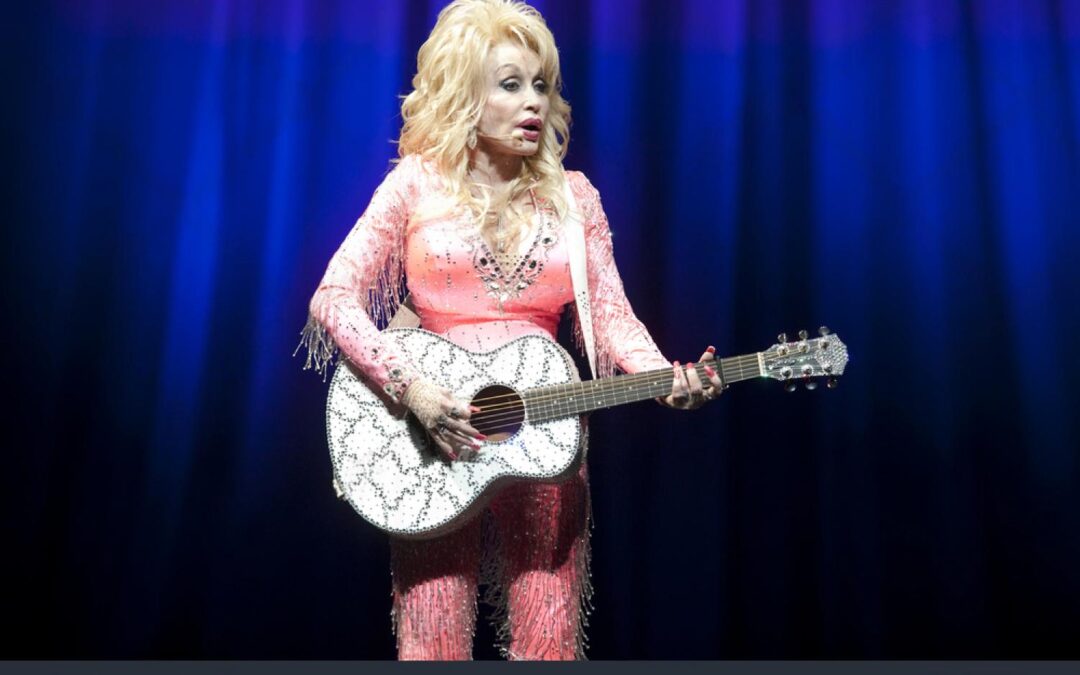
Dolly Parton, the legendary American country singer, songwriter, actress and philanthropist whose career spanned more than six decades, died on Tuesday at the age of 80. Parton died peacefully in Nashville, Tennessee, after a brief battle with cancer, surrounded by loved ones.
Widely regarded as one of the most influential figures in country music, Parton became known around the world for songs including “Jolene,” “Coat of Many Colors,” “9 to 5” and “I Will Always Love You.” She sold more than 100 million records worldwide and earned numerous major honours, including Grammy Awards and inductions into the Songwriters Hall of Fame and the Rock and Roll Hall of Fame.
Born on January 19, 1946, in Tennessee, Parton grew up in a poor family as one of 12 children. Her musical talent emerged at an early age. She began writing songs when she was about six, with one of her earliest known compositions, “Little Tiny Tasseltop”, inspired by a corncob doll with corn-silk hair.
Parton received her first guitar at the age of eight and was performing on local radio by 11. At 13, she made her debut at the Grand Ole Opry in Nashville, an important milestone in her early career.
After completing school, Parton moved to Nashville to pursue music professionally. She became a regular performer on Porter Wagoner’s television programme and recorded a string of successful duets with him. When she eventually left the show to pursue a solo career, she wrote “I Will Always Love You” as a farewell to Wagoner. The song later became a worldwide phenomenon after Whitney Houston recorded it for the 1992 film “The Bodyguard”.
Parton also enjoyed a successful career in Hollywood. She starred in films including “9 to 5”, “The Best Little Whorehouse in Texas” and “Steel Magnolias”. Her songwriting earned her Academy Award nominations for “9 to 5” and “Travelin’ Thru”.
Over the course of her career, Parton wrote thousands of songs, with 25 reaching No. 1 on the Billboard country chart. Her achievements in music were matched by her work as an entrepreneur and entertainer, most notably through Dollywood, the theme park she helped establish in Tennessee.
Beyond music and film, Parton was widely admired for her philanthropy. Her Imagination Library literacy programme provided books to children and families in the United States and other countries. She also donated $1 million to Vanderbilt University in 2020 to support research into Covid-19 vaccines, contributing to work associated with Moderna’s vaccine.
Parton’s personal life also drew public interest, although she generally kept it private. She married Carl Dean in 1966, and the couple remained together until his death in 2025. Dean largely avoided the public spotlight throughout their marriage.
In the months before her death, Parton had faced health challenges that led her to postpone or cancel several planned appearances and performances. Her representatives later confirmed that she had been battling cancer, though the type of cancer was not disclosed.
Parton’s death marks the end of an extraordinary career that transformed her from a child growing up in poverty in rural Tennessee into one of America’s most recognisable entertainers. Through her music, acting, business ventures and philanthropy, she left an enduring cultural legacy that extended far beyond country music.