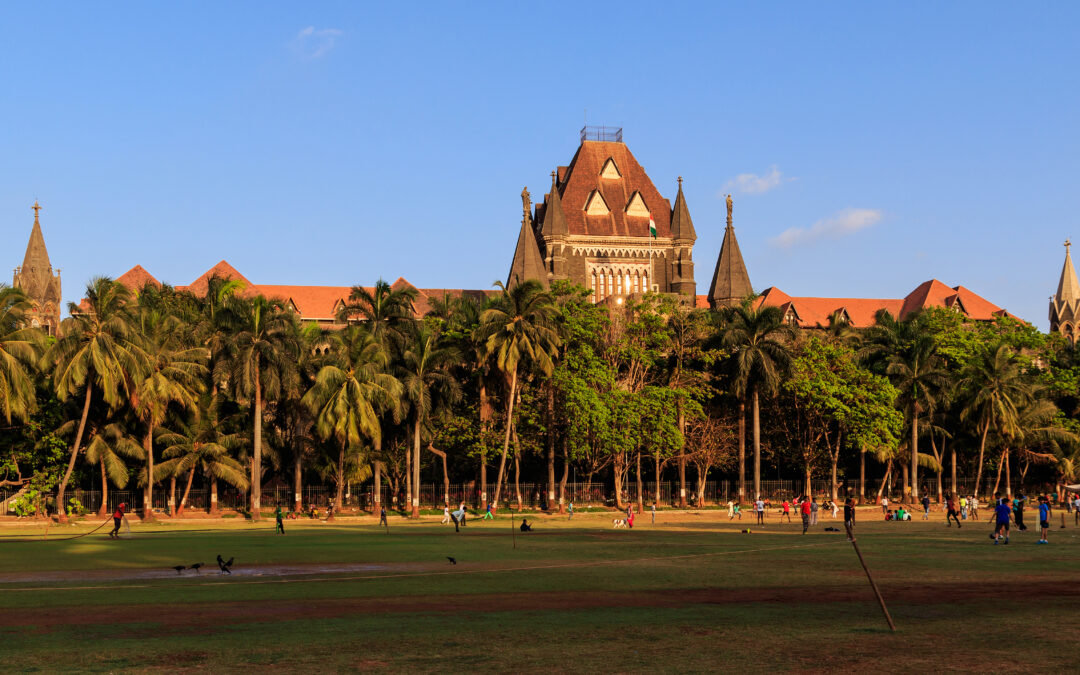
The Bombay High Court on Tuesday directed the state government and other authorities to measure decibel levels at Ganpati pandals and processions, and to take strict legal action including confiscating sound systems where violations occur. The court also signaled it would move to ban the burning of “highly toxic” and polluting firecrackers on public roads during festivals, including Ganeshotsav, along with the use of noise-making metal cylinders during processions.
“Celebrations are not meant for someone to die,” said Justice Girish Kulkarni, who, along with Justice Neela Gokhale, was hearing a suo motu PIL concerning noise pollution from loud music systems and firecrackers during festival season. The bench said its central concern was the health risk posed to citizens continuously exposed to high decibel levels.
The court said authorities must maintain recorded and visual decibel meter readings on-site, and that mandals must display their loudspeaker permits or face consequences. It indicated its written order would call for collecting a substantial deposit from mandals, to be forfeited in case of noise violations.
What the state told the court
State advocate general Milind Sathe clarified that firecrackers aren’t formally banned but simply aren’t granted permission, and that while processions are allowed under an exception, mandals still need police approval for sound systems approval that’s conditional on compliance with noise rules barring loudspeaker use in public after 10 pm. He added that the relevant notification covers any noise-producing instrument, all subject to decibel limits.
Senior counsel Aspi Chinoy, appointed as amicus curiae, along with senior counsel Anil Sakhare and Sanjeev Gorwadkar representing petitioners from Pune and Thane, argued that poor enforcement of existing rules had allowed noise pollution to flourish during festivals, infringing on citizens’ rights. Chinoy suggested that with modest effort, excesses could be curbed. Gorwadkar proposed the court’s order apply across all festivals, a suggestion the bench accepted.
The court stressed that citizens have a duty and should show compassio toward one another, remarking that sensitizing the public on this front is also a government responsibility.
Scale of permissions and proposed measures
Sathe noted that BMC and police issue more than 25,000 permissions during Ganeshotsav. A BMC nod is required to erect a pandal, while police approval is needed for processions and loudspeakers. Chinoy argued that police should be tasked with preventing excessive noise on the spot rather than simply prosecuting after the fact, noting that the daytime noise limit in residential areas is 55dB — a threshold, he said, no firecracker can meet.
Justice Kulkarni suggested firecracker manufacturers could be required to disclose decibel levels on packaging. When the bench pressed the state to act, the advocate general agreed. The court reiterated its stance plainly: ban firecrackers, take all necessary steps to curb pollution from their use, measure decibel levels, and enforce the law including confiscating sound systems. Judges also floated requiring a sizable deposit for loudspeaker use, to be forfeited on violation, noting that mandals clearly have no shortage of funds given what they spend on sound equipment.
Comparing Nagpur and Mumbai’s approach
The court praised Nagpur’s police commissioner for banning modified sound systems with DJs and laser effects during festivals from September 4 to November 1, and questioned why Mumbai and the rest of Maharashtra couldn’t adopt similar restrictions. The advocate general responded that Nagpur’s order isn’t technically a ban, and that a comparable order already exists for Mumbai issued September 4, prohibiting gatherings of more than five people, processions, and the use of loudspeakers, amplifiers, musical bands, or firecrackers in processions from September 9 to 23, with exceptions allowed at the discretion of zonal DCPs, the BMC, and their supervising officers.
Health concerns from petitioners
Sakhare and Gorwadkar echoed concerns that noise levels in residential areas must be respected and that firecrackers should be banned on public streets after 10 pm, as the law requires. Advocate Vinay Deshmane, joining from Nashik, noted that his 2009 PIL had prompted the state to spend nearly Rs 99 lakh supposedly equipping police stations with decibel meters — yet most stations still don’t have any. He added that noise from processions penetrates homes, making it hard for residents to stay indoors during festivities, and that this impact on public health was the core of their concern.
Justice Kulkarni remarked that the court wasn’t seeking to be adversarial or to block processions, but was focused on the genuine health impact of excessive noise. He said the current enforcement machinery isn’t functioning, that fines alone aren’t sufficient since damage shouldn’t be allowed to occur before penalties are imposed, and that action needs to be preventive. He added that those using loudspeakers bear some responsibility toward fellow citizens, particularly near hospitals or residential complexes and questioned how the state could call itself helpless given the scale of noise, traffic and air pollution already affecting the city. He concluded that when processions pass through residential areas, nearby residents, including those stranded in their vehicles are directly affected, and that the rule of law must be upheld.