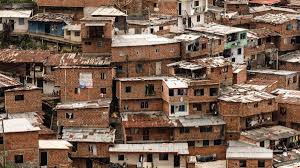
Mumbai: The Bombay High Court on Thursday upheld the validity of a key urban development regulation allowing up to 65% of public open spaces—originally reserved for parks, gardens, and playgrounds—to be used for in-situ slum rehabilitation projects, provided that at least 35% of the land remains as open space.
A bench of Justices Amit Borkar and Somasekhar Sundaresan ruled that Regulation 17(3)(D)(2) of the Development Control and Promotion Regulations (DCPR), 2034, reflects a “practical and balanced approach” to a long-standing urban challenge. “Removing all slums may not be possible, and losing all open spaces is not acceptable. This policy seeks to recover part of the land while ensuring humane rehabilitation,” the judges stated. “It is neither unreasonable nor unconstitutional.”
The verdict came in response to a 2022 public interest litigation filed by NGO NAGAR (Alliance for Governance and Renewal) and urban activists Neera Punj and Nayana Kathpalia of CitiSpace. The petition challenged both the 1992 notification by the Urban Development Department allowing encroached reserved public open spaces to be used for slum rehabilitation and the 2022 regulation in the DCPR enabling its implementation.
Petitioners argued that the policy undermines the core purpose of land reservation, stripping Mumbai of precious green spaces and violating the public trust doctrine and principles of sustainable development. They claimed that even under the guise of welfare, reserved open spaces must not be compromised to accommodate encroachments or private development.
However, the court found no procedural or legal flaws in the regulation. It held that the rule is uniformly applied, based on clear and measurable conditions, and does not violate Article 14 (Right to Equality) of the Constitution.
The judges emphasized that the regulation distinguishes logically between encroached and non-encroached land and between plots larger or smaller than 500 square meters, in order to allow slum dwellers to be rehabilitated on-site while preserving open space wherever feasible.
Addressing environmental concerns, the bench noted that while the regulation reduces the open area originally reserved on paper, it mandates that 35% of the land must remain open, be developed as a public amenity, and preserved. “This policy doesn’t erode environmental values,” the court said. “Rather, it attempts to reclaim some environmental benefit from already encroached lands while upholding the housing rights of the urban poor.”
The court directed the Brihanmumbai Municipal Corporation (BMC) and the Slum Rehabilitation Authority to ensure that in every slum redevelopment scheme, at least 35% of the total plot area must be clearly marked, preserved, and developed as a continuous stretch of open space. These areas must be designated for parks, gardens, or playgrounds and be accessible to the general public. Scattered or fragmented patches will not be permitted. Violations must be rectified, and disciplinary action considered where appropriate.
The judges also clarified that the policy is not set in stone. If future developments—such as new environmental assessments, on-ground data, or public complaints—indicate that the 35% threshold is inadequate, the State will be obligated to review and revise the regulation accordingly.