The Australian government has filed a landmark lawsuit against American manufacturing giant 3M, seeking more than A$2 billion (approximately $1.43 billion) in damages over contamination caused by firefighting foams containing PFAS, commonly known as “forever chemicals.”
Described as the largest legal action ever initiated by the Australian government against a corporation, the case has been lodged in the Federal Court of Australia against 3M Australia Pty Ltd and its US parent company.
Government Seeks Compensation for Decades of Cleanup Costs
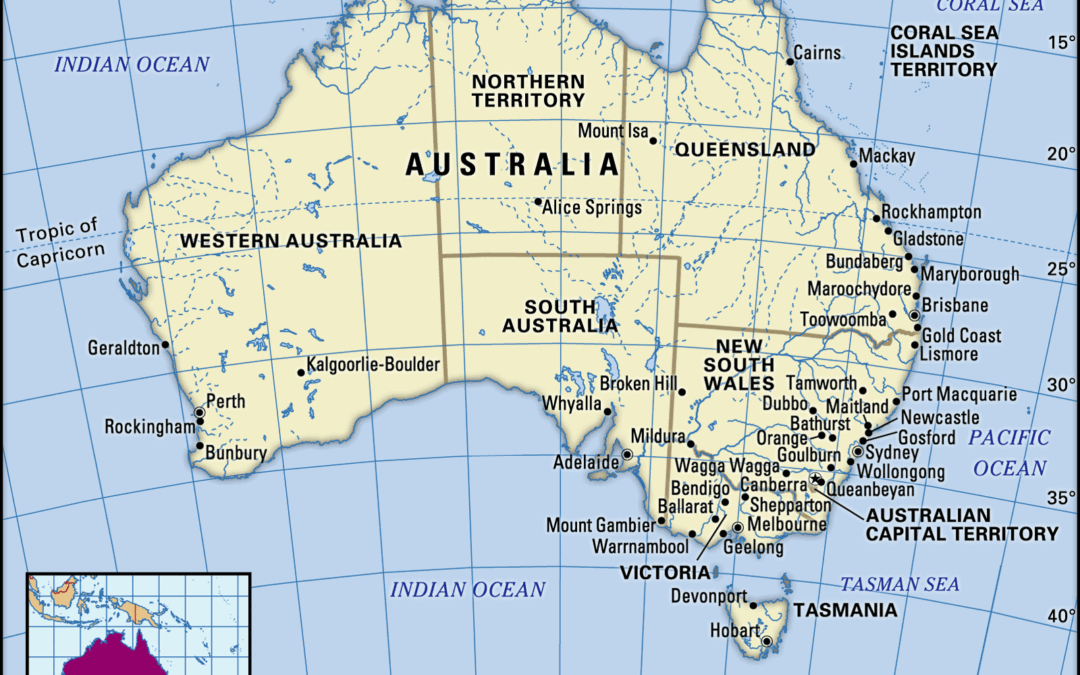
Australia alleges that firefighting foams supplied by 3M contaminated 28 Defence bases across the country, resulting in extensive environmental damage and substantial remediation costs.
The government says it is seeking compensation for both past and future expenses related to investigating, managing and cleaning up PFAS contamination. Officials estimate that more than A$1 billion has already been spent on mitigation and remediation efforts.
Attorney-General Michelle Rowland described the lawsuit as a significant step toward holding the company accountable.
“The Government is committed to holding 3M to account for the economic and environmental harms associated with PFAS contamination,” Rowland said, adding that taxpayers have borne substantial costs resulting from the contamination.
What Are PFAS?
PFAS, short for per- and polyfluoroalkyl substances, are a large group of synthetic chemicals valued for their resistance to heat, water and oil.
These chemicals have been widely used in products such as:
- Firefighting foams
- Non-stick cookware
- Water-resistant clothing
- Electronic devices
- Industrial manufacturing processes
PFAS are often called “forever chemicals” because they break down extremely slowly in the environment and can persist for decades.
Australia’s Allegations Against 3M
According to the lawsuit, Australia claims that 3M:
- Withheld information about the environmental risks associated with its aqueous film-forming foam (AFFF).
- Failed to fully disclose what it knew about the potential impacts of PFAS contamination.
- Provided assurances that the product was biodegradable, non-toxic and safe to dispose of despite allegedly possessing information that contradicted those claims.
The government argues that these actions contributed to widespread contamination at Defence facilities and increased the burden on taxpayers.
3M Rejects the Claims
3M has indicated it will vigorously contest the lawsuit.
A company spokesperson said 3M would “defend ourselves against these claims through the legal process.” The company also noted that Australia’s Department of Defence continued using PFAS-containing firefighting foams for roughly two decades after 3M stopped selling the product in Australia.
The legal battle is expected to be closely watched internationally, as governments around the world increasingly pursue manufacturers over PFAS contamination and the long-term environmental and public health costs associated with these chemicals.
Why the Case Matters
The lawsuit represents one of the largest PFAS-related claims ever brought by a national government. Beyond the financial stakes, the case could influence future litigation involving chemical manufacturers and shape corporate accountability standards for environmental contamination.
With PFAS pollution emerging as a major environmental issue globally, the outcome may have implications far beyond Australia, potentially affecting similar legal actions in other countries seeking compensation for cleanup costs and environmental damage.