Growing concerns over fertiliser supplies amid tensions in the Middle East are driving renewed interest in biofertilisers across India, as farmers prepare for the crucial monsoon sowing season.
The shift comes as uncertainty over shipments of key chemical fertilisers, particularly diammonium phosphate (DAP), has raised concerns among cultivators who depend heavily on imported inputs. Disruptions to shipping routes through the Strait of Hormuz, a critical corridor for global trade, have heightened fears of shortages despite government assurances of adequate stock availability.
India is one of the world’s largest consumers of chemical fertilisers, using around 63 million tonnes annually. However, supply concerns, coupled with rising awareness about sustainable farming practices, are encouraging more farmers to explore biofertilisers as a supplementary option.
In Uttar Pradesh’s Tappal region, a women-led farmer producer organisation has emerged as a notable example of this transition. Tappal Samriddhi Mahila Kisan Limited, which includes more than 1,000 women members across 92 villages, has been producing biofertilisers using locally sourced materials to support small and marginal farmers.
The organisation was established under the government’s Farmer Producer Organisation (FPO) programme and has gained recognition as a model initiative for promoting sustainable agriculture and rural entrepreneurship. According to its members, the goal is to improve soil health while reducing dependence on costly chemical fertilisers.
Demand for the biofertiliser has increased significantly this planting season. The unit has already supplied around 200 farmers in nearby villages, with interest growing as concerns over fertiliser availability continue to circulate among farming communities.
The initiative has also played an important role in empowering rural women. Many members who were previously confined to household responsibilities are now actively participating in agricultural decision-making and income-generating activities.
Local farmers say the product has helped reduce their reliance on chemical fertilisers. Some have reported cutting urea usage while maintaining crop yields, particularly in crops such as pearl millet. Similar experiments are expected during the upcoming paddy cultivation season.
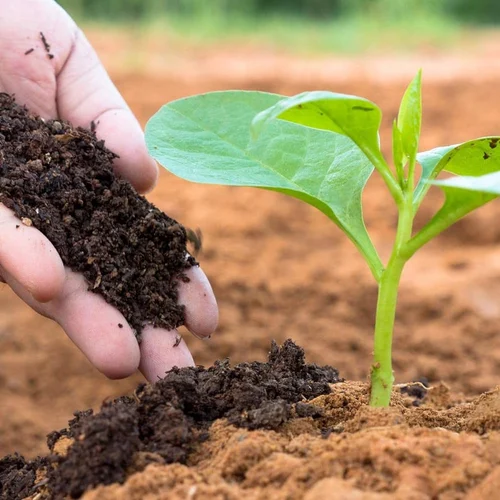
Biofertilisers contain beneficial microorganisms that help plants absorb nutrients naturally present in the soil. While they are not a direct substitute for conventional fertilisers, agricultural experts say they can significantly complement existing nutrient management practices.
Cost is another factor encouraging adoption. The biofertiliser produced by the Tappal unit is priced at ₹300 for a 40-kilogram bag. By comparison, a subsidised 50-kilogram bag of urea costs around ₹266, while an equivalent quantity of DAP can cost approximately ₹1,350.
Despite the growing interest, experts caution that biofertilisers alone cannot meet India’s massive agricultural nutrient requirements. Their effectiveness depends on proper application, crop-specific formulations, and long-term use. Unlike chemical fertilisers, which often produce immediate visible results, biofertilisers improve soil quality gradually over time.
Agricultural scientists also point to environmental benefits. Increased use of biofertilisers can improve soil organic carbon levels and reduce greenhouse gas emissions associated with the production and transportation of chemical fertilisers. Global agencies have repeatedly warned that excessive reliance on synthetic fertilisers contributes to rising emissions and environmental degradation.
For many farmers, however, the immediate concern remains maintaining productivity while ensuring reliable access to agricultural inputs. As geopolitical uncertainties continue to influence global supply chains, biofertilisers are increasingly being viewed as a practical supplement that can strengthen resilience in India’s farming sector.
While chemical fertilisers are expected to remain the backbone of Indian agriculture for the foreseeable future, the current supply concerns have accelerated interest in alternative solutions that support both soil health and long-term sustainability.