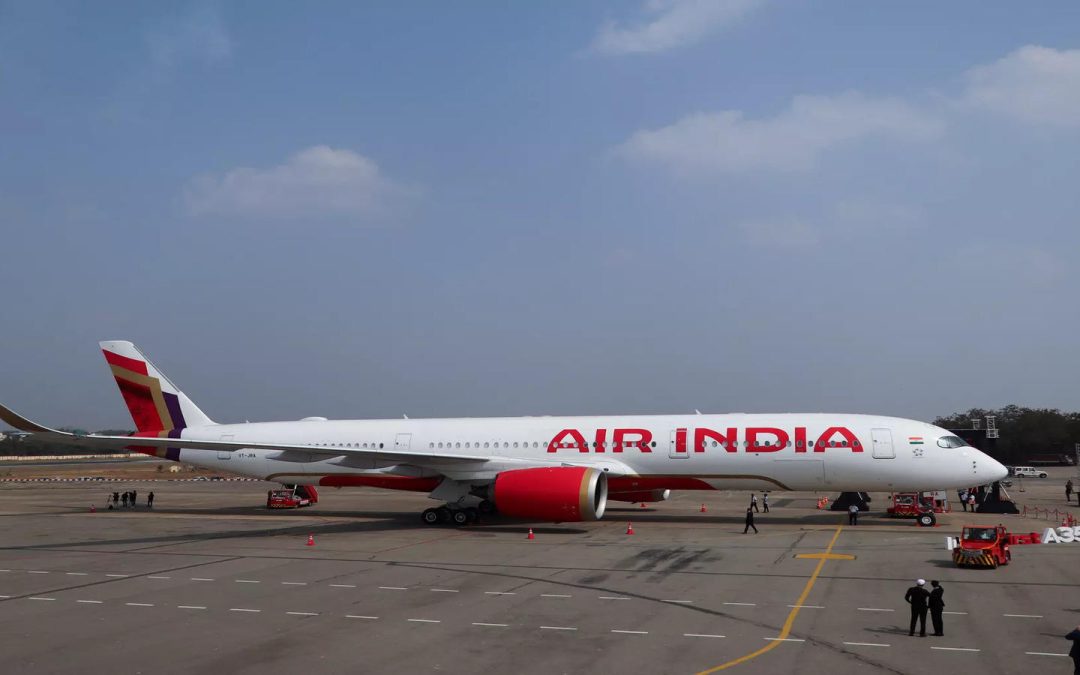
NEW DELHI: European aerospace major Airbus and France’s Bureau of Enquiry and Analysis for Civil Aviation Safety (BEA) will join the investigation into an Air India A320 flight from Phuket to Delhi that suddenly lost around 300 feet in altitude, injuring several passengers and crew members.
The flight, AI 2379, was carrying 145 people when the incident occurred last week. Although the aircraft landed safely in Delhi, 17 people were hospitalised. The investigation, being led by India’s Aircraft Accident Investigation Bureau (AAIB), will examine both possible technical issues and the conduct of the flight crew.
Sources described the incident as a serious “close shave”. The captain’s initial psychoactive substance screening test was reported as “not negative”, with the confirmatory test result still awaited. The captain’s conduct during the incident is also being examined.
“One of the pilots fell in the cockpit and had to be assisted by cabin crew to get back on his seat,” a source said.
Investigators are expected to rely heavily on the aircraft’s Flight Data Recorder (FDR) and Cockpit Voice Recorder (CVR) to reconstruct the sequence of events and determine whether any mechanical failure contributed to the incident.
Airbus, French investigators to assist
Airbus is sending a team to India to inspect the aircraft and provide technical assistance to Air India and the AAIB. Since the aircraft is manufactured in France, investigators from France’s aviation accident investigation agency, the BEA, will also participate in the probe.
An Airbus spokesperson said the company was “providing technical assistance to the investigating authorities” and would continue supporting the airline while providing additional information as it becomes available.
Industry sources have raised the possibility that the A320, registered VT-EXO, may have experienced a brief triple hydraulic-system failure, an extremely rare occurrence.
The aircraft’s hydraulic system uses pressurised fluid to operate several critical components, including wheel brakes, nose-wheel steering, landing gear and flight-control surfaces.
Sources also said the autopilot may have disengaged for a few seconds during the incident and that the aircraft issued a stall warning. A pilot then reportedly stabilised the aircraft by lowering the nose.
Air India said it could not comment on findings or observations related to the investigation, as the probe is being conducted by the AAIB. The airline said it would continue to provide “full cooperation” to the authorities.
The FDR is expected to establish the precise timing and sequence of events, including whether a possible temporary hydraulic failure triggered the rapid descent or occurred after the aircraft encountered an air pocket and turbulence.