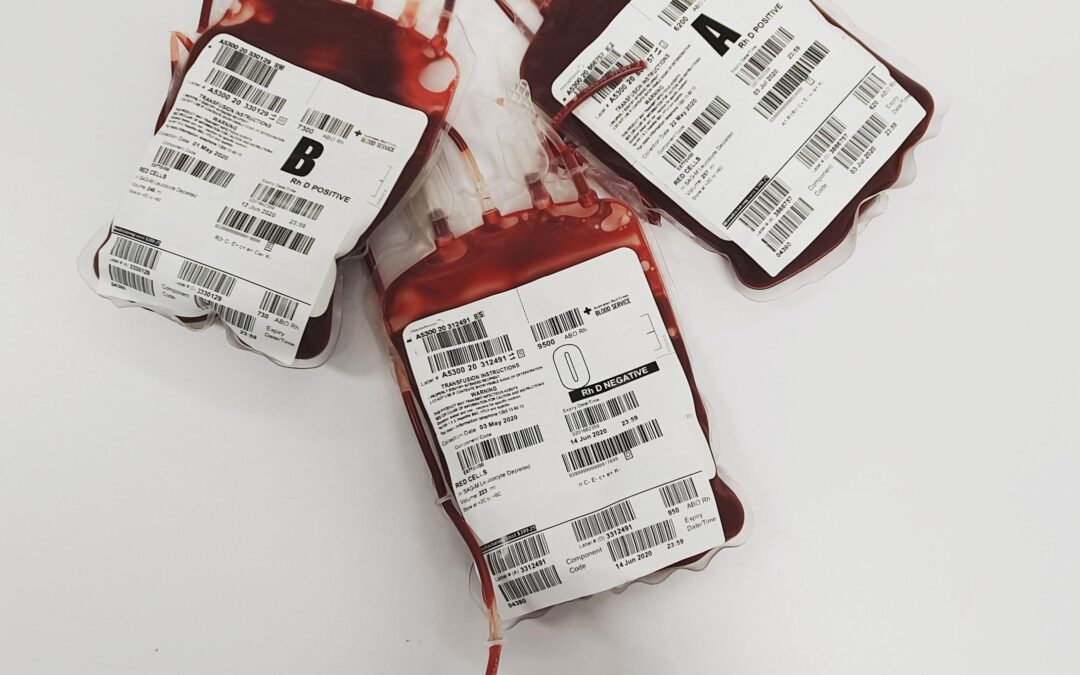
NEW DELHI: India discarded more than 17.4 lakh blood components in 2025, even as blood collection rose to a record 1.58 crore units, according to state-wise data tabled in the Rajya Sabha. The figures highlight persistent gaps in blood inventory management despite a steady increase in donations.
Official data indicate that India and China have among the world’s largest blood collection programmes. India collected 15.71 million units of blood in 2025, while China collected 25.5 million units, according to data from China’s National Health Commission.
The Indian figures, reported by blood centres through the government’s e-Raktakosh portal, show that expiry was the biggest reason for discarding blood components, followed by reactive units and other operational factors. The portal began capturing reasons for discards from 2024; comparable reason-wise data were not available for 2023.
In response to a question in Parliament, the Union health ministry said it had not received reports of any regional shortage of blood. It also said that ensuring an adequate supply of safe blood and minimising wastage primarily falls under the responsibility of state governments and Union Territories.
The Centre, meanwhile, advocates a hub-and-spoke model in which blood is collected and processed at high-volume centres before being supplied to smaller blood banks and storage facilities.
Uttar Pradesh recorded the highest blood collection in 2025, at 21.6 lakh units, followed by Maharashtra with 18.73 lakh, Gujarat with 11.82 lakh, Rajasthan with 10.79 lakh and Tamil Nadu with 9.74 lakh.
Overall blood collection increased from 1.42 crore units in 2023 to 1.58 crore units in 2025. The annexure also showed a corresponding rise in the utilisation of blood components, with Uttar Pradesh, Maharashtra, Gujarat, Tamil Nadu and Rajasthan reporting the highest utilisation during the year.
However, several of the states with high collection and utilisation also recorded substantial wastage. Uttar Pradesh reported the highest number of discarded blood components at 2.40 lakh, followed by Maharashtra (1.87 lakh), Kerala (1.44 lakh), Rajasthan (1.21 lakh) and Tamil Nadu (1.09 lakh).
The health ministry did not provide an explanation for the wide variation in discard rates among states.
Dr Hema Goyal, consultant for blood centre and laboratory services at Aakash Healthcare, said some wastage was unavoidable, particularly because platelets have a shelf life of just five days. However, she said the scale of discards suggested a mismatch between blood collection and actual demand.
“The solution is not fewer donations but smarter inventory management,” Goyal said, stressing the need for real-time sharing of blood-stock information and better coordination among blood banks.
The data suggest that while India has made significant progress in expanding blood collection, improving the movement and utilisation of blood components remains critical to ensuring that donated blood reaches patients before it expires.