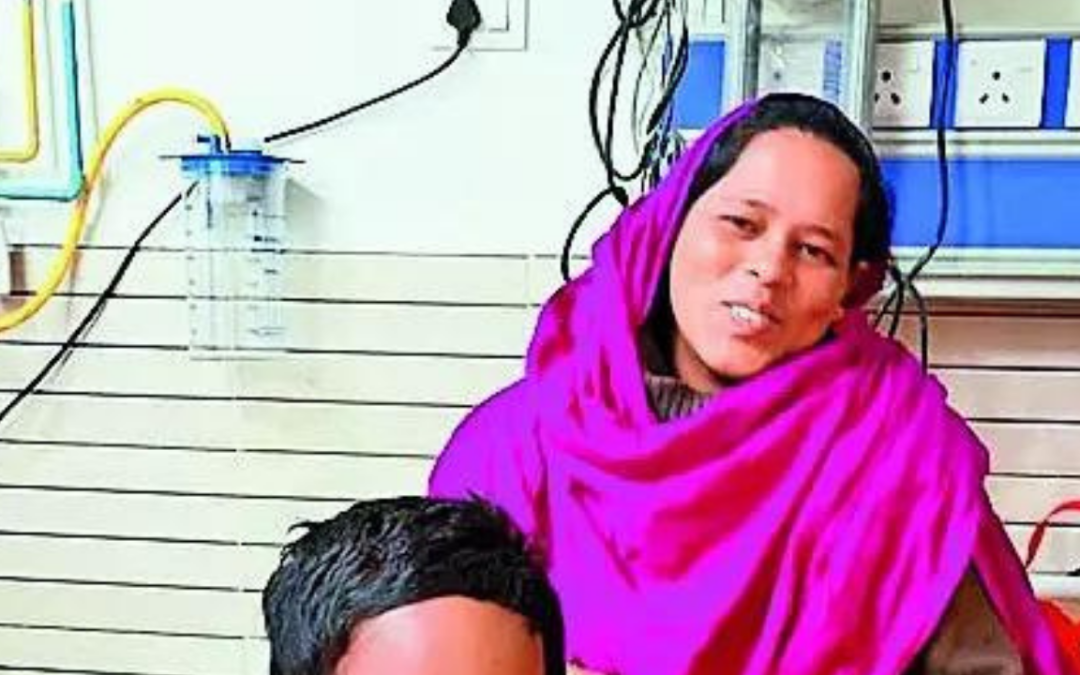
NEW DELHI: More than nine months pregnant and visibly drained, Sunali Khatun speaks in a voice heavy with exhaustion and quiet anger. “I’m tired from inside,” she said, holding back tears. “The worst part is that even after showing all our documents, no one listened to us.”
The 26-year-old domestic worker from Paikar village in West Bengal’s Birbhum district was detained during an identity verification drive in Delhi’s Rohini in late June. Sunali says she and her husband, Danish Sekh, immediately produced every identity document they had — Aadhaar, PAN, ration card. “I even shared my in-laws’ ID proofs over WhatsApp the same night,” she said. “Nothing worked.”
‘Why would we run away from our own country?’
“We did everything,” Sunali said. “We showed every single document. We kept telling them, ‘We are not Bangladeshi. We are Indian.’ But who listens to people like us?”
Within 48 hours, on June 26, following a deportation order from the Foreigners Regional Registration Office, police seized the couple’s belongings from their Rohini jhuggi and transported them — along with their eight-year-old son, Sabir — to Guwahati.
From there, Sunali says, they were hastily pushed across the Bangladesh border.
The deportation blindsided both the couple and their family back home. Over the next five months, Sunali found herself trapped in a cycle of fear, suspicion and despair. “Something broke inside me,” she said.
Family rushed to court as Sunali vanished
After filing a missing-person complaint on July 6, 2025, at the Paikar police station, Sunali’s father, Bhodu Sekh, approached the Calcutta High Court three days later. His habeas corpus petition, filed on July 9, sought the immediate production of his daughter, son-in-law and grandson.
Fearing that his heavily pregnant daughter could be forced to deliver in an unknown country without medical help, Bhodu pleaded for urgent intervention. He stated that the family had already submitted Aadhaar, voter IDs, PAN cards and land records to establish their Indian citizenship — yet authorities still deported them.
‘Hell’ in Bangladesh
For Sunali, the months across the border were a blur of hunger, fear and humiliation. “We lived in hell,” she said. “We didn’t even have ₹5 to feed our child. We had one set of clothes — my yellow kurta and blue salwar. My son had only his red T-shirt and black shorts. We survived on the mercy of strangers.”
When the family tried to return to India a few days after crossing, Sunali says they were beaten back despite pleading to show proof of their identity. “We were profiled simply because we are Bengali-speaking Muslims,” she said.
When they were produced before a Bangladeshi court, Sunali expected questions. “I thought they would ask who we are, how we crossed, why we were there. But it was over in minutes,” she said. “They didn’t ask anything — just sent us to jail.”
“We only told them, ‘We are from India.’ Why would we run away from our own country when we have valid documents? Even they were shocked,” she said. She described her months in detention as “mental torture.”
Back home, but not at peace
Though she has now returned to India, Sunali says fear still hangs over her. “Are there more documents we’re supposed to have? What if they push us out again?” she asked softly. “I can’t sleep thinking about it.”