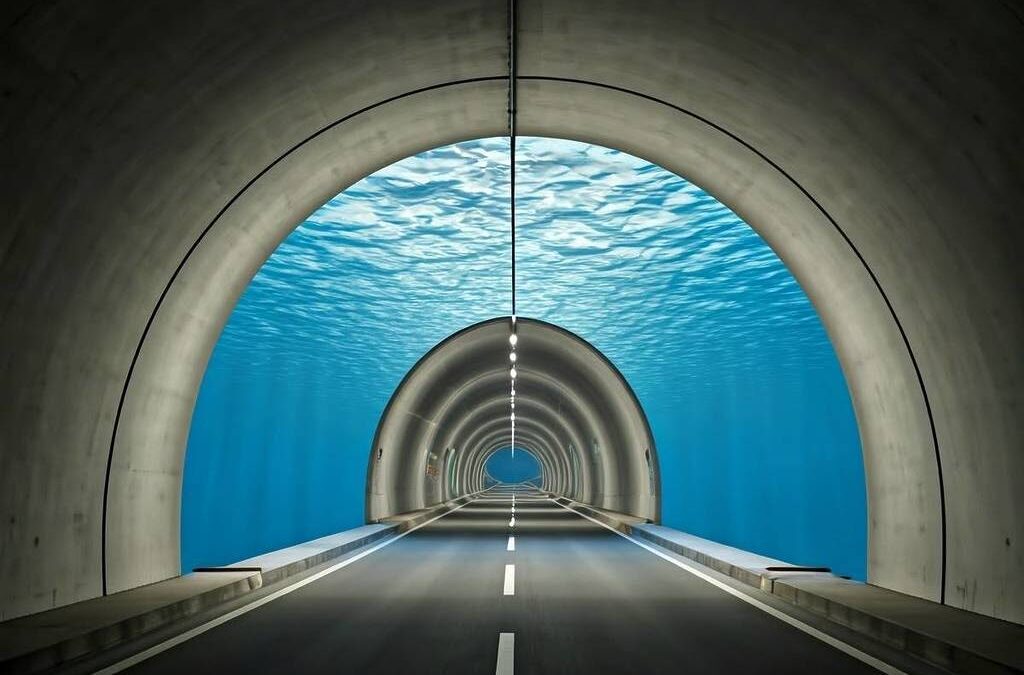
NEW DELHI: In a first for the country, India will build a twin-tube underwater tunnel beneath the Brahmaputra River with provisions for both road and rail traffic, a move aimed at enabling faster deployment of forces and ammunition during emergencies, reports Dipak Dash.
An inter-ministerial panel chaired by the Expenditure Secretary has approved the construction of a 15.8-km twin-tube tunnel in Assam, connecting Gohpur and Numaligarh. One of the two tubes will be designed to accommodate a single railway track. As per the plan, vehicular movement will be halted when trains operate through this tube. The rail line will use electric traction and feature a ballastless track.
The overall project length will be 33.7 km, including the tunnel, approach roads, and railway infrastructure, at an estimated cost of ₹18,600 crore. Once completed, travel time between Gohpur and Numaligarh is expected to drop sharply from the current six-and-a-half hours to just 30 minutes, while reducing the distance from 240 km to 34 km. The project will significantly improve connectivity to Arunachal Pradesh, Manipur, and other northeastern states.
The cost of the project will be shared by the ministries of road transport, railways, and defence.
Designed as two unidirectional tunnels with two lanes each, the structure will be built 32 metres below the river’s deepest bed level. Construction is expected to be completed within five years of the award of work.
Officials said the proposal will be placed before the Union Cabinet for final approval, possibly ahead of the Assam Assembly elections. Last year, the finance ministry had approved a road-only tunnel project costing about ₹14,900 crore, with an 80:20 funding split between the road transport and defence ministries. However, following the government’s decision to pursue road-cum-rail tunnels wherever feasible, three such projects were identified—across the Brahmaputra in Assam, the North-East ‘chicken neck’ corridor, and the Maranahally–Addahole (Shiradi Ghat) stretch in Karnataka, as first reported by TOI on October 6, 2025.
Officials noted that the inclusion of a railway track in one of the tunnels has led to the higher project cost.