NEW DELHI — Michael Rubin, a U.S. military strategist and senior fellow at the conservative American Enterprise Institute, has strongly criticized the Trump administration for allowing the International Monetary Fund (IMF) to extend a $1 billion bailout package to Pakistan. He argued that this financial support came at a time when Pakistan was widely regarded as using terrorism as a tool of state policy.
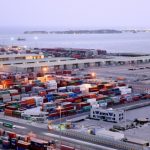
“By sending money to Pakistan, the IMF is essentially bailing out China,” Rubin said, highlighting Islamabad’s deepening economic and strategic ties with Beijing. “Pakistan has become a satellite state of China—its Gwadar port was the original jewel in China’s ‘string of pearls,’ and the China-Pakistan Economic Corridor has driven Pakistan into a $40 billion debt trap.” Rubin previously taught at the U.S. Naval Postgraduate School until 2021.
Rubin joined a chorus of American and international security experts in praising India for what they described as a tactical victory over Pakistan during a four-day limited conflict. He asserted that Pakistan’s threats to impose costs on India backfired and that, instead, Islamabad quickly sought a ceasefire. “Pakistan went running like a scared dog with its tail between its legs,” he remarked.
In a sharply worded video statement, Rubin said, “There is absolutely no narrative the Pakistani military can spin to shield itself from the truth—they not only lost, but they lost very, very badly.” He accused Islamabad of continuing to spread false propaganda while grappling with the repercussions of Indian strikes on its key air bases and military infrastructure.
In an Op-Ed published Wednesday, Rubin further condemned the U.S. for failing to oppose the IMF bailout to what he called “one of the world’s most corrupt countries.” He noted that the aid package came in the wake of terrorist attacks by Pakistan-based operatives who had infiltrated India and murdered non-Muslims in front of their families.
Rubin argued that providing such a large sum to a terror-afflicted, pro-China regime—especially at a time when the White House was trying to de-escalate tensions between two nuclear powers—was not just poor policy. It was, he said, a symbolic act of defiance by the IMF against President Donald Trump himself.