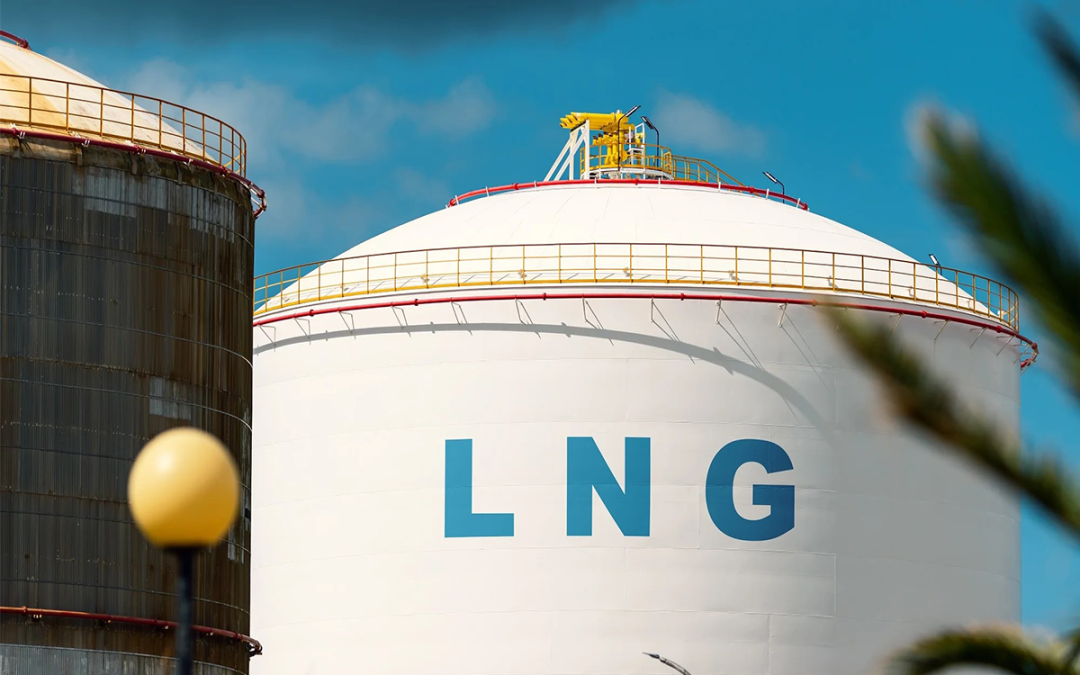
The largest-scale liquefied natural gas (LNG) projects in history are getting on track, and the global LNG carrier order cycle is expected to accelerate again. Observations suggest that with final investment decisions (FID) for major projects centered in the United States being confirmed in succession, large-scale LNG vessel orders will gain momentum starting next year.
According to the shipbuilding industry on the 24th, U.S. LNG development companies’ projects are consecutively reaching the FID stage, revitalizing the flow of new LNG vessel orders. FID means that sales contracts and financing have been virtually completed, so there is a high possibility of proceeding to the construction stage unless there are special external variables.
NH Investment & Securities forecasted that next year’s global newbuilding orders will be 75 million GT (gross tonnage, a concept that converts the entire volume of ships into tonnage), maintaining a similar level to this year. While the absolute scale decreased to half the level compared to last year, it is assessed that there will be no difficulty in maintaining the order backlog for domestic shipbuilders. Next year’s combined order amount for Korea’s three major shipbuilders is expected to be $38.8 billion, a 10% increase compared to the previous year. This reflects the expansion of orders for main vessel types centered on LNG carriers, special vessel exports, and deferred offshore plant orders.
LNG carriers, in particular, are expected to see another increase in orders starting next year. This year, nine LNG projects with a scale of 70.5 million tons confirmed their FID, and these projects will be operated sequentially starting from 2027. Considering the project operation timing, newbuilding orders for LNG transportation are highly likely to continue rapidly from next year. The industry believes that the possibility of vessel price recovery has also increased as demand concentrates on construction slots that can deliver in 2029.
Jung Yeon-seung, a researcher at NH Investment & Securities, analyzed, “Considering only the projects with confirmed FID this year, 100 LNG carriers are needed, and including the reserved volume from the suspended Mozambique project, a total of 117 vessel orders are required. The annual LNG carrier construction capacity of domestic shipbuilders is about 70 vessels, so the additionally needed LNG carriers represent two years’ worth of volume for domestic LNG docks (shipbuilding yards).”
Changes in U.S. policy are another variable that could accelerate order expansion. Recently, the “Unlocking Domestic LNG Potential Act” was passed in the U.S. House of Representatives and is awaiting Senate review. The bill contains provisions to transfer LNG export approval authority from the existing Department of Energy (DoE) to the Federal Energy Regulatory Commission (FERC). While the DoE is influenced by political variables, FERC makes decisions based on technical and regulatory standards, raising expectations that approval process predictability will increase and bottlenecks leading to FID will be alleviated.
The shipbuilding industry believes that special vessels and offshore plants, in addition to LNG carriers, will support next year’s market conditions. If the Korea-U.S. shipbuilding cooperation project “MASGA” gains momentum, there is a high possibility that the scope of participation in U.S. Navy vessel and commercial ship-related maintenance, repair, and overhaul (MRO) and construction will expand. The U.S. Congress is also discussing the “SHIPS for America Act,” which would increase the current level of about 90 U.S.-flagged international voyage vessels to 250 in the future.
Source: Business Korea