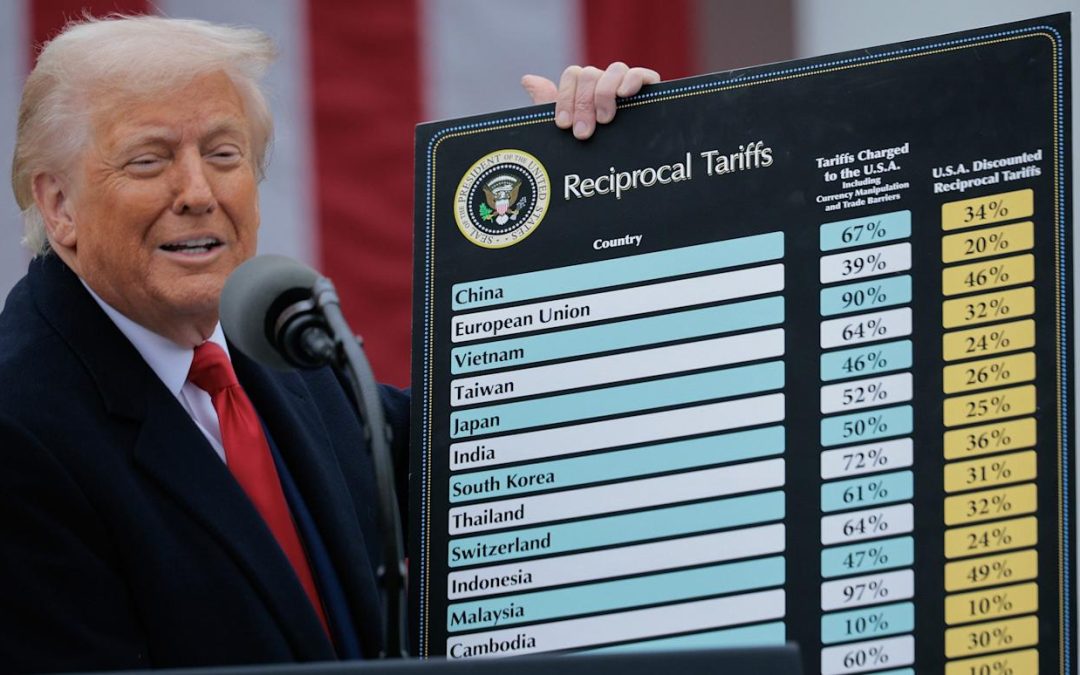
NEW DELHI: U.S. President Donald Trump announced sweeping new tariffs on Thursday, imposing a blanket 10% tax on all imports, with additional duties ranging from 10% to 50% based on trade imbalances.
Enacted under the 1977 International Emergency Economic Powers Act, the tariffs aim to reduce trade deficits and boost domestic manufacturing. While Trump defends the move as necessary to protect American industries, critics warn of economic turmoil and the risk of a full-blown trade war.
Countries Facing the Highest Tariffs
Nations with significant trade surpluses with the U.S. bear the brunt of these measures. Some of the hardest-hit include:
- Lesotho – 50%
- Cambodia – 49%
- Laos – 48%
- Madagascar – 47%
- Vietnam – 46%
- Sri Lanka, Myanmar (Burma) – 44% each
- Bangladesh, Serbia, Botswana – 37% each
Many of these nations, including Vietnam, Bangladesh, and Sri Lanka, are major exporters of textiles, footwear, and electronics to the U.S. The tariffs are expected to disrupt these industries, strain global supply chains, and lead to higher prices for American consumers.
Countries Facing the Lowest Tariffs
Some nations have escaped the steepest duties, facing only the baseline 10% tariff:
- United Kingdom
- Australia
- Brazil
- Chile, Turkey, Argentina, Ecuador, Peru, New Zealand, UAE
- Canada and Mexico (exempt from new tariffs but still subject to existing levies on steel, aluminum, and cars)
The relatively lower tariffs suggest these countries are perceived as fairer trading partners by the Trump administration. However, businesses in these nations remain wary of the broader economic fallout.
Economic Impact and Global Response
The announcement of the tariffs has sent shockwaves through global markets, with S&P 500 futures dropping nearly 2% and Asian and European stock indices seeing similar declines. Analysts warn that these measures could usher in the most protectionist trade environment since the Great Depression, as affected countries prepare to retaliate.
Critics argue that tariffs, which effectively act as import taxes, will increase costs for American consumers and businesses. Economists predict rising inflation, with some forecasting a 1% contraction in the U.S. economy in the second quarter due to higher prices and disrupted supply chains.
In response, some nations, including Israel and Vietnam, have lowered tariffs on U.S. imports in a possible effort to avoid further penalties. Meanwhile, the European Union is reportedly considering restrictions on U.S.-based tech firms as a countermeasure.
As Trump continues to champion his “America First” trade agenda, governments and businesses worldwide remain on edge, bracing for the next move.