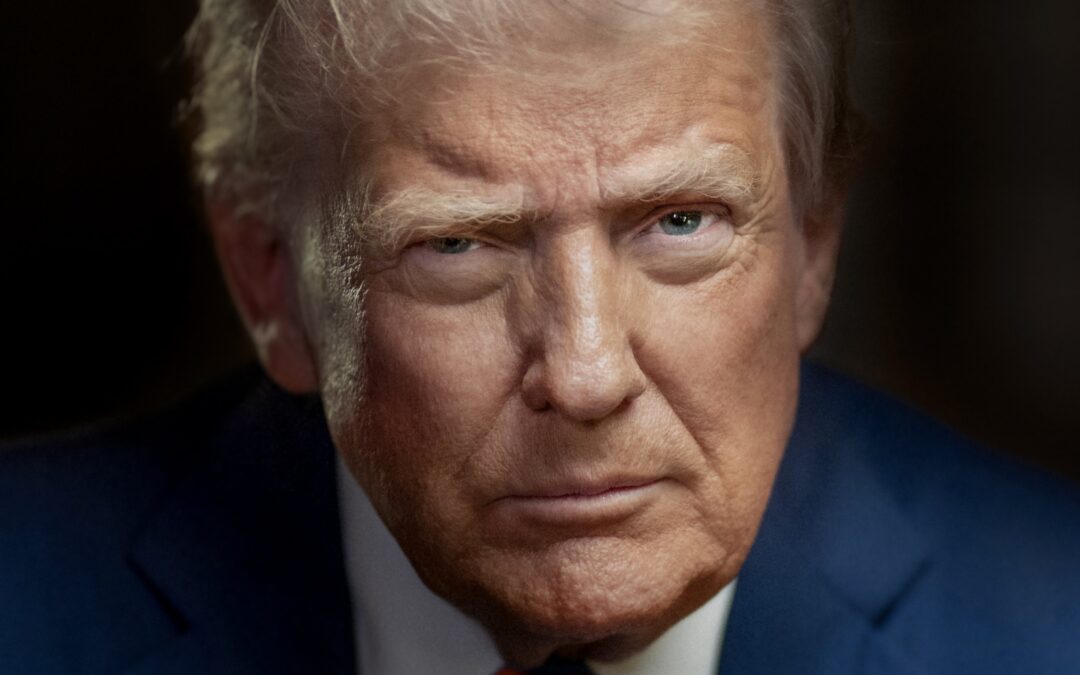
US President Donald Trump said Tuesday that his proposal to end the war in Ukraine has been “fine-tuned,” announcing that he will send envoy Steve Witkoff to meet Russian President Vladimir Putin, while Army Secretary Dan Driscoll will hold talks with Ukrainian officials. Trump added that he may personally meet Putin and Ukrainian President Volodymyr Zelensky at a later stage, once negotiations show further progress.
Speaking aboard Air Force One on Tuesday evening, Trump acknowledged the complexity of resolving the conflict and described what had initially been a 28-point proposal as still evolving. “That was not a plan — it was a concept,” he said.
Tensions rose Wednesday after a Russian diplomat said the Kremlin would not accept major concessions, following a leaked recording in which Witkoff appeared to advise Moscow on how to frame its position to Trump. While Trump insisted Moscow was making concessions and that talks were advancing, Russian Deputy Foreign Minister Sergei Ryabkov rejected that claim, saying: “There can be no question of any concessions or any surrender of our approaches on key points.”
Moscow also criticized the leak — published by Bloomberg News — of a call between Witkoff and Putin’s foreign policy aide Yuri Ushakov, calling it an attempt to sabotage peace efforts and an act of hybrid warfare. Trump dismissed concerns about Witkoff’s comments, saying such guidance was “what a dealmaker does” and part of standard negotiation practice.
European leaders, wary of Russia’s aggression and anxious about being sidelined as Washington steers the discussions, are pushing to assert their role in the process. German Chancellor Friedrich Merz warned that any agreement crafted by “great powers” without Ukrainian and European consent would not produce a lasting settlement. “Europe is not a plaything, but a sovereign actor with its own interests and values,” he told lawmakers in Berlin.
European Commission President Ursula von der Leyen struck a more optimistic tone, saying recent developments present “an opportunity to make real progress” toward peace. She stressed that any agreement must ensure long-term security guarantees for Ukraine and cannot impose limits on Ukraine’s armed forces or obstruct its path toward NATO membership.