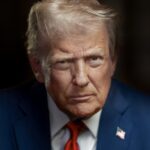
In a sweeping foreign policy shift, U.S. President Donald Trump on Tuesday announced the lifting of long-standing sanctions on Syria, signaling a major turnaround in American strategy toward the war-torn nation. The announcement was made during Trump’s high-profile visit to Saudi Arabia, the opening leg of his second-term foreign tour.
Speaking at a business forum in Riyadh, Trump declared, “It’s now time for Syria to move forward with a chance at greatness,” receiving a standing ovation from an audience packed with global business leaders, including Elon Musk, OpenAI CEO Sam Altman, and BlackRock’s Larry Fink.
According to the New York Times, Trump’s decision followed diplomatic consultations with Turkish President Recep Tayyip Erdogan and Saudi Crown Prince Mohammed bin Salman. The policy shift also comes ahead of Trump’s scheduled meeting on Wednesday with Ahmad al-Sharaa, Syria’s new president and former opposition commander, who led the rebellion that ousted Bashar al-Assad last December.
The U.S. sanctions, first imposed in response to Assad’s violent crackdown during the Syrian civil war that began in 2011, have stifled the country’s economy for over a decade. Trump, in a lighter moment, joked, “Oh, what I do for the crown prince,” implying the lifting of sanctions came at the prince’s request.
Syria’s Foreign Minister Asaad al-Shibani hailed the move as “a new start” for reconstruction and international engagement. Former U.S. Ambassador to Syria Robert Ford told the BBC, “Removing the sanctions… is absolutely vital” for unlocking foreign aid and investment.
The visit also saw Trump seal a record-breaking $142 billion arms deal with Saudi Arabia—the largest defense agreement in U.S. history, according to the White House. In addition, Saudi Arabia pledged up to $1 trillion in future investments across energy, artificial intelligence, infrastructure, and mining. Among the major announcements, Nvidia CEO Jensen Huang revealed a sale of over 18,000 high-performance AI chips to a Saudi tech firm.
Notably, Trump did not visit Israel during this trip but encouraged Saudi Arabia to consider joining the Abraham Accords. “It’s my dream,” he said, while acknowledging that Riyadh would move “in its own time.” Saudi officials reiterated that progress on Palestinian statehood and an end to the Gaza conflict remain essential conditions.
On the ongoing Israel-Hamas war, Trump offered a brief comment, stating that “people in Gaza deserve a better future” and condemned Hamas for targeting civilians.
Trump’s Gulf tour will continue with stops in Qatar and the UAE, where discussions are expected to focus on regional security, trade, and emerging technologies.