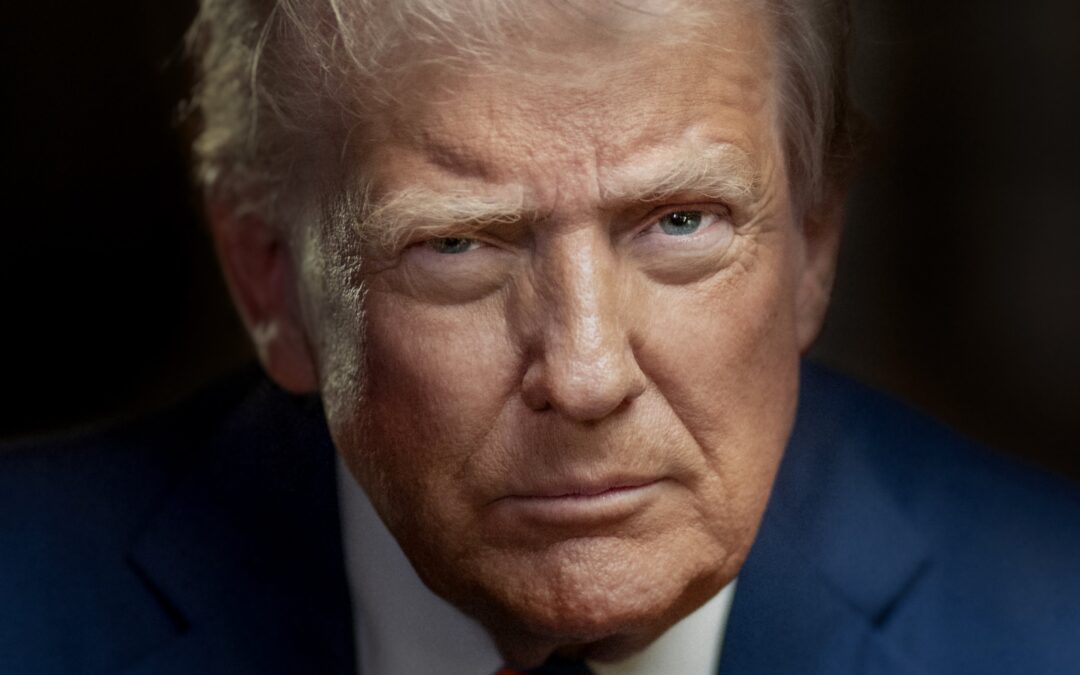
WASHINGTON: US President Donald Trump said he had a “very productive” phone conversation with Russian President Vladimir Putin, calling it a step toward ending what he described as the “inglorious war” in Ukraine.
According to Trump, both sides agreed to hold a meeting of senior advisers next week—led by Secretary of State Marco Rubio—to prepare for a future summit between Trump and Putin in Budapest, Hungary. The US president also confirmed that he will meet Ukrainian President Volodymyr Zelenskyy in the Oval Office tomorrow to continue discussions on achieving a ceasefire.
In a post on Truth Social, Trump said Putin congratulated him and the United States on the “Great Accomplishment of Peace in the Middle East,” calling it an achievement “dreamed of for centuries.” Trump added, “I actually believe that the success in the Middle East will help in our negotiation in attaining an end to the war with Russia and Ukraine.”
Zelenskyy Pushes for Tomahawk Missiles
President Zelenskyy has argued that providing Tomahawk missiles to Ukraine—capable of striking deep into Russian territory—could pressure Putin into serious peace talks. During his recent visit to Israel, Trump acknowledged the issue, saying, “Do they want to have Tomahawks going in that direction? I don’t think so.”
What Are Tomahawk Missiles?
Tomahawk missiles are long-range, precision-guided cruise missiles developed by the US in the 1970s and first used in combat during the 1991 Gulf War.
- They can travel over 1,000 miles at speeds up to 550 mph.
- Launched from ships or land-based platforms, they are equipped with advanced guidance systems allowing them to navigate around obstacles and evade radar detection.
- Typically carrying 400-pound warheads, they are designed for high-accuracy strikes against distant or fortified targets.
Their range, precision, and stealth make them a cornerstone of modern US military strategy.
Renewed Diplomatic Focus
Following the fragile ceasefire in Gaza, Trump has shifted his attention to the Ukraine conflict, framing its resolution as a key goal of his 2024 re-election campaign. Despite earlier tensions with Putin, Trump expressed optimism after their latest exchange: “Interestingly, we made progress today—because of what’s happened in the Middle East.”
Trump also indicated that he may pursue additional economic measures against Russia, though he has resisted sweeping sanctions in the past. Zelenskyy is expected to press for stronger sanctions during their upcoming meeting.
The president further claimed that India has agreed to stop purchasing Russian oil, a move that could further strain Moscow’s wartime revenues. Meanwhile, the White House is reviewing a Senate bill proposing heavy tariffs on Russian exports. While Trump has not publicly endorsed it, officials say he supports the idea if it allows for “complete flexibility” in enforcement.
As preparations begin for the Budapest summit, Washington and Moscow appear poised for their most direct diplomatic engagement since the early months of the war.