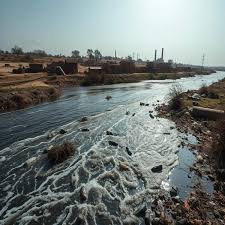
NEW DELHI: The Supreme Court took suo motu cognizance of media reports indicating that the lives and livelihoods of two million individuals are being negatively affected by the severe pollution of the Jojari river near Jodhpur, caused by the discharge of untreated wastewater from over 400 steel rolling and textile units. The court announced that it would issue a comprehensive order on October 9 regarding the “restoration” of the river.
A bench comprising Justices Vikram Nath and Sandeep Mehta informed Rajasthan’s additional advocate general, Siv Mangal Sharma, that the National Green Tribunal (NGT) has already acknowledged the pollution of the Jojari river and emphasized the urgent need for remedial measures to protect it. Sharma mentioned that several directives issued by the NGT have been contested in the Supreme Court and are currently awaiting adjudication.
Polluted river water is unsuitable even for animal consumption.
The Jojari river is a seasonal watercourse that originates in Pandalu village in Nagaur and flows through Jodhpur after merging with the Luni River at Balotra. For the last twenty years, the untreated discharge of chemicals from more than 400 textile and steel units has made the river water unfit for use, even by animals, thereby affecting the lives of residents in 50 villages along the Jodhpur-Barmer stretch.
This river serves as a vital source of drinking water for villagers in the Thar desert. The Rajasthan State Pollution Control Board has also remarked, “Farmers utilize this water. The consumption of agricultural products irrigated with such water can have detrimental effects on human health due to the presence of toxic heavy metals.”
In addition to the pH value, the total suspended solids, chemical oxygen demand, biochemical oxygen demand, and oil and grease levels in the samples collected from the Jojari river were found to exceed the prescribed standards significantly, according to the report. There are also reports of individuals migrating from villages adjacent to the river due to severe water shortages. The area’s biodiversity has suffered as well, with both flora and fauna disappearing.