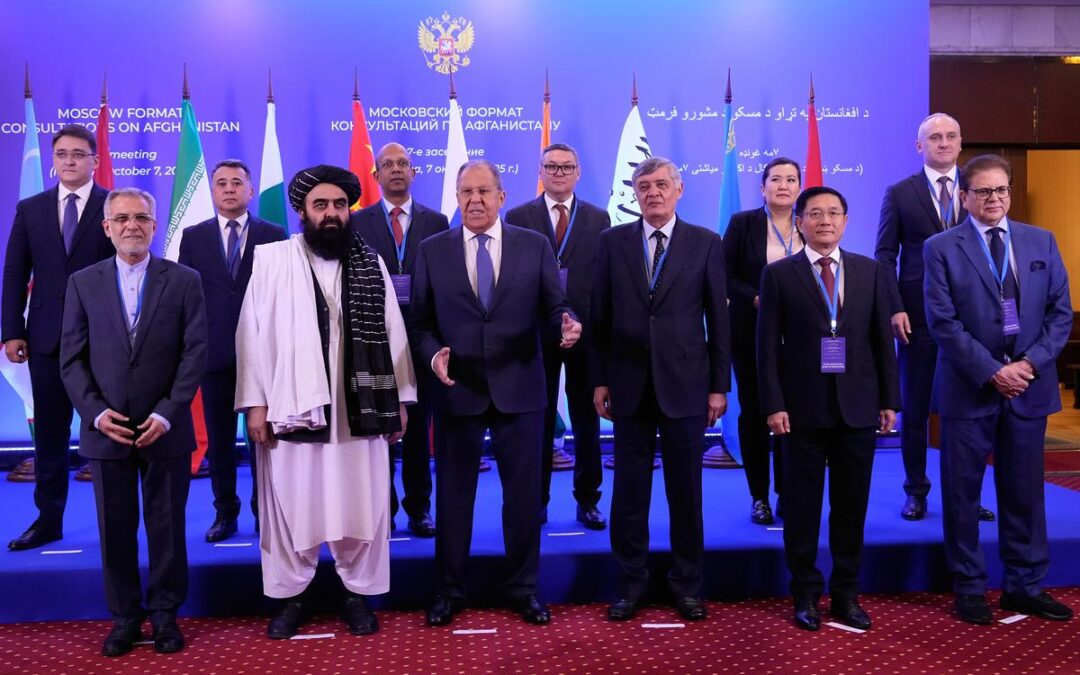
The Taliban are aiming to enhance their relationship with India through diplomatic recognition, as Afghanistan’s foreign minister, Amir Khan Muttaqi, meets with external affairs minister S. Jaishankar on Friday.
Muttaqi arrived in Delhi on Thursday for a six-day visit, which is anticipated to strengthen India’s rapidly expanding economic ties and interpersonal connections with Kabul, even in the absence of formal recognition for the regime in Kabul.
On the eve of Muttaqi’s meeting with Jaishankar, a senior Taliban leader informed TOI that it is time for both governments to elevate their relationship by recognizing the Islamic Emirate of Afghanistan (IEA), the designation used by the Taliban for the nation.
“This marks the first high-level visit by our foreign minister to India and is of great significance. We anticipate that it will usher in a new phase of relations between the two nations. There are numerous areas that can be explored for mutual cooperation during this visit,” stated Suhail Shaheen, the head of the Taliban’s political office and Afghanistan’s ambassador to Qatar.
“I believe it is time for the leadership of both nations to elevate the diplomatic status by acknowledging the IEA government, thereby facilitating bilateral cooperation and the enhancement of relations across various sectors,” stated 10/10/25, 2:15 PM, prior to the Delhi meeting, as the Taliban seeks India’s recognition for the Islamic Emirate. The UN Security Council previously lifted a travel ban on Muttaqi to permit his travel to India. India’s willingness to host Muttaqi signifies a growing trust in the relationship, as the Taliban encourages India to broaden its economic presence in the nation. This visit also enables India to further leverage the significant decline in the Taliban’s relations with Pakistan, which accuses Kabul of financing and arming the Pakistan Taliban, or Tehreek-e-Taliban Pakistan (TTP). However, granting recognition to the Taliban poses a complex challenge for India, as the Indian government aims to align its stance with that of the international community. This position is unlikely to shift with Muttaqi’s visit. According to multiple sources here who spoke to TOI, the visit merely reflects an improvement in bilateral relations and diplomatic interactions. As the government has previously articulated, India aspires for a sovereign, democratic, and peaceful Afghanistan, where the rights of all segments of Afghan society, including women, children, and minorities, are safeguarded. Furthermore, despite credible assurances from Kabul that it will not permit Afghanistan to be utilized against India, the Indian government continues to harbor concerns regarding connections between Pakistan-based terrorist organizations and factions in Afghanistan. While numerous countries have accepted Taliban-appointed officials as diplomats, Russia remains the sole nation to have officially recognized the government in Kabul. This absence of recognition is unlikely to hinder India’s endeavors to strengthen its relations with the Taliban, as it asserts that its connections are informed by historical ties and friendship with the Afghan populace.” Although India has initiated projects in all 34 provinces of the nation, it has pledged to undertake additional development initiatives in the near future, while maintaining its current humanitarian assistance program, supported by the backing it has received from the Taliban. In addition to Delhi, Muttaqi is expected to visit Agra and Deoband. Previously, he had also intended to travel to 10/10/25, 2:15 PM in anticipation of the Delhi meeting, where the Taliban are seeking India’s acknowledgment of the Islamic Emirate.